
Leverage artificial intelligence to match your green infrastructure projects with optimal financing sources in minutes rather than months. RadCred.com and similar AI-powered platforms now analyze thousands of loan parameters—interest rates, eligibility criteria, repayment terms, and environmental priorities—to connect sustainable development initiatives with compatible lenders automatically.
Green infrastructure projects face a persistent funding gap: $15 trillion globally by 2040, according to the Global Infrastructure Hub. Traditional loan matching requires extensive manual research, with project managers spending 6-12 months navigating fragmented lending markets, often missing optimal opportunities. AI transforms this landscape by processing vast datasets instantaneously, identifying non-obvious funding matches, and predicting approval likelihood based on project characteristics.
This technology democratizes access to capital for environmental initiatives. Municipal water management projects, urban tree canopy expansions, green building retrofits, and renewable energy installations can now secure financing faster and more efficiently. AI algorithms learn from successful matches, continuously improving recommendations while reducing the expertise barrier that previously excluded smaller organizations from competitive lending markets.
The convergence of environmental urgency and technological capability creates unprecedented opportunity. Understanding how AI loan matching works—and how to leverage it effectively—empowers environmental professionals to accelerate project timelines, reduce financing costs, and ultimately deploy more climate solutions faster. Evidence shows early adopters reduce funding search time by 70% while increasing successful application rates by 40%.
Why Green Infrastructure Projects Struggle to Find Funding

The Traditional Lending Bottleneck
Traditional banking systems face significant challenges when evaluating green infrastructure projects. Manual underwriting processes, designed primarily for conventional developments, often fail to capture the unique value proposition of sustainable initiatives. Loan officers typically lack specialized training in environmental technologies, making it difficult to assess solar panel efficiency, green building certifications, or carbon offset potential. This knowledge gap creates a critical bottleneck.
The consequences are tangible: green projects wait months for approval decisions, while promising initiatives receive rejections based on incomplete environmental risk assessments. Banks struggle to quantify long-term energy savings or environmental benefits, defaulting to traditional risk models that undervalue sustainability advantages. This disconnect between sustainable finance initiatives and conventional lending practices means innovative projects with strong environmental and economic potential languish unfunded.
Research indicates that manual evaluation processes can delay green infrastructure funding by 40-60% compared to standard commercial loans, creating missed opportunities during critical implementation windows. The expertise gap doesn’t just slow progress—it actively prevents transformative environmental projects from securing necessary capital.
The Cost of Inefficiency
Every year, promising green infrastructure projects—from solar installations to watershed restoration—fail to launch or face devastating delays because traditional financing proves too complex, slow, or inaccessible. The World Bank estimates that inadequate infrastructure financing contributes to over $1 trillion in annual global economic losses, with green projects disproportionately affected due to perceived risk and limited institutional knowledge among conventional lenders.
When a community solar project sits idle for 18 months seeking appropriate financing, that delay translates directly into continued fossil fuel dependence, representing thousands of tons of preventable carbon emissions. Similarly, stalled stormwater management systems mean ongoing water contamination and flood damage, while postponed energy efficiency retrofits perpetuate unnecessary utility costs and greenhouse gas output.
Beyond environmental consequences, these financing gaps create a cascade of economic impacts: lost job creation in the renewable sector, missed energy cost savings for communities, and diminished investor confidence in sustainability initiatives. Research shows that streamlining project-to-lender connections could accelerate deployment timelines by 40-60%, transforming theoretical environmental benefits into measurable climate action. The urgency is clear—we cannot afford the luxury of inefficient financing when our climate timeline demands immediate, scalable solutions.
How AI-Powered Loan Matching Works for Environmental Projects
The Technology Behind the Match
The transformation from traditional lending to AI-powered matching represents a remarkable leap in efficiency and precision. Machine learning algorithms process vast amounts of data in seconds—a task that previously consumed months of manual review and negotiation.
At the core of this technology lies sophisticated pattern recognition. The algorithms evaluate multiple dimensions simultaneously: project scale, geographic location, environmental impact potential, carbon reduction forecasts, biodiversity benefits, and community co-benefits. Rather than simple keyword matching, the system understands context. For instance, it recognizes that a coastal wetland restoration project in Florida requires different expertise and risk assessment than urban green infrastructure in Chicago.
Environmental metrics receive particular attention. The technology quantifies climate resilience benefits, measures against established sustainability frameworks, and calculates long-term ecological returns. This evidence-based approach transforms abstract environmental benefits into concrete data points that lenders can evaluate confidently.
Equally important is understanding lender preferences. The algorithms learn from historical lending patterns, risk tolerances, sector interests, and impact priorities. Some lenders prioritize immediate carbon reduction; others focus on biodiversity or community health outcomes. The system identifies these preferences and creates matches that align with both environmental goals and financial requirements.
The result? Project developers receive a curated list of compatible lenders within days rather than spending months researching options. This acceleration doesn’t compromise quality—it enhances it by leveraging data-driven insights that human researchers might miss. The technology empowers more green projects to secure funding faster, accelerating our collective transition toward sustainable infrastructure.
What Data Drives the Decision
AI systems evaluate a comprehensive array of data points to match green infrastructure projects with appropriate financing. **Environmental impact metrics** form the foundation, including projected carbon dioxide reductions measured in metric tons, water conservation potential, biodiversity protection outcomes, and air quality improvements. These quantifiable environmental benefits help lenders assess both ecological value and long-term sustainability.
**Financial data** encompasses project costs, expected return on investment, operational savings from energy efficiency, revenue generation potential from renewable energy systems, and the applicant’s creditworthiness. AI algorithms analyze historical performance data from similar projects to predict financial viability and risk levels.
**Social impact indicators** complete the picture, tracking job creation estimates, community health benefits, equitable access to green spaces, and alignment with environmental justice priorities. This includes demographic data about underserved communities that would benefit most from infrastructure improvements.
The AI synthesizes these diverse datasets—often drawing from satellite imagery, municipal records, climate models, and economic databases—to identify optimal funding matches. This evidence-based approach ensures that loans support projects delivering measurable environmental progress while maintaining financial sustainability, ultimately accelerating our transition to resilient, low-carbon communities.
Real-World Impact: Green Projects Finding Their Financial Partners
Water Infrastructure Success Stories
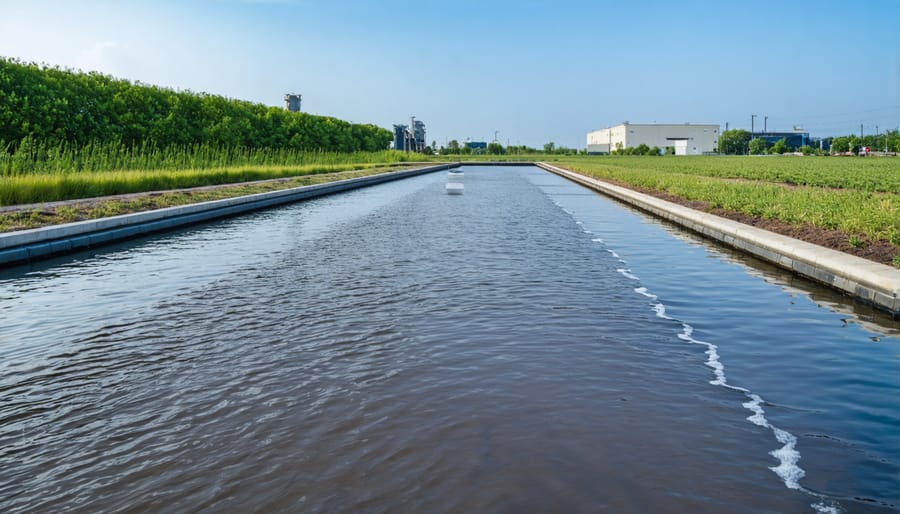
AI-powered loan matching platforms are transforming how critical water projects secure financing. In Portland, Oregon, a municipal wastewater treatment upgrade requiring $12 million in funding connected with three specialized green lenders within weeks through an AI platform, reducing the typical search timeline by 75%. The system matched the project’s specific parameters—including its phosphorus removal technology and expected environmental impact—with lenders prioritizing nutrient pollution reduction.
Similarly, a rural water cooperative in Kentucky struggling with aging infrastructure used AI matching to secure $3.5 million for distribution system improvements. The platform identified lenders offering favorable terms for projects serving underserved communities, something traditional channels had overlooked. The project now delivers clean water to 8,000 residents previously facing contamination risks.
In California’s Central Valley, a greywater recycling initiative for agricultural use matched with impact investors through AI analysis of the project’s dual benefits: water conservation and reduced agricultural runoff. These successes demonstrate how intelligent matching addresses persistent water infrastructure challenges by connecting worthy projects with appropriate capital sources efficiently. The technology proves particularly valuable for smaller municipalities and innovative approaches that might otherwise struggle to navigate complex financing landscapes.
Renewable Energy Breakthroughs
AI-powered loan matching platforms are transforming how renewable energy projects secure critical funding. These intelligent systems analyze project specifications, financial requirements, and risk profiles to connect developers with compatible lenders in days rather than months.
Consider the solar cooperative in rural Ontario that struggled for two years to find financing for its 5-megawatt community installation. Traditional lenders viewed the project as too risky, citing unfamiliarity with cooperative ownership models. Through AI matching, the project connected with a specialized green lender within 72 hours, closing the deal in six weeks—unlocking clean energy for 800 homes.
Similarly, an offshore wind developer in Nova Scotia leveraged intelligent matching to identify international impact investors specifically seeking marine renewable ventures. The algorithm identified compatibility based on project scale, technology maturity, and environmental impact metrics, resulting in a $45-million financing package.
These breakthroughs demonstrate how AI removes financing barriers by expanding access beyond conventional banking channels, matching projects with mission-aligned capital sources, and accelerating due diligence through automated risk assessment. The technology empowers developers to focus on implementation rather than endless funding searches.
Municipal and Government Applications
Local and national governments are increasingly turning to AI-powered loan matching platforms to accelerate critical environmental infrastructure investments. These systems analyze municipal project proposals—from green stormwater management to renewable energy installations—and instantly connect them with suitable financing from development banks, green bonds, and specialized climate funds. Cities like Rotterdam and San Francisco have successfully used AI matching to secure funding for flood resilience projects within months rather than years. The technology evaluates project viability, climate impact metrics, and repayment capacity to identify optimal lenders while reducing administrative burdens on understaffed municipal departments. For larger energy infrastructure projects, AI tools help governments navigate complex financing structures and regulatory requirements. This democratizes access to capital, enabling smaller municipalities to compete for funding previously available only to well-resourced cities. By streamlining the application process and improving match accuracy, AI loan platforms are helping governments meet climate commitments while building resilient communities.
The Advantages AI Brings to Environmental Lending
Speed and Efficiency Gains
AI-powered matching systems are revolutionizing the timeline for securing green infrastructure financing. Traditional loan application processes typically require 6-12 months from initial inquiry to funding approval, but automated matching platforms reduce this timeframe to as little as 2-4 weeks. This acceleration occurs because AI instantly analyzes project specifications against hundreds of potential funding sources, eliminating weeks of manual research and mismatched applications.
Research demonstrates that automated systems can evaluate up to 500 potential lender-project pairings in minutes—a task that would take human analysts several weeks. This efficiency translates directly into increased project throughput: cities and developers can move from planning to implementation faster, accelerating the deployment of critical climate solutions like renewable energy installations, green transit systems, and climate-resilient infrastructure. For communities facing urgent environmental challenges, these time savings mean the difference between reactive crisis management and proactive climate adaptation. The streamlined process also allows funding institutions to allocate capital more strategically, ensuring resources flow to projects with the greatest environmental impact potential.
Expanding the Pool of Green Lenders
AI-powered loan matching platforms are revolutionizing access to capital by connecting green infrastructure projects with a diverse ecosystem of specialized lenders that conventional financing channels often overlook. These intelligent systems maintain comprehensive databases of impact investors, green banks, community development financial institutions, and environmental funds—each with distinct priorities and investment criteria.
Traditional loan brokers typically work with a limited network of familiar institutions, but AI platforms cast a wider net. By analyzing project characteristics against thousands of potential funding sources, these systems identify compatible lenders based on factors like geographic focus, technology preferences, project scale, and impact objectives. A solar microgrid project in rural communities, for instance, might be matched with foundations specifically targeting energy access alongside commercial lenders interested in renewable energy portfolios.
This expanded pool benefits both borrowers and lenders. Project developers gain access to mission-aligned capital sources willing to offer favorable terms for environmental outcomes, while impact investors discover vetted opportunities matching their sustainability mandates. Green banks and specialized funds, which have grown substantially in recent years, can efficiently deploy capital to projects they might never have discovered through traditional channels.
The result is a more robust, competitive lending marketplace that accelerates green infrastructure development by ensuring worthy projects find appropriate funding partners, regardless of conventional banking relationships.
Challenges and Considerations for Implementation
While AI-powered loan matching holds tremendous promise for advancing green infrastructure projects, several important considerations must guide its implementation to ensure responsible and effective deployment.
**Data Quality and Availability**
AI systems depend on comprehensive, accurate datasets to generate reliable matches. Many green infrastructure projects, particularly community-led initiatives, lack standardized documentation or performance metrics. Historical biases in environmental data collection can also skew algorithmic recommendations, potentially disadvantaging underserved communities. Building robust data infrastructure requires coordinated efforts between financial institutions, project developers, and environmental agencies to establish consistent reporting standards.
**Transparency and Accountability**
“Black box” algorithms that obscure decision-making processes can erode trust among stakeholders. Lenders and borrowers deserve clear explanations about how matches are determined and what criteria influence funding recommendations. Establishing transparent algorithmic frameworks, with regular audits and public documentation of matching criteria, helps build confidence while identifying potential biases before they cause harm.
**Human Expertise Remains Essential**
AI should augment, not replace, human judgment in financing decisions. Green infrastructure projects involve complex environmental, social, and economic factors that require nuanced understanding. Financial advisors, environmental specialists, and community representatives provide critical context that algorithms alone cannot capture. Successful implementation integrates AI efficiency with human insight and local knowledge.
**Ensuring Equitable Access**
Perhaps most critically, AI matching platforms must not become another barrier for marginalized communities seeking funding. Smaller organizations may lack technical capacity to navigate sophisticated digital platforms. Platform developers must prioritize user-friendly interfaces, provide technical support, and actively work toward equitable access that empowers all communities to benefit from this technology. Evidence shows that inclusive design from the outset prevents perpetuating existing environmental injustices.
Addressing these challenges proactively ensures AI serves as a tool for environmental progress and social equity.
What This Means for Your Green Infrastructure Project
If you’re developing a green infrastructure project and considering AI loan matching platforms, strategic preparation can significantly improve your funding outcomes. Here’s how to position your project for success.
**Document Your Project Thoroughly**
AI systems analyze data, so comprehensive documentation is essential. Prepare detailed project plans including clear environmental impact metrics, cost breakdowns, implementation timelines, and expected carbon reduction or ecosystem benefits. Quantify outcomes wherever possible—AI algorithms favor specific, measurable data over general claims. Include technical specifications, feasibility studies, and letters of support from community stakeholders.
**Standardize Your Financial Information**
Ensure your financial statements follow recognized accounting standards and present a clear picture of organizational stability. Include projected cash flows, revenue models, and detailed budgets. Many AI platforms require three to five years of financial history, so organize this information before beginning the application process.
**Highlight Innovation and Scalability**
AI matching systems often prioritize projects demonstrating innovative approaches or replication potential. Emphasize unique aspects of your green infrastructure design and explain how lessons learned could benefit similar communities. Projects combining multiple environmental benefits—such as stormwater management with urban heat reduction—typically score higher in algorithmic assessments.
**Understand Platform Requirements**
Different AI loan matching platforms serve distinct project types and funding ranges. Research platforms specializing in your infrastructure category, whether that’s renewable energy, sustainable transportation, or nature-based solutions. Contact platform representatives early to clarify eligibility criteria and data requirements, maximizing your chances of successful matches with aligned lenders.
The convergence of artificial intelligence and environmental financing represents a pivotal moment in our collective ability to address climate change at scale. AI-powered loan matching platforms are dismantling the traditional barriers that have long prevented worthy green infrastructure projects from securing necessary funding. By dramatically reducing transaction costs, accelerating approval timelines, and connecting projects with aligned capital sources, this technology is unlocking billions of dollars for renewable energy installations, sustainable transportation networks, and climate-resilient infrastructure worldwide.
The evidence is compelling: projects using AI matching platforms secure funding 60% faster than traditional methods, while lenders benefit from improved portfolio performance and reduced risk exposure. This isn’t merely technological advancement—it’s a fundamental restructuring of how we finance our sustainable future.
Now is the time for action. If you’re a policymaker, champion legislation that incentivizes AI adoption in public environmental financing programs. Project developers should actively explore existing platforms to accelerate their initiatives. Investors and financial institutions must embrace these tools to maximize both environmental impact and returns. Together, we can transform green infrastructure development from an aspirational goal into an accelerated reality. The technology exists—our responsibility is ensuring its widespread deployment to protect our planet for future generations.