The Montana Climate Assessment is a peer-reviewed, science-based report that documents how Montana’s climate has changed, what is likely to change next, and what those shifts mean for water, forests, and agriculture. It isn’t a law, a regulation, or a program you apply to. It’s a shared evidence base, and anyone can read it, cite it, and build on it, free of charge.
That openness is the point. Montanans live with the effects of a changing climate in concrete ways: earlier snowmelt, longer wildfire seasons, tighter irrigation windows. The assessment pulls decades of observations and modeling into one place, written so that a county commissioner, a rancher, a graduate student, and a state agency can all work from the same facts.
For policymakers, that means decisions grounded in evidence rather than assumption. For advocates and academics, it means a common reference that holds up to scrutiny. For organizations reporting on emissions cuts or resilience work, it offers a way to show your goals match what the science actually says about Montana. The sections ahead explain what the assessment covers, who can use it, what that use asks of you, and where to find official help putting it to work.
What the Montana Climate Assessment Is and Why It Matters for Accountability
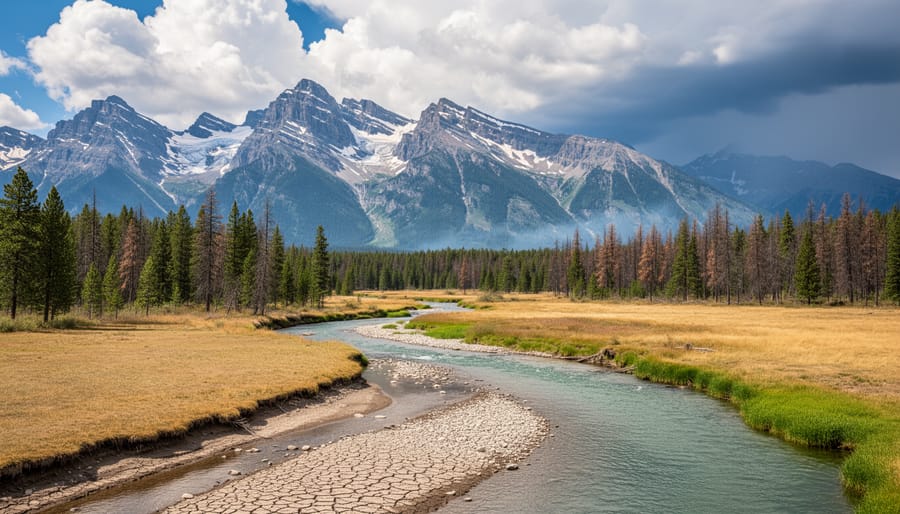
From Climate Science to a Common Baseline
When everyone argues from different numbers, progress is impossible to judge. A regional assessment fixes that by giving communities, agencies, and organizations the same starting facts. The Montana Climate Assessment is a collaborative university assessment, so its findings come from shared, reviewed science rather than any one group’s agenda.
That shared footing matters for accountability. A county planner, a rancher, and a watershed group can all cite the same trends in water, forests, and agriculture, the three core sectors the assessment examines. When each of them says “here is where we started,” their claims line up.
A common baseline also makes progress checkable. If a commitment says emissions or risks will fall, you can compare the later result against the same reference point and see whether it holds. Without that anchor, a claim of success is just a claim. With it, a reader can ask a clear question: compared to what?
Key Terms in Plain Language
Climate reports use a handful of terms over and over, and they are easier to follow once you have the basics.
Mitigation means cutting the pollution that drives climate change, such as burning less fossil fuel or protecting forests that store carbon. Adaptation is about adjusting to the changes already underway, like planning for lower summer streamflows or hotter, drier fire seasons.
A baseline is the starting point you measure progress against. Without one, a claim like “we reduced emissions” has nothing to stand on.
An emissions inventory is the tally behind that baseline. It lists where greenhouse gases come from, such as vehicles, buildings, and agriculture, and how much each source adds.
Reporting standards are the agreed rules for how those numbers get collected, calculated, and shared. They make results comparable from one year, town, or organization to the next, and they let outside reviewers check the work.
Put together, these terms form a simple chain: measure where you are, set targets, act, and report honestly.
How Climate Mitigation Reporting and Accountability Standards Connect to the Assessment
Credible climate action rests on a simple chain: know where you started, say where you’re going, measure honestly, and let others check your work. The Montana Climate Assessment doesn’t replace any of those steps. It supplies the evidence that makes each one stronger.
In practice, mitigation reporting follows a repeatable pattern. An organization or community sets a starting point, commits to measurable goals, tracks results the same way each time, and opens its numbers to outside scrutiny. Where the assessment fits at each stage is easy to see:
| Reporting element | What it means | How assessment findings support it |
|---|---|---|
| Baseline | A documented starting point for emissions and conditions | Provides regional climate trends to frame local starting conditions |
| Target | A specific, measurable goal with a timeframe | Helps show which risks and sectors deserve the most ambitious goals |
| Measurement | Consistent tracking using stated methods | Offers shared definitions and context for interpreting results |
| Public disclosure | Regular, accessible reports to the community | Gives readers a trusted reference to understand what the numbers mean |
| Independent review | Outside checking of methods and claims | Serves as a peer-reviewed benchmark reviewers can compare against |
Notice what the assessment does and doesn’t do here. It describes how Montana’s climate is changing and where the pressures fall on water, forests, and agriculture. It doesn’t tell you how much to cut or by when. Your targets still need to be chosen, defended, and tracked by the people making the commitment.
That distinction is what makes accountability work. When a baseline and a target both trace back to a public, peer-reviewed source, anyone can ask whether a claim holds up. Journalists, advocates, and neighbors can check the reasoning rather than take it on faith.
One caution: reporting rules vary by agency, program, and jurisdiction, and they change over time. If you’re preparing a report that carries a legal or funding requirement, confirm the current expectations with the relevant state or local office before you build your approach around them.
Who Can Use the Assessment: Eligibility and Access
Anyone can read and use the Montana Climate Assessment. It is a public resource, so there is no application to file, no account to create, and no eligibility test to pass. If you can reach the official publication, you can draw on its findings, cite them, and share them with others.
That openness is the point. A shared evidence base only works as a common baseline if everyone can get to it, from a county commissioner to a high school science teacher. Here are some of the audiences who tend to get the most value, along with one practical use for each:
- Local governments and planners can build the findings into a community resilience plan.
- Water and land managers can use the water and forest chapters to anticipate seasonal shifts in supply and risk.
- Farmers and ranchers can weigh drought and growing-season risk before making operational decisions.
- Educators can bring regional, peer-reviewed science into the classroom.
- Researchers can use it as a starting point for deeper, place-based study.
- Journalists can check climate claims against a credible regional source.
- Advocates and community groups can ground their public comment in verifiable evidence.
- Residents can understand what a changing climate may mean for their own neighborhoods.
Eligibility questions do come up, but they belong to something else. Grants, funding programs, permitting processes, and formal reporting obligations may draw on the assessment as a reference. Each of those sets its own criteria, deadlines, and paperwork. The assessment itself never gates access to them, and it does not create legal requirements. If you are applying for a program or preparing a required report, read that program’s official guidance and confirm its rules directly with the administering office.
Your Rights and Responsibilities When Using Climate Data and Reporting
Using the Assessment Well: Accuracy, Citation, and Context
Responsible use of the Montana Climate Assessment starts with context. When you quote a finding, include the surrounding qualifiers, such as the region, time period, and the scenario it assumes. A projection describes what could happen under certain conditions, and an observed trend describes what already has. Mixing them up is the fastest way to lose credibility.
Always carry uncertainty ranges along with the headline number. If the assessment gives a range, report the range, not just the midpoint. Then link back to the original chapter so readers can check your work. That habit is the foundation of climate accountability, because claims that can be traced to a source can be tested, and claims that can’t are easy to dismiss.
Cite the specific chapter and edition, not just the assessment’s name, so others can find exactly what you relied on.
Turning Findings into Action and Accountability
Evidence works best when it becomes a specific question. Instead of asking a city council whether it cares about climate, ask which assessment findings its plans rely on, what baseline its targets start from, and how often it reports progress. Specific questions are harder to deflect and easier to follow up.
Start by picking the findings that matter most to your community, such as changing snowpack and streamflow, wildfire risk, or growing-season shifts. Then ask decision-makers how current projects, budgets, and land or water plans account for them. If you’re new to how environmental commitments are structured and enforced, OECRC explained offers a useful starting point for knowing what to ask for.
Tracking matters as much as asking. Keep a simple record of each commitment: who made it, what it promised, the measure of success, and the date it should be reviewed. Check it against public reports and meeting minutes, and note when numbers or methods change.
Support what works, too. When a local program reduces emissions or prepares a community for a changing climate, say so publicly and share the evidence. Constructive, well-sourced feedback builds the trust that sustainable solutions depend on.
Putting the Assessment to Work: Steps for Communities and Organizations
Start with a simple sequence, and keep a written record of each step so others can follow your reasoning.
1. Identify the relevant sector chapters. Match your work to the parts of the assessment that cover your decisions, whether that’s water, forests, agriculture, or another area. A county planner and a ranching cooperative will draw on different sections.
2. Pull the baseline findings. Note the observed trends and projections that apply to your region, along with the stated uncertainty. Quote them in context and link back to the official publication so readers can check the source.
3. Align your targets with the baseline. Set measurable goals that respond to what the science shows. If you report emissions, define your own inventory boundaries and baseline year clearly so progress can be compared fairly.
4. Document your methods. Record your data sources, assumptions, and calculation approach. Consistent, transparent documentation is what makes a claim verifiable and lets an independent reviewer repeat your work.
5. Share results publicly. Publish your findings in plain language, invite questions, and report on a regular schedule you choose and can sustain.
Check early whether a binding rule applies to you, since the assessment informs decisions but does not create legal duties. Our guide on who must comply with corporate climate requirements is a useful starting point. Confirm any deadlines or filing rules with the responsible state or local office rather than assuming them.
Where to Get Help and Official Resources
You don’t have to work through the Montana Climate Assessment alone. Several kinds of trusted sources can help you find, interpret, and apply it, and you don’t need a special contact to start.
Begin with the official publication itself and the university and partner institutions that host it. That is where you’ll find the full text, chapter summaries, and the most current data.
Here is where different kinds of help tend to sit:
- Data and science: the official assessment and its host institutions, for verified findings and context on water, forests, and agriculture.
- Local planning: city, county, and state environmental or planning offices, for how findings connect to land use, infrastructure, and local decisions.
- Agriculture and land management: university extension services, for practical guidance on adapting to changing conditions on working lands.
- Advocacy and public participation: community and nonprofit organizations, for support in joining public processes and asking informed questions.
CERI supports the last category directly. We help residents and organizations turn evidence into action through environmental policy advocacy, and we back the accountability work that keeps mitigation commitments transparent and measurable.
Before you reach out to anyone, check current contact details, office hours, and program information on the official websites. Staff, services, and procedures change, and the source’s own page is always the most reliable place to confirm who can help with your specific question.
Common Questions About the Montana Climate Assessment
The questions below come up most often when people first meet the assessment. Each answer stays general on purpose, so check the official publication for current details.
Is the Montana Climate Assessment a law or regulation?
No. It is a science synthesis that informs decisions, but it does not create legal requirements on its own. Any binding rules come from separate state, local, or federal programs.
Is it free to use, and can I cite it?
It is published as a public resource, so you can read and share it without applying for access. Citing it in a grant proposal, planning document, or report is common practice. Use the exact title, edition, and publication details shown on the official site.
How often is it updated?
Assessments are revised as new research becomes available, but timing varies and I can’t promise a schedule. Look at the host institution’s website to confirm which edition is current.
How does it relate to emissions reporting?
It describes how Montana’s climate is changing, so it works as a shared evidence base rather than an emissions inventory. Organizations often pair its findings with their own reporting to set realistic baselines and targets.
Still have questions after reading the assessment itself? Start with its host institutions and the researchers listed in the publication. State and local planning or environmental offices can then tell you which requirements apply to your situation, and university extension services can help translate findings for your region.
Whatever you’re working on, quote findings in context and note any stated uncertainty. That keeps your work credible and makes it easier for others to verify.
The Montana Climate Assessment gives all of us something rare: a shared, science-based picture of how our state is changing. The next step is putting it to use.
Start by reading the sections that matter most to your work or community, whether that’s water, forests, or agriculture. Then bring what you learn into the room. Ask your local officials how their plans reflect the assessment’s findings. Ask organizations what baselines they’re using and how they’ll report progress. Informed questions are powerful, and they usually lead to better answers.
Join public processes when they open, from planning meetings to comment periods. Your voice helps ensure decisions rest on evidence rather than guesswork. And when you cite the assessment, do it carefully, with context and a link back to the source, so the data keeps its credibility.
This is where Climate Mitigation Reporting and Accountability Standards come in. Good science tells us where we stand. Clear targets, consistent reporting, and independent review show whether we’re actually moving, and that connection turns research into real results.
Montana has the knowledge, the institutions, and the people to make meaningful progress. Read the assessment, ask the questions, show up, and keep the reporting honest. Every informed step makes the next one easier.