
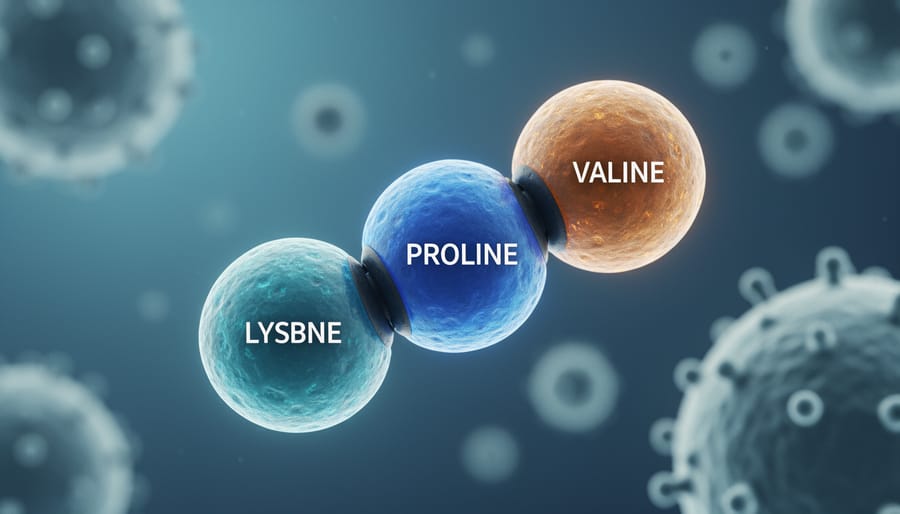
KPV is a tiny chain of three amino acids: lysine (K), proline (P), and valine (V). It’s a fragment of a larger hormone in the body called alpha-melanocyte-stimulating hormone, and researchers study it because it appears to calm inflammatory signaling in cells. That’s the short version. The longer one is more interesting, and more cautious.
Interest in the KPV peptide has grown fast, partly because small molecules like this are easy to study in a lab and easy to talk about online. Lab and animal findings suggest it may interact with inflammation pathways in the gut and skin. Human evidence, though, is still thin, and no approved medical use exists. Separating what’s been shown from what’s merely claimed matters, especially as science in public discussions tends to outrun the data.
This article explains what KPV is made of, how it’s thought to work, the forms it comes in, and where current research stands, all in plain language and without hype.
What KPV Means: A Plain-Language Definition
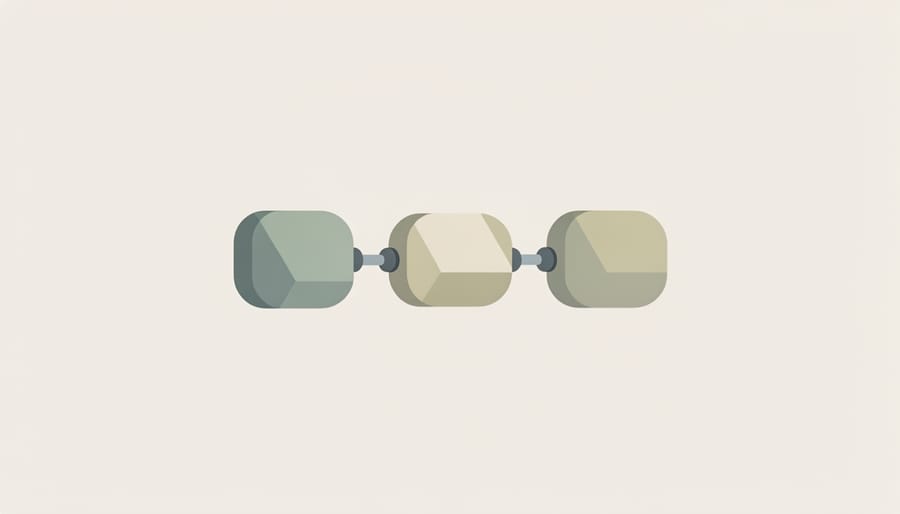
KPV is a very small piece of protein chemistry. Its name is just shorthand for the three amino acids it contains: lysine (K), proline (P), and valine (V). Strung together in that order, they form a tripeptide, which is about as short as a peptide can get.
Think of amino acids as individual beads. Link a few beads together and you get a peptide. Link hundreds into a long, folded chain and you get a protein. KPV sits at the tiny end of that spectrum, with just three beads on the string.
Here is a quick glossary of the terms you’ll keep running into:
- Amino acid
- One of the basic building blocks the body uses to make peptides and proteins. Lysine, proline, and valine are three of the roughly twenty common ones.
- Peptide
- A short chain of amino acids linked together. Peptides are generally smaller than full proteins.
- Tripeptide
- A peptide made of exactly three amino acids. KPV is one example.
- Alpha-MSH
- Short for alpha-melanocyte-stimulating hormone, a larger natural hormone in the body. KPV matches a small fragment of it.
- Inflammation
- The body’s response to injury or irritation, often involving redness, swelling, or heat. Much of the research interest in KPV centers on this process.
That last connection matters. KPV isn’t an invention from nowhere. It copies the tail end of alpha-MSH, which is why researchers became curious about whether this small fragment might behave like a slimmed-down version of its parent.
It’s just as important to say what KPV is not. It isn’t an approved drug for treating any disease. It isn’t a supplement with proven benefits, either, no matter what a product label or online listing might suggest. At this stage it is best understood as a research compound, studied mostly in laboratory and early-stage settings.
That honest starting point helps you read everything else with a clear head. Knowing what something actually is, and where it sits in the evidence, makes it much easier to spot claims that run ahead of the science.
How KPV Works in the Body
From Hormone Fragment to Research Compound
KPV is a short piece of a larger natural molecule called alpha-melanocyte-stimulating hormone, or alpha-MSH. Alpha-MSH is a chain of 13 amino acids that the body produces, and it plays a role in pigmentation, immune signaling, and the regulation of inflammation. The last three amino acids at the end of that chain are lysine, proline, and valine. That tail is KPV.
Researchers noticed something useful. When they tested pieces of alpha-MSH separately, this small end segment appeared to carry much of the hormone’s anti-inflammatory activity in laboratory settings, without the pigmentation effects tied to other parts of the chain. A fragment that does one job is easier to study than a whole molecule doing many.
Small peptides also appeal for practical reasons. They are simple to make and easy to modify, and their tiny size makes it easier to ask precise questions about how they behave. Still, most of this interest comes from cell and animal work, so it signals curiosity, not proof of benefit in people.
What the Research Does and Does Not Show
Most of what we know about KPV comes from the laboratory. In cell studies, the tripeptide has been shown to dial down inflammatory signaling. In animal models, particularly of gut and skin inflammation, researchers have reported encouraging results. These are meaningful early signals, and they explain why scientists keep studying it.
But early signals are not proof. Human data is limited, and large, well-controlled clinical trials that confirm safety and benefit are largely missing. A result in a petri dish or a mouse often fails to carry over to people, and that gap is where many promising compounds stall.
This is why the source of a claim matters. Peer-reviewed studies have been vetted by independent experts, and they spell out their methods, sample sizes, and limitations. Marketing pages, social media posts, and testimonials do none of that. When you see a bold promise about KPV, ask a simple question: is it backed by human trials, or only by preliminary lab work?
Holding that line is not pessimism. It is how good science, and good decisions, get made.
Forms and Components of KPV
KPV gets its name from the one-letter codes of its three amino acids. Think of them as three beads on a very short string. Each bead has its own character, and the order matters.
- Lysine (K): a positively charged amino acid that helps the peptide interact with other molecules in the body.
- Proline (P): a rigid, ring-shaped amino acid that puts a bend in the chain and shapes how the peptide folds.
- Valine (V): a compact, water-avoiding amino acid that helps anchor the peptide’s overall structure.
- The standalone tripeptide: KPV on its own, the simplest form and the baseline researchers compare everything else against.
- Delivery-system versions: KPV attached to or packed inside carriers such as nanoparticles or hydrogels, designed to protect it and guide where it goes.
- Related alpha-MSH fragments: other pieces of the parent hormone, which scientists study alongside KPV to see which parts do what.
Why does the form matter so much? Small peptides are fragile. Enzymes in the gut and bloodstream can break them apart quickly, and a peptide that falls apart before it reaches its target can’t do much. That is why researchers explore carrier systems. A nanoparticle can shield KPV along the way, while a hydrogel can hold it in place and release it slowly at a specific site.
Form also shapes how studies are designed and interpreted. A result seen with KPV in a protective carrier may not apply to the plain peptide, and a finding about one alpha-MSH fragment doesn’t automatically carry over to another. When you read about KPV, check which version was actually tested. If you want to dig into the source material yourself, you can find peer-reviewed research and look for the exact form used in each study.
How KPV Is Studied and Used Today
Researchers are looking at KPV in a few distinct areas, and none of them has produced an approved treatment. The most active line of work involves inflammation. Because KPV appears to quiet some inflammatory signals in cells, scientists use it as a tool to study how those signals can be dialed down.
Two tissues come up most often. In gut research, KPV has been tested in laboratory and animal models of intestinal inflammation, partly because the digestive tract is a place where a small peptide could, in theory, act directly on irritated tissue. In skin research, the interest is similar: the skin is accessible, which makes it easier to apply a compound locally and observe the response in cell cultures and animal studies.
A third area is less about KPV itself and more about how to deliver it. Peptides tend to break down quickly in the body, so teams are testing carriers such as nanoparticles and hydrogels that might protect the peptide and release it where it is needed. Much of the real progress here is engineering, not biology.
Outside the lab, KPV has also found its way into wellness marketing, where it is sometimes described in confident, health-oriented language. Treat that language with caution. A compound that shows promise in a dish or in mice has not been shown to work safely in people, and sellers are not required to meet the standards a regulator would apply to a medicine. Before believing a product claim, check whether any health authority has approved it for a specific use, look for peer-reviewed human studies, and talk with a qualified healthcare professional.
This habit is bigger than one peptide. The same discipline behind evidence-first decision-making in environmental advocacy applies here: ask for the data, separate early findings from proven outcomes, and follow regulatory updates rather than marketing copy.
Common Questions About KPV
Readers tend to arrive here with the same handful of follow-up questions, so here are brief, plain-language answers.
What does KPV stand for?
The letters are the single-letter codes for its three amino acids: K for lysine, P for proline, and V for valine. Together they form a very short chain, which is why it’s called a tripeptide.
Is KPV the same as alpha-MSH?
No. KPV is a small fragment of alpha-MSH, a larger natural hormone. Researchers study the fragment separately because it may behave differently than the full molecule.
Is KPV approved as a medication?
Not to our knowledge. It’s best understood as a research compound, and anyone considering it should check current regulatory status and talk with a qualified health professional first.
Where can I find reliable research on KPV?
Start with peer-reviewed journals and databases such as PubMed, and look for studies that clearly state whether they involved cells, animals, or people.
Those answers share one theme: separate what has been studied from what has been proven. A product page may sound confident, but a published, peer-reviewed paper shows its methods and limits. Using that habit with KPV prepares you to weigh any new claim, in wellness or in environmental science, on its evidence.
KPV is a tiny chain of three amino acids (lysine, proline, and valine) that comes from a larger natural hormone called alpha-MSH. Researchers are interested in it because small pieces like this can be easier to study, and early lab and animal work points to a role in calming inflammatory signals inside cells. That is the honest summary: intriguing, but still early.
What we don’t have yet is solid proof in people. KPV is not an approved treatment, and the confident promises you may see in wellness marketing run well ahead of the evidence. The science is developing, and that’s worth following with curiosity rather than hype.
So here’s the takeaway you can use. When you meet a bold claim, ask where the data comes from, whether it was peer reviewed, and whether it was tested in humans. Look for regulatory status, and talk with a qualified professional before acting on anything. Bring that same evidence-first habit to climate, environmental, and public health questions, where clear thinking helps us choose solutions that actually work.