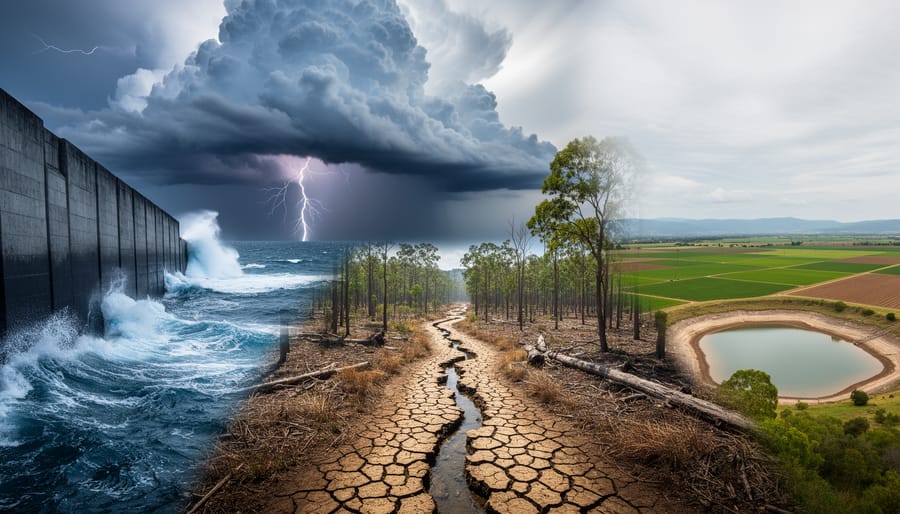

Scholarly articles on global climate change offer the most rigorous, peer-reviewed evidence available to shape environmental policy and drive meaningful action. These scientific publications, vetted through independent expert review, provide the foundation for climate advocacy, allowing policymakers, organizations, and concerned citizens to build arguments grounded in verifiable data rather than opinion. Accessing and applying this research effectively requires understanding where to find credible sources, how to evaluate their quality, and what rights you have to use them in advocacy work.
The landscape of climate scholarship has evolved dramatically. What once required university library access is now increasingly available through open-access journals, government repositories, and institutional archives. This democratization of knowledge has empowered organizations to influence policy at unprecedented scales. Groups that have transformed climate policy consistently cite peer-reviewed research as their primary tool for credibility and impact.
But access alone isn’t enough. Understanding the anatomy of a scholarly article, recognizing methodological strengths and limitations, and navigating copyright restrictions determine whether research becomes a powerful advocacy tool or just another PDF gathering digital dust. Climate science literacy means reading beyond abstracts, identifying research with policy relevance, and synthesizing findings from multiple studies into compelling narratives that decision-makers cannot ignore.
This guide walks you through the complete process: identifying high-impact climate research, accessing it legally and affordably, evaluating its credibility, understanding your rights to cite and share it, and ultimately applying these scholarly insights to influence environmental policy. Whether you’re drafting testimony for a legislative hearing, building a campaign strategy, or simply seeking to understand the science behind climate action, mastering scholarly research is essential.
What Scholarly Articles on Climate Change Are and Why They Matter
Scholarly articles on climate change are peer-reviewed research papers published in academic journals after rigorous evaluation by independent experts in the field. These articles represent original research, systematic reviews, or meta-analyses that have passed through a formal vetting process designed to verify methodology, data integrity, and scientific validity. Unlike blog posts, news articles, think-tank reports, or advocacy pieces, scholarly articles adhere to strict academic standards that require transparent methods, reproducible results, and thorough citation of sources.
The peer-review process, a peer review core practice in academic publishing, typically involves multiple rounds of critique and revision before publication. Researchers submit their work to a journal, where editors send it to several independent scientists with relevant expertise. These reviewers assess whether the research question is well-formulated, the methodology sound, the data properly analyzed, and the conclusions justified by the evidence. This gatekeeping function filters out flawed research, unsubstantiated claims, and biased interpretations before they enter the scientific record.
Why does this matter for climate policy? The Intergovernmental Panel on Climate Change (IPCC), which provides the scientific foundation for international agreements like the Paris Agreement, relies almost exclusively on scholarly literature. The IPCC assesses peer-reviewed literature to establish what the global scientific community knows about climate change, what remains uncertain, and what risks humanity faces. National governments, the European Union, and multilateral environmental treaties ground their regulatory frameworks in findings drawn from this peer-reviewed corpus.
Scholarly articles establish scientific consensus through cumulative evidence. A single study might suggest a relationship between rising CO2 levels and ocean acidification, but when dozens of independent research teams across continents arrive at consistent findings using different methods and datasets, that convergence forms the basis for policy action. Policymakers and advocacy organizations cannot build durable, effective climate strategies on anecdotal evidence or opinion pieces. They need the verified, reproducible evidence that only the peer-review process delivers.
Who Can Access and Use Climate Scholarly Articles: Eligibility and Access Rights

Climate scholarly articles are more accessible than many people assume. While the stereotype of locked-away academic research persists, the reality is that multiple pathways exist for different audiences to access peer-reviewed climate science, though the ease and cost vary significantly.
Institutional Access: The Traditional Gateway
Researchers affiliated with universities, government laboratories, and research institutions typically enjoy the broadest access through institutional subscriptions. Universities pay substantial annual fees to publishers, granting their faculty, students, and staff access to thousands of journals. Government scientists at agencies like NOAA or NASA similarly access research through federal subscriptions. These institutional arrangements cover the majority of paywalled content, making nearly all published climate research available to academic and governmental researchers.
Open Access: Leveling the Playing Field
The open-access movement has transformed scholarly publishing over the past two decades. Open-access journals make articles freely available to anyone immediately upon publication, funded instead by author fees or institutional sponsors. Major climate journals like Environmental Research Letters and platforms like PLOS ONE publish climate research under open licenses. Preprint servers such as EarthArXiv allow researchers to share manuscripts before formal peer review, expanding public access to emerging findings. The European Union and many funding agencies now mandate open-access publication for research they support, accelerating this shift.
Access Rights Across User Categories
Different groups have varying levels of access to scholarly climate literature:
- Researchers with institutional access: Full subscription access to most journals through university or government library systems
- Policymakers: Often granted complimentary access by publishers for legislative purposes, plus access through government research offices and libraries
- Advocacy organizations: Can access open-access articles freely; may purchase individual articles or request them directly from authors; some gain institutional access through educational partnerships
- General public: Free access to open-access journals, preprints, and institutional repositories; can request articles from authors via email or ResearchGate
- Journalists: Many publishers provide temporary access for reporting purposes; some outlets maintain institutional subscriptions for their staff
Organizations like CERI navigate these access models strategically, combining open-access resources with institutional partnerships and direct researcher collaboration to build evidence-based policy positions.
Legal Use in Policy and Advocacy
Accessing an article and using it are separate considerations. Copyright law generally permits citing and discussing published research in policy briefs, educational materials, and advocacy campaigns under fair use principles. You can quote short passages with proper attribution, summarize findings, and reference data in reports without permission. However, reproducing entire articles, figures, or substantial portions typically requires publisher permission unless the work carries an open license like Creative Commons. Most scholarly publishers explicitly allow use in policy documents and non-commercial educational contexts, recognizing the public benefit of research-informed governance.
How to Find, Access, and Apply Scholarly Climate Research
Searching Academic Databases and Repositories
Google Scholar offers the broadest starting point for climate research, simply enter terms like “climate change mitigation” or “carbon emissions policy” and filter results by date range to capture the latest findings. For more precision, use Boolean operators: combine “climate AND adaptation AND coastal” to narrow results, or “renewable energy OR clean energy” to broaden searches across related terms. Quotation marks force exact phrases, so “climate tipping points” returns only that specific concept.
Web of Science and Scopus provide more rigorous filtering by citation count, journal impact factor, and research area categories like Environmental Sciences or Meteorology & Atmospheric Sciences. These platforms let you track which studies shape policy debates by identifying highly-cited foundational papers and recent publications building on them.
PubMed works well for health-related climate research, search “climate change AND public health” to find peer-reviewed studies on heat waves, disease vectors, or air quality impacts that inform public health policy.
Institutional repositories from universities and research centers often house preprints, working papers, and datasets unavailable elsewhere. Check repositories at institutions leading climate research: MIT’s DSpace, Stanford’s Digital Repository, or the European Commission’s Open Research Europe.
Combine platforms strategically. Start broad with Google Scholar to identify key authors and journals, then use Web of Science to track citations and measure influence, and finally check institutional repositories for the latest unpublished findings. This layered approach uncovers the evidence base driving community environmental wins and international climate agreements alike.
Evaluating Article Quality and Relevance

Evaluating a scholarly article’s quality requires examining multiple indicators that collectively reveal its credibility and usefulness for policy work. Start with the journal’s reputation, publications like Nature Climate Change, Environmental Science & Technology, or Global Environmental Change maintain rigorous peer review standards. Check the journal’s impact factor through databases like Journal Citation Reports, though recognize this metric reflects influence within academic circles rather than real-world application.
Citation count indicates how widely the research has influenced other scholars, but newer studies may carry fewer citations while offering cutting-edge findings. Examine the methodology section closely: robust climate research discloses data sources, statistical methods, sample sizes, and limitations transparently. Studies funded by industry groups or lacking methodological detail warrant skepticism.
Recency matters differently across climate topics. Foundational science on greenhouse gas physics remains valid for decades, while emissions data or renewable technology assessments require recent publication dates, ideally within three years for policy relevance.
Organizations like CERI assess policy applicability by evaluating whether findings translate from evidence to action. Does the research address actionable policy questions? Are recommendations specific and implementable? Articles combining scientific rigor with clear policy implications prove most valuable for advocacy work and legislative proposals.
Accessing Full-Text Articles
Finding the full text of scholarly climate articles is often easier than it appears, even when a paywall blocks initial access.
Institutional Access
If you’re affiliated with a university, research institute, or organization like CERI, your institution likely subscribes to major academic databases. Access these resources through your institution’s library portal or VPN, which authenticates your credentials and grants you full-text access to thousands of journals. Contact your librarian to verify available subscriptions and set up remote access.
Interlibrary Loan Services
When your institution doesn’t subscribe to a specific journal, request articles through interlibrary loan. This free service obtains copies from other libraries, typically delivering PDFs within three to five business days. Public libraries often provide this service to community members.
Direct Author Requests
Researchers can legally share their published work. Email the corresponding author directly, contact information appears in the article header, and request a PDF. Most scientists respond positively within 48 hours, especially when you explain how you’ll use their research for policy advocacy.
Preprint Servers and Open Repositories
Check preprint servers like arXiv, EarthArXiv, or institutional repositories before publication versions appear. These platforms host author manuscripts that are nearly identical to final published versions. Search the article title in Google Scholar, which often links to free repository versions alongside paywalled publisher sites.
Your Rights and Obligations When Using Climate Research

When you use scholarly articles on climate change, you operate under specific rights granted by copyright law and academic publishing norms, balanced against clear ethical and legal obligations. Understanding these boundaries protects both your organization’s credibility and the integrity of the research itself.
Most scholarly articles are protected by copyright, typically held by the publisher or, less commonly, the author. Under fair use provisions in U.S. law (and similar doctrines internationally), you can generally quote excerpts for purposes like education, criticism, commentary, or news reporting without seeking permission. For advocacy organizations like CERI, this means you can cite findings, reproduce short passages with attribution, and reference data in policy briefs without violating copyright. Fair use doesn’t allow wholesale reproduction of entire articles for distribution or posting full PDFs on public websites unless they’re already open-access.
Proper citation isn’t optional, it’s a fundamental requirement. Every time you reference a study’s findings, you must provide a complete citation including authors, publication year, article title, journal name, and DOI or URL. This applies whether you’re drafting a policy memo, writing a blog post, or presenting to policymakers. Standard formats like APA or Chicago style work well, but consistency matters more than the specific style you choose.
Beyond legal citation requirements, you have ethical obligations to represent research accurately. Don’t exaggerate conclusions beyond what the authors stated, ignore limitations they identified, or selectively quote results that support your position while omitting contradictory evidence. If a study shows a 2°C warming scenario with specified uncertainty ranges, present those ranges honestly. Misrepresenting scientific consensus or individual studies damages both your credibility and public trust in climate science.
Commercial use carries stricter limitations. If you’re incorporating research into a product you sell, like a subscription-based climate risk assessment tool, you typically need explicit permission from the copyright holder. Non-commercial advocacy, educational materials, and policy documents generally fall under fair use, but the line blurs when organizations generate revenue.
When citing research in media interviews or press releases, maintain the same accuracy standards you’d apply to formal policy documents. Journalists and the public rely on advocates to translate complex science faithfully, not to oversimplify or sensationalize findings for impact.
Key Databases and Resources for Climate Scholarly Articles
Access to quality peer-reviewed climate research begins with knowing where to look. Several major databases and repositories serve as gateways to the three pillars of climate scholarship: original research, policy-relevant synthesis, and cross-disciplinary insights that inform environmental action.
| Database | Access Type | Special Climate Features | Best For |
|---|---|---|---|
| Google Scholar | Open | Broad coverage, citation tracking, “related articles” function | General researchers, advocates, initial searches |
| Web of Science | Subscription | High-impact journals, citation metrics, advanced filtering by field | Academics, institutions requiring rigorous peer review |
| PubMed Central | Open | Climate health impacts, environmental medicine, epidemiology studies | Public health researchers, policy analysts |
| JSTOR | Subscription/Limited Open | Historical climate data, policy analysis archives, interdisciplinary coverage | Students, researchers needing historical context |
| arXiv | Open | Preprints in climate modeling, atmospheric science, geophysics | Researchers seeking cutting-edge findings before formal publication |
Specialized climate repositories offer targeted collections. The IPCC Data Distribution Centre archives datasets and findings from assessment reports. NASA’s Global Climate Change portal provides open-access research alongside visualizations and satellite data. The Copernicus Climate Change Service maintains European climate research with emphasis on regional impacts and adaptation strategies.
Institutional repositories from leading universities often make faculty climate research freely available. MIT’s DSpace, Stanford’s Digital Repository, and similar platforms host dissertations, working papers, and published articles that complement subscription databases. Many institutions participate in open-access initiatives, making their climate scholarship publicly accessible within months of publication.
For advocacy organizations and policymakers without institutional subscriptions, PubMed Central, CORE, and Directory of Open Access Journals provide no-cost entry points to peer-reviewed climate literature. These platforms aggregate millions of articles, searchable by topic, author, or publication date, ensuring that evidence-based research remains accessible to those shaping environmental policy regardless of budget constraints.
Where to Get Help: Support Resources for Accessing Climate Research
Accessing scholarly climate research becomes significantly easier when you know where to turn for expert guidance and institutional support. Multiple organizations and agencies provide specialized assistance to help researchers, advocates, and policymakers navigate the complex landscape of peer-reviewed climate literature.
University and academic libraries offer some of the most comprehensive support services available. Research librarians trained in environmental sciences can conduct tailored literature searches, explain database navigation, and secure articles through interlibrary loan networks when paywalls block direct access. Many institutions extend these services to community members, alumni, and partner organizations beyond enrolled students and faculty.
Governmental scientific agencies maintain robust public outreach programs designed to connect users with climate data and research. NOAA’s Climate Program Office and NASA’s Earth Science Division both operate dedicated help desks staffed by information specialists who can point you toward relevant studies, datasets, and synthesis reports. These agencies also publish accessible research summaries that bridge technical findings and policy applications.
International bodies provide centralized access points for authoritative climate science. The IPCC hosts comprehensive resource portals with structured access to assessment reports, special reports, and the underlying research literature cited in their publications. UNEP’s science division similarly offers research repositories and connects users with regional climate research networks.
For direct support accessing climate research, consider these key resources:
– University research libraries offering specialized climate literature search assistance
– IPCC Technical Support Units providing guidance on assessment report sources and citations
– NOAA and NASA public inquiry services connecting users with agency-funded research
– Nonprofit organizations like CERI offering research assistance programs for advocacy partners
– Professional networks including the American Geophysical Union and Society for Conservation Biology with member support services
Advocacy organizations increasingly recognize research access as fundamental to effective environmental campaigns. CERI’s resource centers provide curated research collections, host workshops on literature evaluation, and connect partner organizations with academic experts who can interpret complex studies. Many environmental NGOs operate similar programs, pooling institutional access credentials and research staff expertise to support grassroots advocates who lack direct university affiliations.
How to Apply or Complete the Process
Finding and using scholarly climate articles doesn’t require submitting an application, but following a systematic research process ensures you access credible sources efficiently and use them appropriately.
Start by defining your research question or policy need. Narrow your focus, whether examining renewable energy transitions, adaptation strategies, or emission reduction policies, to target relevant articles.
Next, select appropriate databases. Google Scholar offers broad coverage, while Web of Science and Scopus provide citation tracking. For climate-specific research, check specialized repositories like the IPCC publications database or institutional collections from NASA and NOAA.
Use precise search terms combining your topic with qualifiers like “peer-reviewed,” “empirical study,” or specific timeframes. Apply database filters for article type, publication date, and subject area to refine results.
When you identify relevant articles, verify access rights. Download available open-access versions first, then request institutional access or contact authors directly for paywalled content.
Document your sources immediately. Record full citation information, DOI numbers, and access dates to maintain proper attribution.
Finally, evaluate each article’s methodology and conclusions before incorporating findings into policy briefs or advocacy materials. Cross-reference multiple studies to establish consensus rather than relying on single sources.
Common Questions About Using Scholarly Climate Articles
How do I access articles without institutional credentials?
Use open-access platforms like Google Scholar, PubMed Central, and preprint servers such as arXiv. You can also request articles directly from authors via email or ResearchGate, as many researchers willingly share their work when asked.
What’s the difference between IPCC reports and individual studies?
IPCC reports synthesize thousands of individual peer-reviewed studies to present scientific consensus on climate change, while individual articles focus on specific research questions or datasets. IPCC assessments provide authoritative overviews, whereas individual studies offer detailed findings on particular aspects of climate science.
How current should climate research be for policy use?
Prioritize research published within the last five years for rapidly evolving topics like renewable technology or emissions data. Foundational climate science from earlier decades remains valid, but supplement older studies with recent findings to ensure your policy recommendations reflect current evidence and technological advances.
Can I share paywalled articles with colleagues?
Sharing full-text paywalled articles typically violates copyright unless permitted by fair use provisions for educational or research purposes within your organization. Instead, share citations and abstracts, or direct colleagues to legal access methods like institutional subscriptions or interlibrary loan.
How do I know if a journal is reputable?
Check if the journal uses peer review, appears in recognized databases like Web of Science or Scopus, and has an established impact factor. Avoid predatory journals that charge publication fees without rigorous review, reputable climate journals include Nature Climate Change, Environmental Research Letters, and Climatic Change.
Beyond these practical concerns, understanding how to evaluate conflicting research findings strengthens your advocacy work. When studies present different conclusions, examine their methodologies, sample sizes, and funding sources rather than dismissing contradictory evidence. Scientific debate drives progress, and acknowledging uncertainty where it exists builds credibility with policymakers who value nuanced, evidence-based arguments over oversimplified claims.
If you’re citing climate research in public communications or media outreach, translate technical findings into accessible language without distorting the science. Misrepresenting research damages both your organization’s credibility and public trust in climate science. When uncertain about interpreting complex statistical analyses or modeling results, consult with scientists or research librarians who can clarify methodology and appropriate applications of the findings.
Scholarly climate research isn’t just an academic exercise, it’s the foundation for every credible environmental policy and advocacy campaign. Access to peer-reviewed articles empowers you, whether you’re drafting legislation, building a community initiative, or holding corporations accountable. The evidence matters because decision-makers can’t dismiss rigorous science the way they ignore opinion.
At CERI, we’ve seen firsthand how quality research transforms advocacy from passionate pleas into policy wins. By connecting scientific findings to real-world action, we turn data into momentum for change. The tools and databases outlined here give you direct access to the same evidence shaping international climate agreements and national regulations.
Don’t let paywalls or technical jargon intimidate you. Start small: find one relevant article this week, read the abstract and conclusion, then identify how it supports your cause. From there, building an evidence-based argument becomes second nature, linking sustainability in practice with solid research.
Climate action depends on informed voices. Yours can be one of them.