
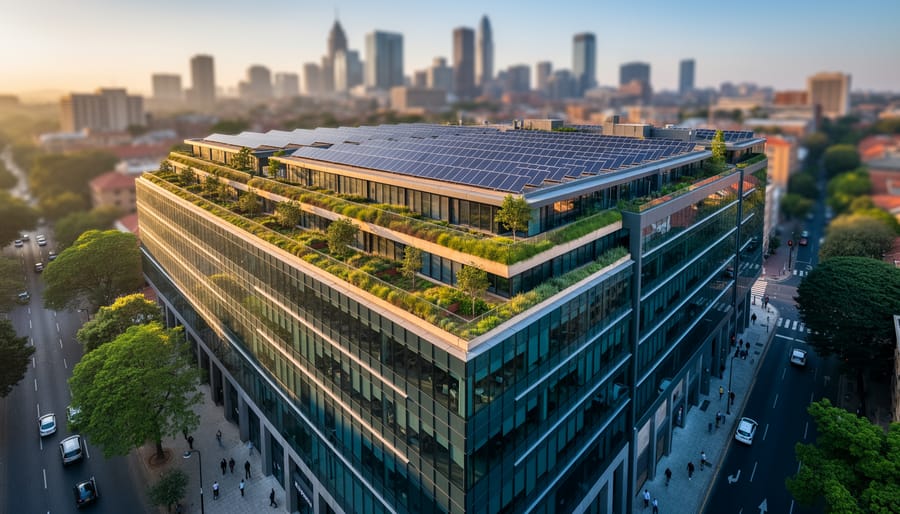
Choose offices to let in Rosebank that carry Green Star SA or EDGE certification to ensure measurable reductions in energy consumption, water usage, and carbon emissions. Verify building credentials through the Green Building Council South Africa database and request documented proof of sustainability performance metrics before signing any lease agreement.
Prioritize office spaces with intelligent building management systems that optimize heating, ventilation, and air conditioning based on occupancy patterns, reducing operational costs by up to 30% while improving indoor air quality. Look for features like low-VOC materials, natural daylighting design, and advanced air filtration systems that directly enhance employee health and productivity.
Evaluate the total cost of occupancy rather than base rental rates alone. Green-certified buildings in Rosebank typically deliver 8-13% lower operating expenses through reduced utility bills, decreased maintenance requirements, and improved equipment longevity. Request detailed utility consumption data from the past 12-24 months to validate these savings claims.
Assess the building’s water conservation infrastructure, including rainwater harvesting systems, greywater recycling, and low-flow fixtures. South Africa’s water security challenges make these features essential for business continuity, with certified green buildings using up to 40% less potable water than conventional structures.
The business case for sustainable office space extends beyond environmental responsibility. Companies occupying green-certified buildings report 11% higher employee satisfaction, reduced absenteeism, and enhanced corporate reputation among stakeholders. As Rosebank continues positioning itself as Johannesburg’s premium business district, choosing green-certified office space aligns your organization with forward-thinking sustainability standards while delivering quantifiable financial and operational benefits that support long-term success.
The Environmental Case for Green Office Buildings
Energy Efficiency and Carbon Reduction
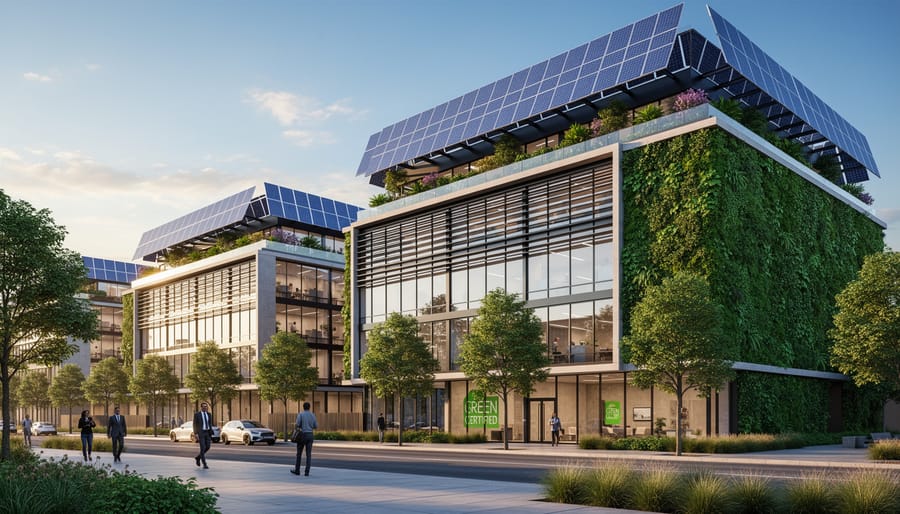
Green office buildings in Rosebank deliver measurable environmental benefits through cutting-edge design and technology. These structures typically consume 25-40% less energy than conventional office spaces, primarily through high-performance insulation, energy-efficient HVAC systems, and intelligent lighting controls that respond to occupancy and natural daylight levels. Solar panel installations further reduce reliance on grid electricity, while rainwater harvesting systems decrease water consumption by up to 50%.
The carbon reduction impact is equally impressive. Green-certified offices in Rosebank can lower carbon emissions by 35-50% compared to traditional buildings, aligning with global energy initiatives aimed at combating climate change. This reduction stems from renewable energy integration, improved building envelope performance, and operational efficiency measures that minimize waste.
For organizations committed to environmental stewardship, these buildings offer transparent performance tracking through real-time energy monitoring systems. Many Rosebank green offices have achieved 4-Star to 6-Star Green Star SA ratings, providing third-party verification of their sustainability credentials. By choosing these spaces, businesses don’t just reduce their environmental footprint—they demonstrate tangible commitment to climate action, contributing to broader urban sustainability goals while benefiting from lower operational costs and healthier work environments that enhance employee wellbeing and productivity.
Water Conservation and Waste Management
Rosebank’s green office buildings showcase innovative approaches to resource management that deliver measurable environmental and financial benefits. These facilities employ greywater recycling systems that treat and repurpose water from sinks and showers for toilet flushing and irrigation, reducing municipal water consumption by up to 40%. Rainwater harvesting infrastructure captures precipitation from rooftops, storing it in underground tanks for non-potable uses. Low-flow fixtures and sensor-activated taps further minimize waste, while real-time monitoring systems help facility managers identify leaks immediately.
Comprehensive waste management programs form another cornerstone of sustainability efforts. Buildings feature dedicated sorting stations for recyclables, organics, and general waste, with some facilities achieving diversion rates exceeding 75%. Composting initiatives transform organic waste into nutrient-rich soil amendments, while partnerships with specialized recyclers ensure proper handling of e-waste and hazardous materials. Smart waste monitoring technology tracks disposal patterns, enabling data-driven optimization.
These systems represent more than environmental responsibility—they create tangible cost savings through reduced utility bills and waste removal fees. For organizations committed to sustainability, choosing office space with robust water conservation and waste management infrastructure demonstrates genuine environmental stewardship while supporting operational efficiency. By prioritizing these features, your business joins a growing movement toward resource-conscious operations that benefit both the planet and your bottom line.
Green Certification Standards in Rosebank Office Spaces
Understanding green building certifications empowers you to make informed decisions that align with your sustainability values while ensuring genuine environmental impact. In Rosebank’s evolving commercial landscape, several internationally recognized certification systems help distinguish truly sustainable office spaces from conventional properties with superficial green features.
Green Star SA, administered by the Green Building Council of South Africa, represents the most widely adopted certification framework in the region. This rating system evaluates buildings across nine categories including energy efficiency, water conservation, indoor environment quality, and materials selection. Offices achieving a 4-Star rating demonstrate best practice, while 5-Star and 6-Star buildings represent South African and world leadership respectively. When exploring Rosebank office rentals, request documentation showing the building’s Green Star certification level and the specific strategies implemented to achieve that rating.
LEED (Leadership in Energy and Environmental Design), developed by the U.S. Green Building Council, offers another globally recognized benchmark. LEED-certified buildings in Rosebank undergo rigorous third-party verification, earning points across categories like sustainable sites, water efficiency, and innovation. Certification levels range from Certified to Platinum, with higher tiers indicating superior environmental performance.
EDGE (Excellence in Design for Greater Efficiencies) certification focuses specifically on emerging markets and provides a practical, measurable approach to resource efficiency. EDGE-certified buildings demonstrate at least 20% reductions in energy and water consumption compared to conventional structures.
To identify genuinely sustainable office rentals, request certification documentation directly from property managers and verify credentials through official databases maintained by certifying bodies. Look beyond marketing claims by examining energy performance data, water usage metrics, and tenant satisfaction reports regarding indoor air quality. Evidence-based verification ensures your rental decision supports authentic environmental progress rather than greenwashing. Your choice to occupy certified green buildings sends a powerful market signal, accelerating the transformation toward sustainable commercial development throughout Rosebank and beyond.
The Business Benefits Beyond Environmental Impact
Lower Operating Costs and Financial Incentives
Green buildings in Rosebank deliver measurable financial advantages that directly impact your bottom line. These properties typically reduce energy consumption by 25-40% compared to conventional offices through advanced HVAC systems, LED lighting, smart sensors, and superior insulation. Water-efficient fixtures can lower usage by up to 30%, translating into substantial monthly savings on utility bills. For businesses committed to sustainability, these reductions create predictable operating expenses and free up capital for core business activities.
Beyond operational savings, South African businesses occupying green-certified office spaces may access various financial incentives. Section 12B of the Income Tax Act allows accelerated depreciation deductions for energy-efficient equipment, while certain municipalities offer property tax rebates for green buildings. Additionally, organizations pursuing green office rentals position themselves favorably for green infrastructure funding and emerging sustainable finance opportunities that prioritize environmentally responsible operations.
The evidence is compelling: companies occupying green buildings report average operational cost reductions of 13-19% annually. These savings compound over lease terms, providing financial flexibility while advancing environmental stewardship. When evaluating Rosebank office rentals, request utility performance data from previous tenants and investigate available incentive programs. This proactive approach ensures you maximize both financial returns and environmental impact, creating value that extends well beyond traditional cost considerations.
Employee Wellbeing and Productivity Gains
Choosing a green office space in Rosebank delivers significant advantages for employee health and organizational performance. Research demonstrates that environmentally designed workplaces directly impact your team’s wellbeing and output in measurable ways.
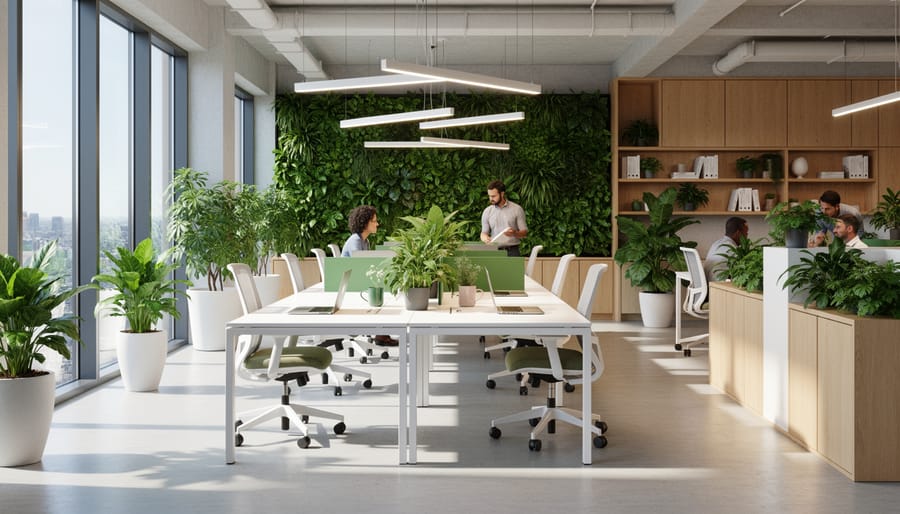
Indoor air quality stands as one of the most compelling benefits. Green buildings typically feature advanced ventilation systems that reduce carbon dioxide levels and filter out pollutants. A Harvard study found that employees in green-certified buildings scored 61% higher on cognitive function tests compared to those in conventional offices. This translates to better decision-making, improved problem-solving, and enhanced focus throughout the workday.
Natural lighting represents another crucial factor. Green buildings maximize daylight penetration through strategic window placement and open floor plans. Evidence shows that access to natural light improves sleep quality by supporting healthy circadian rhythms, leading to a 46% reduction in eyestrain and headaches. Workers near windows report 84% less eyestrain, blurred vision, and headaches.
Temperature control and acoustic design in green buildings create comfortable environments where employees can concentrate without distraction. These factors collectively contribute to reduced absenteeism, with green buildings showing up to 30% fewer sick days compared to traditional spaces.
The productivity gains are substantial. Studies indicate that green building features can boost productivity by 8-11%, representing significant financial returns that often exceed the premium paid for sustainable office space. For organizations committed to both environmental responsibility and employee satisfaction, green office rentals in Rosebank offer evidence-based solutions that align values with measurable business outcomes.
What to Look for When Choosing a Green Office Rental in Rosebank
Selecting a truly sustainable office space requires looking beyond marketing claims to verify genuine environmental credentials. Start by requesting documentation of green building certifications such as the Green Building Council of South Africa’s Green Star rating or LEED certification. These third-party verified standards provide reliable benchmarks for environmental performance. Ask landlords to share the building’s energy performance certificate and water usage data, as transparent reporting indicates authentic commitment to sustainability.
Examine the building’s energy systems closely. Quality green offices in Rosebank should feature energy-efficient LED lighting, advanced HVAC systems with smart controls, and preferably on-site renewable energy generation through solar panels. Investigate whether the building has energy monitoring systems that allow tenants to track their consumption in real-time. Request information about average utility costs compared to conventional buildings, as genuine efficiency translates to measurable savings.
Water conservation infrastructure deserves equal attention. Look for rainwater harvesting systems, greywater recycling for non-potable uses, and low-flow fixtures throughout the facility. These features significantly reduce environmental impact while lowering operational costs. Indoor environmental quality matters too. Verify that the building maximizes natural daylight, incorporates adequate ventilation systems, and uses low-VOC materials that protect occupant health and productivity.
Transportation accessibility demonstrates comprehensive sustainability thinking. Evaluate proximity to public transit, availability of bicycle storage and shower facilities, and electric vehicle charging stations. These amenities support your team’s low-carbon commuting options and align with broader environmental goals.
Be alert for greenwashing red flags. Vague environmental claims without supporting evidence, reluctance to share certification documents, or superficial green features like lobby plants without substantive infrastructure improvements signal questionable authenticity. Buildings genuinely committed to sustainability welcome detailed inquiries and proudly share their environmental performance data.
Ask prospective landlords about waste management programs, including recycling facilities and composting options. Question their maintenance practices and whether cleaning products meet environmental standards. Understanding the building’s sustainability roadmap reveals whether they view green credentials as static achievements or ongoing commitments requiring continuous improvement.
Armed with this knowledge, you can confidently identify office spaces that genuinely support your organization’s environmental values while delivering measurable benefits for both your business and the planet.
How Your Office Choice Influences Environmental Policy
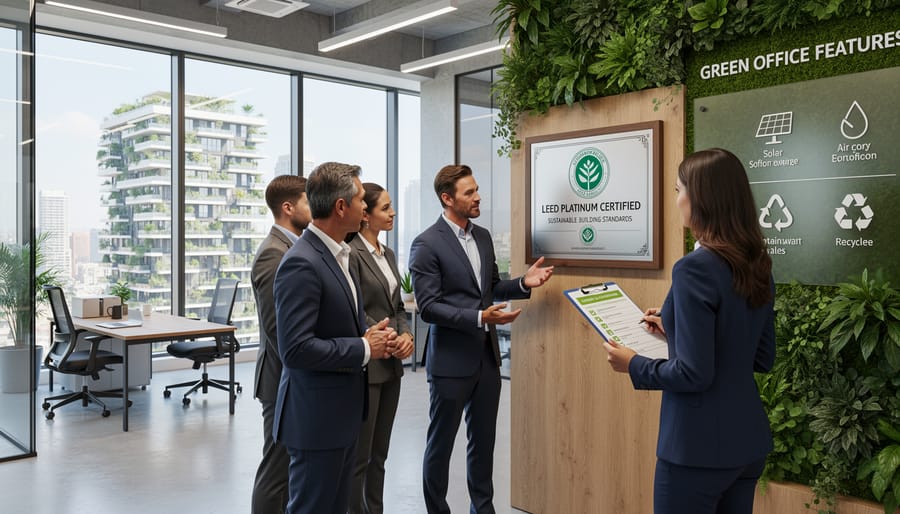
Your office rental decision carries more influence than you might realize. When businesses choose green-certified buildings in Rosebank, they send a powerful market signal that extends far beyond their individual lease agreement. This collective demand fundamentally reshapes how developers approach new construction projects and renovations.
Property developers respond to tenant preferences because their financial success depends on occupancy rates. As more organizations prioritize sustainability criteria in their office searches, developers increasingly incorporate green features from the planning stage rather than as afterthoughts. This shift has already transformed Rosebank’s commercial landscape, with newer developments competing on sustainability metrics alongside traditional factors like location and amenities.
Your choices also influence environmental policy at the municipal level. When green buildings demonstrate higher occupancy rates and command premium rents, local governments take notice. This evidence supports policy initiatives such as updated building codes, green building incentives, and sustainable development requirements for new commercial projects. Johannesburg’s evolving sustainability regulations reflect this dynamic relationship between market demand and policy creation.
The ripple effects extend throughout the commercial real estate industry. Property management companies adapt their operations to meet sustainability expectations, while conventional buildings invest in retrofits to remain competitive. Suppliers and service providers adjust their offerings to support green building requirements, creating an ecosystem that makes sustainable choices increasingly accessible and affordable.
By selecting green office space, you become part of a transformative movement. Your decision validates sustainable practices, encourages industry innovation, and demonstrates that environmental responsibility aligns with sound business strategy. This collective action accelerates the transition toward a built environment that supports both economic vitality and planetary health.
Choosing a green building for your Rosebank office rental represents more than a simple real estate decision—it’s an investment in your organization’s future and our collective environmental wellbeing. The evidence is clear: businesses operating in certified green buildings experience measurable advantages, from 25-30% reductions in energy costs to improved employee productivity and enhanced brand reputation among increasingly environmentally conscious stakeholders. These immediate financial and operational benefits create compelling business cases that strengthen your bottom line while reducing your ecological footprint.
Beyond quarterly results, your office space choice contributes to addressing the climate crisis. Green buildings in Rosebank collectively reduce carbon emissions, conserve precious water resources, and minimize waste generation—tangible environmental impacts that accumulate with each lease signed and each sustainable practice adopted. As decision-makers, you hold the power to drive market transformation. When businesses prioritize green certifications and sustainability features, property developers respond by investing in more environmentally responsible buildings, creating a positive cycle that elevates standards across the commercial real estate sector.
The path forward is straightforward: make sustainability a non-negotiable criterion in your Rosebank office search. Request green building certifications, energy performance data, and comprehensive sustainability reports from landlords. Compare options using evidence-based metrics rather than marketing claims alone. Engage with property managers who demonstrate genuine environmental commitment through measurable actions. Your choice today shapes the commercial landscape of tomorrow—choose office space that aligns with both your business objectives and environmental values, proving that profitability and planetary stewardship can coexist successfully.