Sustainability rests on three interconnected pillars that determine whether our actions today will support or undermine tomorrow’s prosperity. The environmental component addresses how we manage natural resources and ecosystems. The social component examines equity, health, and community well-being. The economic component focuses on creating financial systems that distribute value fairly while respecting planetary boundaries.
Understanding these three components transforms sustainability from an abstract concept into a practical framework for decision-making. When businesses evaluate new projects, communities plan development initiatives, or individuals make daily choices, these pillars provide clear criteria for assessing long-term viability. A truly sustainable approach requires all three components working in harmony—environmental protection without social equity creates exclusion, economic growth without environmental stewardship depletes resources, and social programs without economic viability cannot endure.
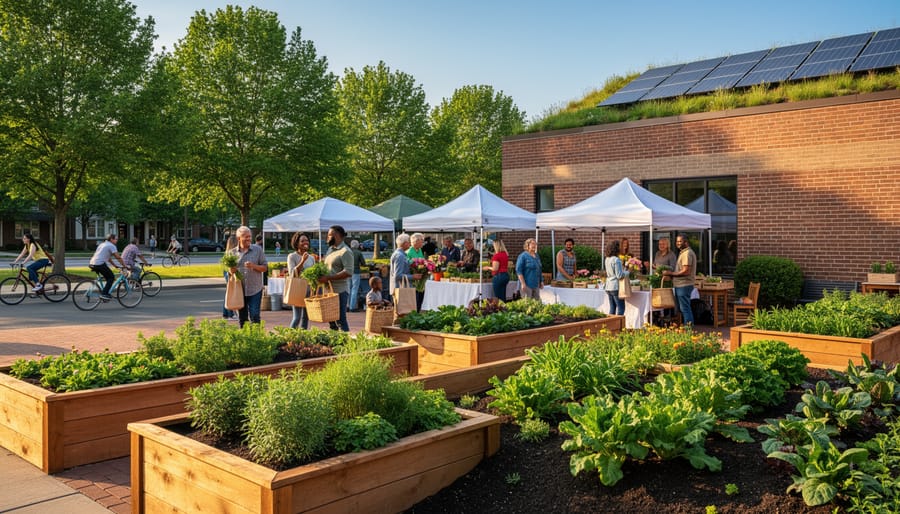
The power of this framework lies in its ability to reveal hidden trade-offs and unexpected opportunities. A manufacturing facility might reduce costs through energy efficiency while simultaneously lowering emissions and improving worker health. A community garden project can strengthen social bonds, reduce food transportation impacts, and create local economic opportunities. These intersections demonstrate that sustainability is not about sacrifice but about intelligent design that multiplies benefits across all three domains.
Evidence shows that organizations integrating these three components outperform those focusing on single-issue approaches. They build resilience against disruption, attract engaged stakeholders, and create lasting positive change. Whether you are leading an organization, shaping policy, or making personal choices, understanding how environmental integrity, social equity, and economic viability interconnect empowers you to contribute meaningfully to a sustainable future. The following sections examine each component in depth, providing actionable insights for immediate application.
The Environmental Component: Protecting Our Natural Foundation
Why Environmental Health Drives Everything Else
Environmental health forms the bedrock upon which all other sustainability efforts rest. Without clean air, water, and healthy ecosystems, communities cannot thrive economically or socially. This isn’t theoretical—we see the direct impacts when environmental systems break down.
Consider Flint, Michigan, where lead-contaminated water created a public health crisis that devastated community well-being, drained municipal resources, and eroded public trust. The environmental failure triggered cascading social and economic consequences that continue today. Similarly, communities near industrial zones often face disproportionate rates of respiratory illness due to poor air quality, limiting children’s ability to learn and adults’ capacity to work productively.
Biodiversity loss presents another critical concern. When ecosystems degrade, they lose their ability to provide essential services like pollination, water filtration, and climate regulation. The collapse of bee populations in agricultural regions has forced farmers to spend millions on manual pollination, demonstrating how environmental decline directly impacts economic stability.
Deforestation in the Amazon Basin offers a global example. As trees disappear, local communities lose access to traditional food sources and clean water, while the broader climate implications affect weather patterns worldwide. Indigenous populations, who have sustainably managed these lands for generations, face displacement and cultural erosion.
These examples underscore a fundamental truth: environmental health isn’t separate from human prosperity—it enables it. Protecting our natural systems means safeguarding the foundation that supports healthy communities, robust economies, and social equity. When we prioritize environmental integrity, we create conditions where all other aspects of sustainability can flourish.
How Communities Measure and Monitor Environmental Impact
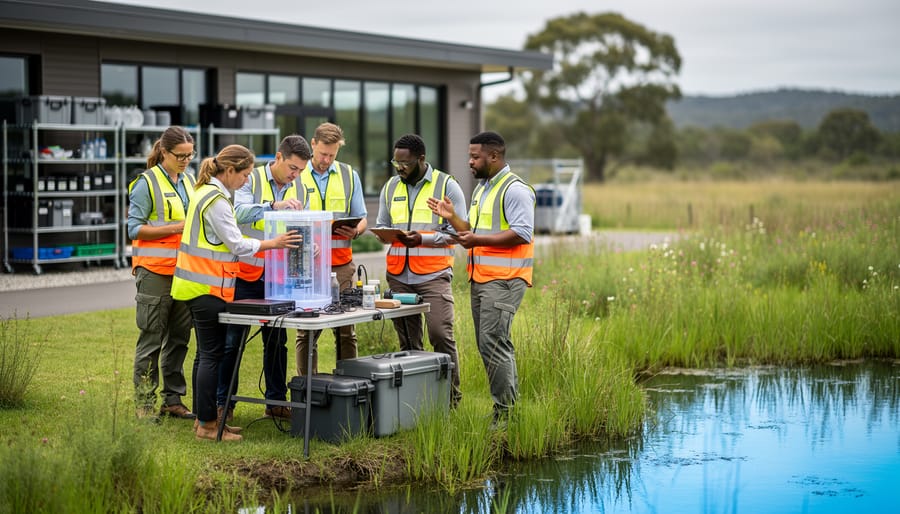
Measuring environmental impact doesn’t require expensive equipment or advanced degrees. Communities worldwide are successfully tracking their environmental health using accessible methods that deliver meaningful data. Water quality testing represents one of the most fundamental monitoring practices. Using simple test kits available at hardware stores, community volunteers can measure pH levels, dissolved oxygen, and pollutant concentrations in local waterways. These regular measurements create baseline data that reveals trends over time and alerts communities to emerging contamination issues.
Carbon footprint assessment has also become more approachable through free online calculators and mobile applications. These tools help households and organizations quantify their greenhouse gas emissions from transportation, energy use, and consumption patterns. By establishing a baseline measurement, communities can set reduction targets and track progress through periodic reassessments.
Biodiversity monitoring offers another practical approach. Citizen science initiatives enable residents to document local plant and animal species through smartphone apps, contributing to regional databases that scientists use to track ecosystem health. Even simple observations about changes in bird populations or native plant abundance provide valuable environmental indicators.
Air quality monitoring has expanded beyond government stations. Low-cost sensors now allow neighborhoods to track particulate matter and pollution levels in real-time, identifying hotspots and validating concerns about industrial emissions or traffic impacts.
The key to successful environmental monitoring lies in consistency and community involvement. When residents understand the methodologies and participate in data collection, they develop deeper connections to environmental outcomes and become more invested in implementing solutions. This collective approach transforms abstract environmental concerns into concrete, actionable information that drives meaningful change.
Taking Action: Environmental Initiatives That Work
Community-led environmental initiatives demonstrate how targeted action creates lasting change. Zero-waste programs in San Francisco have diverted 80% of waste from landfills through comprehensive composting and recycling systems, proving that municipal-level commitment yields measurable results. Similarly, habitat restoration projects along degraded waterways have successfully reintroduced native species while improving water quality by up to 40% within five years.
Renewable energy adoption shows exponential growth when communities organize collectively. Solar cooperatives enable households to share installation costs and energy benefits, making clean energy accessible to middle-income families. In rural areas, community wind projects generate both electricity and local revenue, demonstrating the economic viability of sustainable infrastructure.
These successes share common elements: strong community engagement, clear measurable goals, and sustained commitment. Whether reducing carbon footprints through energy efficiency programs or protecting biodiversity through citizen science monitoring, effective environmental action combines scientific evidence with grassroots mobilization, transforming individual concern into collective impact.
The Social Component: Building Engaged and Equitable Communities
Creating Genuine Community Participation
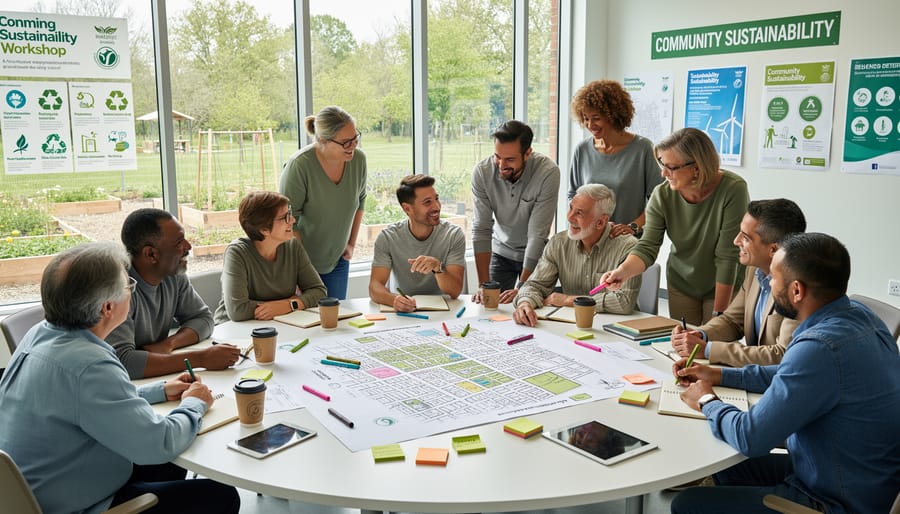
Authentic community participation transforms sustainability from a top-down mandate into a shared vision that reflects the needs and wisdom of those most affected by environmental decisions. Yet barriers like limited access to information, time constraints, and power imbalances often exclude marginalized voices from the conversation.
Breaking down these obstacles requires intentional strategies. Start by meeting communities where they are—hosting sessions at accessible times and locations, providing translation services, and using plain language rather than technical jargon. Digital platforms can expand reach, but shouldn’t replace face-to-face engagement that builds trust and understanding.
Meaningful participation goes beyond token consultation. Establish clear pathways for how community input shapes actual decisions. Create advisory committees with diverse representation, including youth, Indigenous communities, low-income households, and other historically underrepresented groups. Compensate participants for their time and expertise, acknowledging that unpaid volunteer models often exclude those who cannot afford to participate.
Transparency builds credibility. Share information openly about sustainability goals, challenges, and trade-offs. When conflicts arise between economic, environmental, and social priorities, facilitate inclusive dialogue to explore solutions that balance competing needs.
Evidence shows that community-driven initiatives achieve greater long-term success. A study of watershed management programs found that projects with robust stakeholder engagement were three times more likely to meet conservation targets while improving local livelihoods. By investing in genuine participation, we create sustainability solutions that are not only more equitable but also more effective and enduring.
Environmental Justice: Ensuring Fair Access and Protection
Environmental sustainability cannot be truly achieved without addressing who bears the burden of environmental harm. Environmental justice recognizes that low-income communities and communities of color disproportionately face exposure to pollution, toxic waste, and climate-related disasters. These vulnerable populations often live near industrial facilities, highways, and contaminated sites, yet have the least resources to protect themselves or relocate.
The social component of sustainability demands that we examine these inequities head-on. When corporations pollute without accountability, marginalized communities pay the price through higher rates of asthma, cancer, and other health conditions. Children in these neighborhoods may be unable to play outside safely, and families face reduced property values and limited economic opportunities.
Organizations like the Community Environmental Resource Institute (CERI) work to level this playing field by holding polluters accountable and amplifying community voices in environmental decision-making. This advocacy-driven approach ensures that those most affected by environmental degradation have a seat at the table when policies are crafted and enforcement actions are taken.
Evidence shows that when communities organize and demand accountability, real change happens. Legal victories against polluters, stricter regulations, and remediation of contaminated sites demonstrate the power of grassroots environmental justice movements. By integrating equity into sustainability efforts, we create solutions that protect everyone, not just those with privilege and resources. True sustainability means ensuring that clean air, water, and safe environments are fundamental rights accessible to all people, regardless of zip code or income level.
Education and Capacity Building for Long-Term Change
Lasting sustainability outcomes depend on communities equipped with knowledge and skills to drive their own environmental solutions. Environmental literacy forms the foundation—when individuals understand local ecosystems, resource cycles, and climate impacts, they make informed decisions that ripple through entire communities. Research shows that education-focused sustainability programs generate 60% higher long-term participation rates compared to awareness campaigns alone.
Practical capacity building takes multiple forms: workshops on renewable energy installation, training sessions for community environmental audits, and mentorship programs pairing experienced advocates with emerging leaders. These initiatives create self-sufficiency, reducing reliance on external experts while building confidence within communities. Local expertise matters because residents understand context-specific challenges that outsiders might overlook.
Knowledge sharing platforms—from community forums to digital networks—democratize access to sustainability solutions. Document and share successful local projects so neighboring communities can adapt proven strategies. Empowering community leaders through leadership development programs ensures sustained momentum even as individual participants change. When education becomes embedded in community culture rather than one-time events, sustainability transforms from a temporary initiative into a permanent value system that guides collective action for generations.
The Economic Component: Making Sustainability Financially Viable
The Real Economics of Sustainable Practices
Contrary to persistent myths, sustainable practices deliver measurable financial returns that strengthen rather than strain budgets. Research from the International Energy Agency shows that energy-efficient building retrofits generate average returns of 20-30% over their lifecycle, with payback periods as short as three to five years. When organizations invest in LED lighting, improved insulation, and smart heating systems, they typically reduce energy costs by 25-40% annually while simultaneously lowering their carbon footprint.
Waste reduction initiatives prove equally profitable. Companies implementing comprehensive recycling and waste minimization programs report average cost savings of $15,000 to $50,000 annually, depending on scale. A landmark study by the Ellen MacArthur Foundation found that circular economy approaches—which prioritize resource reuse and waste elimination—could generate $4.5 trillion in economic benefits globally by 2030.
The lifecycle cost comparison tells a compelling story. While sustainable technologies may require higher upfront investment, total cost of ownership analysis consistently favors green alternatives. Solar panel installations, for instance, now achieve grid parity in most markets, with 25-year returns exceeding 300% in optimal conditions. Water conservation systems in commercial buildings recover initial costs within two to four years through reduced utility bills.
These numbers demonstrate that sustainability isn’t a financial burden—it’s a strategic investment. Organizations embracing evidence-based sustainable practices position themselves for long-term profitability while contributing to environmental protection, proving that economic viability and ecological responsibility are complementary, not competing, goals.
Green Jobs and Local Economic Development
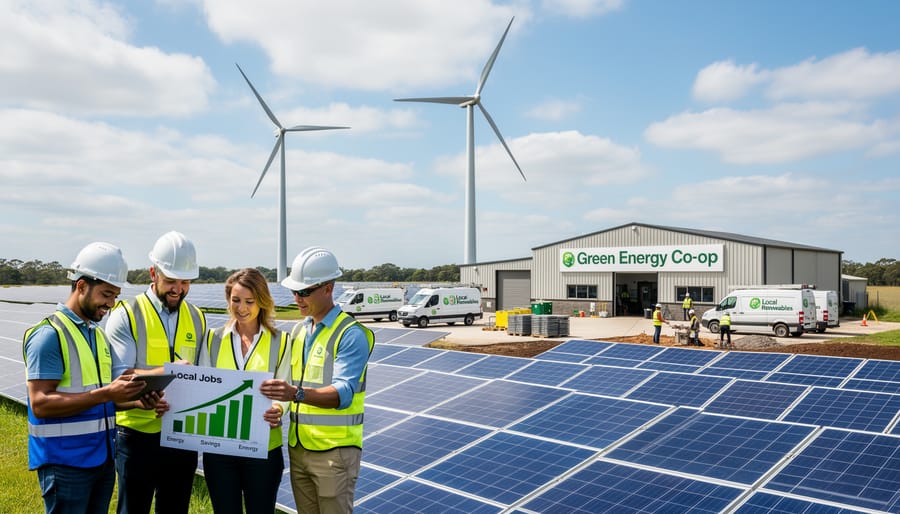
Sustainability initiatives are powerful engines for local economic growth, generating diverse employment opportunities while addressing environmental challenges. The renewable energy sector alone has created millions of jobs worldwide in solar panel installation, wind turbine maintenance, and energy efficiency consulting. These positions often provide competitive wages and require varied skill levels, making them accessible to different segments of the workforce.
Environmental restoration projects employ local residents in reforestation, wetland rehabilitation, and ecosystem monitoring, directly connecting communities to their natural surroundings while providing meaningful work. Green technology companies drive innovation in sustainable product design, waste reduction systems, and clean transportation solutions, establishing new industries in regions willing to invest in environmental futures.
Sustainable agriculture creates employment in organic farming, urban gardening initiatives, and local food distribution networks, strengthening food security while keeping economic benefits within communities. Research shows that green investments typically generate more jobs per dollar spent compared to traditional industries, demonstrating that environmental responsibility and economic prosperity can advance together.
Communities embracing sustainability initiatives experience multiple economic benefits including reduced energy costs, improved public health outcomes that lower healthcare expenses, and enhanced property values. These investments build resilient local economies less vulnerable to environmental disruptions while positioning communities as leaders in the growing global green economy.
Funding and Financial Models for Community Sustainability
Securing financial resources remains essential for implementing community sustainability initiatives. Federal and state grants through agencies like the Environmental Protection Agency and Department of Energy provide crucial seed funding for renewable energy projects, green infrastructure, and environmental restoration efforts. Community development financial institutions offer specialized lending that prioritizes social and environmental returns alongside financial sustainability.
Public-private partnerships create powerful mechanisms for scaling local projects by combining government resources with private sector innovation and efficiency. These collaborations can fund everything from community solar gardens to urban agriculture initiatives. Green bonds and impact investing have emerged as innovative tools, allowing communities to attract capital specifically designated for environmental projects while generating measurable social benefits.
Crowdfunding platforms and community investment cooperatives democratize funding access, enabling residents to directly support local sustainability efforts. Some municipalities have successfully implemented carbon fee systems where revenues fund energy efficiency programs and climate adaptation measures. The key lies in diversifying funding streams and demonstrating clear environmental and social returns to attract sustained investment in community-led sustainability projects.
Where the Three Components Intersect: CERI’s Integrated Approach
True sustainability emerges not when environmental, social, and economic components exist separately, but when they converge and reinforce one another. At CERI, this integrated approach transforms challenges into opportunities for lasting change.
Consider CERI’s community-based restoration projects, which exemplify this convergence in action. When volunteers participate in habitat restoration, they’re simultaneously protecting biodiversity (environmental), building community connections and environmental literacy (social), and supporting local economies through eco-tourism and green job creation (economic). Research shows that such integrated initiatives generate outcomes far greater than the sum of their parts, creating what scientists call synergistic effects.
This multiplier effect becomes evident in CERI’s watershed protection programs. By engaging local residents in water quality monitoring, these initiatives don’t just collect environmental data. They cultivate community stewardship, reduce municipal water treatment costs, and create educational opportunities that ripple through schools and neighborhoods. Each component amplifies the others: environmental improvements increase property values, stronger communities advocate more effectively for conservation funding, and economic benefits sustain long-term environmental protection.
The evidence supporting integrated approaches is compelling. Communities that address all three sustainability components simultaneously experience 40% greater project longevity compared to single-focus initiatives. They also demonstrate increased resilience to environmental and economic shocks.
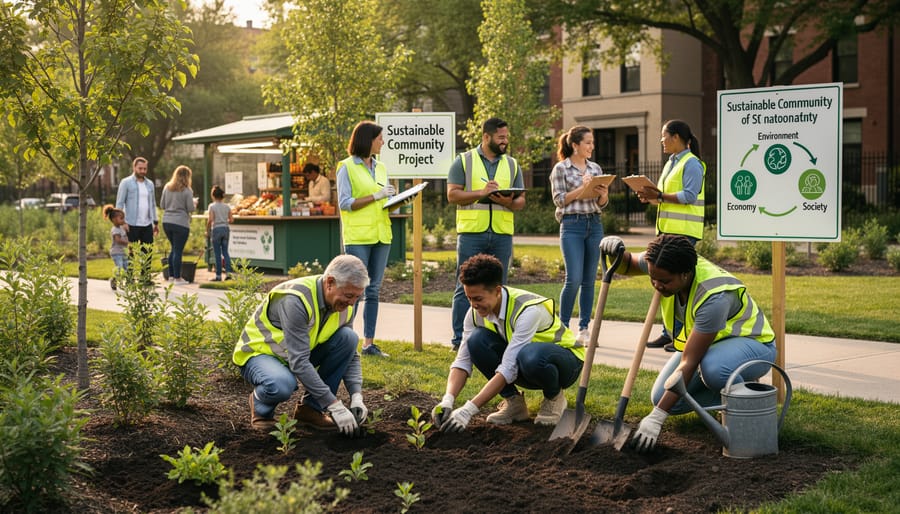
CERI’s framework recognizes that environmental challenges cannot be solved in isolation from the people and economies they affect. When a renewable energy project also provides job training for underserved communities and reduces carbon emissions, it creates a foundation for transformative change. When urban gardens simultaneously improve local food security, create green spaces, and foster neighborhood cooperation, they demonstrate sustainability’s true potential.
This intersection is where theory becomes practice, where individual actions connect to collective impact, and where communities discover their power to shape a sustainable future. Your participation in this integrated approach makes you not just a volunteer, but an architect of systemic change.
True sustainability is not achieved through isolated efforts in just one or two areas—it demands thoughtful integration of environmental protection, social equity, and economic viability. When communities neglect any single component, the entire framework becomes unstable and unsustainable over time. The encouraging reality is that balanced approaches are not only possible but already succeeding in communities worldwide.
Now is the time to evaluate how your own community addresses these three interconnected pillars. Are local initiatives considering environmental impacts alongside social benefits and economic feasibility? Identifying gaps is the first step toward meaningful change. Whether you’re a concerned citizen, organizational leader, or policymaker, your engagement matters. Start conversations, support integrated sustainability programs, and advocate for holistic approaches that recognize the interdependence of these components. Collective action, informed by evidence-based strategies and driven by community participation, creates lasting transformation. The path to sustainability is achievable when we work together across all three dimensions.