
The planet is burning, flooding, and unraveling at a pace that defies what previous generations thought possible. Climate change has escalated from distant threat to immediate crisis, with 2023 marking the hottest year on record and extreme weather events displacing millions worldwide. Yet amid this urgency lies an equally powerful truth: strategic environmental advocacy can transform policy landscapes and create tangible solutions at unprecedented speed.
Understanding how advocacy organizations convert scientific evidence into legislative action reveals pathways that every concerned citizen can navigate. When environmental groups combine rigorous research with community mobilization, they’ve demonstrated capacity to shift billion-dollar industries, reshape government priorities, and accelerate transitions toward renewable energy systems. These successes aren’t accidental—they emerge from systematic approaches grounded in the three pillars of sustainability: environmental integrity, economic viability, and social equity.
Climate advocacy works because it translates complex atmospheric science into policy language that legislators understand and communities support. Organizations that master this translation have secured emissions reduction commitments, protected critical ecosystems, and redirected trillions in infrastructure investments toward sustainable alternatives. Their methods are replicable, their strategies teachable, and their impact measurable through concrete metrics like carbon reduction rates and conservation acreage.
This article examines proven advocacy mechanisms that have generated meaningful climate policy achievements, from international agreements to local ordinances. By exploring specific case studies where evidence-based interventions overcame political resistance and industry opposition, we illuminate both the mechanics of successful environmental advocacy and the opportunities for broader participation. The climate crisis demands urgent action, but strategic engagement demonstrates that individual involvement, when channeled through effective advocacy frameworks, can contribute to systemic transformation.
The Climate Crisis: Understanding the Global Challenge
Climate change represents the defining environmental challenge of our generation, touching every corner of our planet and affecting billions of lives. Since the late 19th century, Earth’s global temperature has risen by approximately 1.1°C (2°F), driven primarily by greenhouse gas emissions from human activities. While this may seem modest, even small temperature shifts trigger cascading effects throughout Earth’s interconnected systems.
The consequences manifest in increasingly visible and devastating ways. Extreme weather events have intensified in frequency and severity, from prolonged droughts and catastrophic wildfires to record-breaking hurricanes and flooding. The United States alone has experienced a dramatic uptick in billion-dollar weather disasters, placing enormous strain on communities, infrastructure, and emergency response systems. Rising sea levels threaten coastal populations, while shifting precipitation patterns disrupt agriculture and water supplies that millions depend upon.
Biodiversity faces unprecedented pressure as ecosystems struggle to adapt to rapid environmental changes. Species extinction rates have accelerated, with coral reefs bleaching, polar ice habitats shrinking, and forests experiencing die-offs from heat stress and pest invasions. These losses ripple through food webs, ultimately threatening the natural systems that provide clean air, fresh water, and fertile soil—services essential for human survival and prosperity.
The socioeconomic dimensions of climate change compound its environmental impacts. Vulnerable communities, particularly in developing nations and low-income areas, bear disproportionate burdens despite contributing least to the problem. Climate disruptions threaten food security, displace populations, exacerbate health challenges, and strain economic resources that could otherwise fund education, healthcare, and development.
Yet this complex challenge also presents an opportunity for transformative action. Understanding climate change as an interconnected crisis—simultaneously environmental, social, and economic—reveals that solutions must be equally multifaceted. Effective responses require coordinated policy interventions at local, national, and international levels, supported by scientific evidence and driven by collective commitment. The urgency is undeniable, but so too is our capacity to create meaningful change through informed advocacy, strategic policy development, and sustained collaboration across sectors and borders.

CERI’s Research Foundation: Building the Evidence Base
Technological Innovation in Climate Monitoring
CERI leverages cutting-edge technology to transform how we understand and respond to environmental challenges. By deploying satellite monitoring systems, artificial intelligence algorithms, and sensor networks across vulnerable ecosystems, the organization provides unprecedented insight into our planet’s health. These tools track greenhouse gas emissions in real time, measuring concentrations of carbon dioxide and methane with precision that was unimaginable just a decade ago.
The organization’s advanced monitoring platforms combine data from multiple sources, including ground-based sensors, atmospheric measurements, and remote sensing technologies. This integrated approach creates comprehensive environmental profiles that reveal patterns invisible to traditional observation methods. For instance, machine learning algorithms analyze deforestation rates, ocean temperature changes, and ice sheet movements, generating early warning signals before damage becomes irreversible.
Perhaps most importantly, CERI makes this complex data accessible to those who need it most. The organization has developed user-friendly dashboards that translate technical measurements into actionable intelligence for policymakers, community leaders, and city planners. Government officials can now access real-time air quality data, track progress toward emission reduction targets, and identify pollution hotspots requiring immediate intervention.
This technological infrastructure doesn’t just collect information; it empowers evidence-based decision-making. When policymakers have reliable, current data at their fingertips, they can craft regulations grounded in scientific reality rather than estimates. CERI’s commitment to open data sharing ensures that researchers, journalists, and advocacy groups worldwide can hold governments and corporations accountable for their environmental commitments.

Collaborative Research Networks
CERI’s collaborative research networks exemplify how collective action drives meaningful environmental progress. By partnering with leading international institutions, universities, and research centers across six continents, CERI builds comprehensive datasets that capture the true scope of environmental challenges while validating findings across diverse geographical contexts.
These partnerships create a powerful multiplier effect. When researchers in coastal Bangladesh document rising sea levels alongside colleagues in the Pacific Islands and Arctic regions, patterns emerge that single-location studies might miss. This cross-continental collaboration enables CERI to present policymakers with evidence that transcends regional boundaries, demonstrating how local environmental changes connect to global patterns.
The network operates through shared data protocols and regular knowledge exchanges, ensuring that communities from different regions can learn from each other’s experiences. For instance, drought adaptation strategies developed in sub-Saharan Africa have informed water management policies in Mediterranean countries facing similar climate pressures. Universities contribute cutting-edge research methodologies, while local research centers provide crucial ground-level insights that satellite data alone cannot capture.
This collaborative approach strengthens advocacy efforts by removing doubt from policy discussions. When multiple independent institutions validate the same findings, decision-makers face compelling evidence they cannot easily dismiss. The network also accelerates solution development, as successful interventions tested in one region can be adapted and implemented elsewhere.
By joining forces with CERI’s collaborative networks, individuals and organizations can contribute to this evidence-based movement, transforming scientific understanding into actionable environmental policy worldwide.
Key Policy Achievements: Where CERI Made a Difference
International Climate Agreements
The Climate and Environmental Research Initiative (CERI) has established itself as a formidable voice in shaping international climate agreements, translating scientific evidence into actionable policy provisions that hold nations accountable. Through strategic participation in United Nations Framework Convention on Climate Change (UNFCCC) negotiations, CERI has influenced critical components of global climate frameworks, ensuring they reflect both scientific necessity and practical implementation pathways.
CERI’s contributions to the Paris Agreement proved particularly significant. The organization’s research team provided technical expertise that informed the establishment of nationally determined contributions (NDCs), the mechanism through which countries commit to emission reduction targets. By advocating for transparency requirements and five-year review cycles, CERI helped create accountability structures that encourage nations to strengthen their climate commitments over time rather than settle for static pledges.
Beyond target-setting, CERI has championed provisions for climate finance and technology transfer, recognizing that developing nations require support to achieve ambitious emission reductions. The organization’s policy briefs have influenced discussions around the Green Climate Fund, advocating for equitable resource distribution that enables global participation in climate action.
CERI’s ongoing work includes monitoring national compliance with international commitments and publishing annual assessments that highlight both progress and gaps. This evidence-based accountability mechanism empowers citizens and civil society organizations to advocate for stronger domestic policies aligned with global goals. Through these efforts, CERI demonstrates that international agreements become powerful tools for change when supported by rigorous science, transparent reporting, and sustained civic engagement.
Corporate Accountability Standards
Through rigorous research and sustained advocacy, CERI has successfully pressured corporations and governments to adopt stricter environmental regulations. By publishing comprehensive reports exposing industrial pollution patterns and their health impacts, the organization built an evidence-based case that policymakers couldn’t ignore. These findings directly influenced the implementation of mandatory emissions reporting systems across multiple industries, transforming opacity into accountability.
CERI’s pressure campaigns combined scientific data with strategic coalition-building, uniting environmental groups, community organizations, and concerned citizens. This collaborative approach led to landmark regulatory reforms, including strengthened air quality standards and enhanced penalties for violations. Industries that once operated with minimal oversight now face regular audits and public disclosure requirements, creating a powerful deterrent against environmental negligence.
The impact extends beyond regulation itself. By demanding transparency, CERI empowered communities to access real-time pollution data from nearby facilities, enabling informed advocacy at local levels. This democratization of environmental information represents a fundamental shift in corporate accountability, proving that sustained pressure backed by solid research can reshape industrial practices and protect public health while addressing the broader climate crisis.
Sustainable Development Integration
CERI’s evidence-based approach has successfully shaped policies that integrate environmental protection with economic growth, particularly in regions most vulnerable to climate impacts. In Southeast Asia, CERI’s research informed coastal management strategies that protect mangrove ecosystems while supporting local fishing communities’ livelihoods. These policies demonstrate how sustainable development creates win-win solutions rather than forcing false choices between nature and prosperity.
In sub-Saharan Africa, CERI collaborated with governments to develop renewable energy frameworks that expand electricity access while reducing carbon emissions. These initiatives prioritize community ownership and job creation, ensuring that climate solutions address poverty and inequality simultaneously. CERI’s technical assistance helped design subsidy programs that make clean energy affordable for low-income households, proving that environmental action can advance social justice.
Similarly, CERI’s work in Latin America influenced agricultural policies that restore degraded lands while improving food security. By promoting regenerative farming techniques and providing farmers with financial incentives, these policies show how environmental restoration can strengthen rural economies and build climate resilience in communities facing severe environmental challenges.
The Advocacy Approach: How CERI Holds Power Accountable
CERI’s approach to environmental advocacy rests on a fundamental belief: meaningful policy change requires both rigorous evidence and strategic action. Rather than operating in isolation, the organization has developed a comprehensive methodology that transforms scientific findings into legislative victories and corporate accountability measures.
At the heart of CERI’s strategy lies a carefully orchestrated process that bridges the gap between research and real-world impact:
- Conduct independent research to identify policy gaps and environmental violations, ensuring all findings are peer-reviewed and documented with verifiable data.
- Translate complex scientific evidence into accessible policy briefs that resonate with both lawmakers and the general public.
- Build strategic coalitions with grassroots organizations, indigenous communities, and other stakeholders who are directly affected by environmental decisions.
- Launch coordinated public campaigns that combine traditional media outreach with digital mobilization to generate widespread awareness and pressure.
- Engage directly with government officials through testimony, private consultations, and formal submissions to regulatory bodies.
- Deploy legal mechanisms when necessary, filing lawsuits or supporting litigation that challenges environmentally harmful policies or corporate practices.
- Monitor implementation of policy changes and hold institutions accountable for commitments, applying sustainability principles throughout the oversight process.
This systematic approach has proven particularly effective because it addresses multiple pressure points simultaneously. When CERI identifies an urgent environmental threat, the organization doesn’t rely solely on behind-the-scenes negotiations or public protests. Instead, it deploys a multi-pronged strategy that makes inaction politically and economically costly for decision-makers.
Coalition-building stands as one of CERI’s most powerful tools. By uniting environmental groups with labor unions, health advocates, and affected communities, the organization creates broad-based movements that transcend traditional environmental constituencies. This approach recognizes that climate action and environmental protection intersect with economic justice, public health, and human rights concerns.
Legal action serves as both a tactical tool and a deterrent. CERI strategically pursues litigation when administrative channels fail, establishing legal precedents that strengthen environmental protections for years to come. These cases send clear signals that environmental violations carry tangible consequences, encouraging preemptive compliance from both government agencies and corporations.
Challenges in Global Environmental Policy Reform
Despite growing scientific consensus and public awareness, global environmental policy reform faces substantial obstacles that organizations like CERI must navigate strategically. Understanding these challenges is essential for developing effective advocacy approaches and maintaining realistic expectations about the pace of change.
Political resistance remains one of the most significant barriers to meaningful environmental policy. Short-term electoral cycles often discourage policymakers from supporting regulations that may impose immediate economic costs, even when long-term benefits are scientifically proven. Governments may face pressure from influential lobbying groups representing fossil fuel industries, agricultural corporations, and manufacturing sectors that view environmental regulations as threats to profitability. This creates a complex political landscape where evidence-based policy recommendations compete with powerful economic interests.
The implementation gap presents another critical challenge. Even when progressive environmental policies are adopted, translating them into effective action proves difficult. Many countries lack the institutional capacity, funding, or technical expertise to enforce new regulations. Monitoring compliance across vast territories and diverse industries requires substantial resources that developing nations often cannot allocate. This gap between policy adoption and real-world impact can undermine public confidence in environmental governance.
International coordination adds layers of complexity to environmental policy reform. Climate change and biodiversity loss transcend national borders, yet countries operate with different economic priorities, development stages, and political systems. Negotiating agreements that balance the needs of industrialized nations with the development aspirations of emerging economies requires careful diplomacy and compromise. Additionally, the absence of enforceable international environmental law means that compliance often depends on voluntary commitments rather than binding obligations.
Economic considerations also complicate reform efforts. Transitioning to sustainable practices requires significant upfront investments that may strain national budgets and business operations. Industries reliant on environmentally harmful practices employ millions of workers, making just transition planning essential but challenging. Despite these obstacles, organizations like CERI continue advancing policy solutions through evidence-based advocacy, strategic partnerships, and persistent engagement with decision-makers at all levels.
Community Engagement: Empowering Local Action
CERI recognizes that lasting environmental change requires more than top-down policy mandates—it demands active participation from the communities most affected by environmental degradation. By bridging the gap between international agreements and local realities, CERI empowers citizens to become environmental stewards in their own neighborhoods while ensuring that policies reflect diverse cultural contexts and practical implementation needs.
Community engagement begins with education and capacity building. CERI conducts workshops and training programs that equip local leaders with the knowledge and tools to address environmental challenges specific to their regions. These initiatives transform complex climate science into actionable strategies that communities can implement immediately, from establishing local monitoring systems to developing sustainable resource management practices. This grassroots approach creates a powerful feedback loop where community insights inform policy recommendations, making regulations more effective and culturally sensitive.
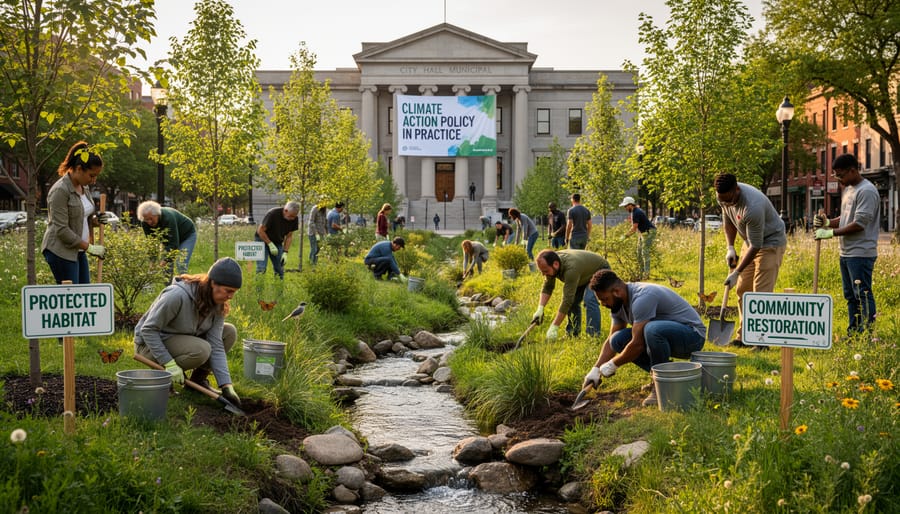
CERI also facilitates participatory decision-making processes that give communities a voice in environmental governance. Through town halls, citizen advisory panels, and digital platforms, local residents contribute to policy design rather than simply receiving directives. This inclusive model has proven essential for successful community-level sustainability initiatives, as people are more likely to support and maintain programs they helped create.
Furthermore, CERI supports the formation of community coalitions that amplify local voices on national and international stages. These networks enable communities to share successful strategies, mobilize collective action, and demonstrate to policymakers that environmental protection enjoys widespread public support. By documenting community-led successes, CERI provides evidence that environmental policies are not only necessary but achievable when communities are empowered as partners rather than passive recipients of change.
What You Can Do: Joining the Movement for Policy Change
The path to meaningful environmental policy change begins with individual action, and every voice contributes to building the collective pressure needed for systemic transformation. Whether you’re a concerned citizen, business leader, or academic, you have multiple avenues to champion evidence-based environmental policies that address our planet’s most pressing challenges.
Start by engaging directly with your elected representatives at local, state, and federal levels. Contact them regularly about environmental priorities, attend town halls, and share research-backed solutions. Policymakers respond to constituent voices, especially when those voices come armed with credible data and real-world examples of successful interventions. Supporting local sustainability initiatives demonstrates community-level commitment that can influence broader policy conversations.
Consider taking these concrete actions to amplify your impact:
- Join or support organizations conducting environmental policy research and advocacy
- Participate in public comment periods for environmental regulations and policies
- Attend city council and planning commission meetings to advocate for sustainable development
- Share credible environmental information through your social networks and community groups
- Vote for candidates with strong, evidence-based environmental platforms
- Organize or participate in peaceful demonstrations and awareness campaigns
Beyond advocacy, align your personal and professional choices with the policies you support. Adopting sustainable practices in your daily life creates market demand that reinforces policy objectives. Businesses can commit to science-based emissions reduction targets, while institutions can divest from fossil fuels and invest in clean energy.
Financial support matters too. Organizations dedicated to environmental policy research rely on donations to conduct the rigorous analysis that informs effective legislation. Your contribution funds the evidence base that transforms advocacy into actionable policy.
Remember that policy change rarely happens overnight. Persistence, informed engagement, and collective action create the momentum necessary for transformational environmental policies. Your participation today shapes the environmental legacy we leave for future generations.
CERI’s demonstrated impact on global environmental policies proves a fundamental truth: science-driven advocacy works when supported by meaningful public engagement. Through strategic partnerships, evidence-based research, and persistent policy dialogue, organizations like CERI have successfully influenced landmark climate agreements, advanced renewable energy adoption, and strengthened environmental protections across multiple continents. These achievements illustrate that the climate crisis, while urgent and complex, is not insurmountable.
The path forward requires coordinated action at every level. Governments must honor their climate commitments, businesses need to embrace sustainable practices, and individuals must advocate for systemic change. When scientific expertise meets public support, real transformation becomes possible. CERI’s work demonstrates that policy change happens through persistent engagement, transparent communication of evidence, and building coalitions that unite diverse stakeholders around common environmental goals.
This hopeful message carries an essential responsibility. The climate crisis demands more than passive concern—it requires active participation. Readers can contribute by engaging with their elected representatives on environmental legislation, supporting evidence-based organizations working toward sustainable solutions, and staying informed about climate science and policy developments. Every voice strengthens the collective call for action.
The transition to a sustainable future is achievable, but only through sustained commitment to evidence-based advocacy and broad public participation. By supporting organizations that prioritize scientific integrity and policy impact, individuals become partners in addressing one of humanity’s greatest challenges. The time to act is now—our collective future depends on the choices we make today.