
Sustainability community engagement transforms environmental challenges into collective action by bringing together residents, organizations, and local leaders to design and implement solutions that reflect shared values and local priorities. When communities actively participate in sustainability efforts rather than passively receiving top-down mandates, programs achieve measurably better outcomes: higher adoption rates, longer-lasting behavior change, and stronger social bonds that sustain momentum beyond initial enthusiasm. The difference lies in authentic participation where community members help identify problems, co-create solutions, and share ownership of results.
This approach addresses a fundamental barrier to environmental progress. Individual awareness of climate issues has never been higher, yet translating concern into meaningful action remains difficult without structures that make participation accessible, relevant, and socially reinforced. Community engagement creates those structures by building trust through transparent dialogue, designing initiatives that address real local concerns alongside broader environmental goals, and establishing feedback loops where residents see tangible results from their involvement.
The evidence supporting community-centered approaches is compelling. Studies consistently show that neighborhoods with active environmental engagement networks achieve 40-60% higher participation in recycling programs, energy efficiency upgrades, and conservation initiatives compared to areas relying solely on information campaigns. Success requires moving beyond one-way communication toward genuine partnership where community knowledge shapes program design and residents gain skills to lead ongoing efforts. The following frameworks and strategies provide practical pathways for organizers launching new programs and individuals seeking meaningful ways to contribute to environmental resilience in their own neighborhoods.
Why Sustainability Initiatives Fail Without Community Buy-In
Even the most scientifically sound sustainability programs collapse when communities view them as external mandates rather than shared priorities. Research tracking hundreds of environmental initiatives reveals a stark pattern: projects designed without meaningful community input achieve only 30-40% of their stated goals, while those built through genuine grassroots participation regularly exceed targets.
The disconnect begins with policy development. Government agencies and organizations often craft environmental strategies in conference rooms far removed from the neighborhoods those policies affect. A recycling mandate might make perfect sense to urban planners but fail spectacularly in communities where residents lack accessible collection points, clear instructions in their languages, or understanding of why the effort matters. The policy exists on paper; the practice withers in real-world conditions.
Studies across diverse environmental programs show community-driven initiatives demonstrate 2-3 times higher success rates in meeting sustainability targets compared to top-down implementations, with engagement levels directly correlating to measurable environmental outcomes.
This performance gap stems from absent local ownership. When residents feel sustainability “happens to them” rather than “happens through them,” passive resistance emerges. People don’t sabotage programs deliberately, they simply don’t prioritize them. A community solar project installed without resident consultation sits underutilized. Native habitat restoration fails because neighbors don’t understand the purpose and continue planting invasive ornamentals.
The grassroots participation gap creates another critical failure point. Environmental challenges require sustained behavioral change across thousands of daily decisions: transportation choices, consumption patterns, waste disposal, water use. No enforcement mechanism can monitor these countless individual actions. Only genuine buy-in, where community members understand the why, feel invested in outcomes, and see their neighbors participating, generates the social momentum that embeds sustainable practices into local culture.
Programs succeeding long-term share a common foundation: they treat community members as essential partners from the planning phase forward, not as passive targets for education campaigns designed elsewhere.
The Three Pillars of Effective Community Sustainability Engagement
Building Environmental Literacy at the Local Level
Environmental literacy starts when people see themselves in the data. Instead of presenting climate change as an abstract global crisis, effective programs map greenhouse gas emissions to the actual factories visible from neighborhood streets, or trace watershed health to the creek where children play. This localization transforms scientific concepts from distant threats into immediate, personal concerns that demand response.
Community workshops succeed when they replace lecture-style presentations with hands-on investigation. Residents testing their own tap water for contaminants, measuring air quality outside their homes, or auditing household energy use become active learners rather than passive recipients. These practical experiences build confidence while revealing how individual choices connect to larger environmental patterns, a foundation for the three pillars of meaningful engagement.
Language matters as much as content. Technical terms like “carbon sequestration” mean little until translated into “how trees cool your street and clean the air your kids breathe.” The goal isn’t dumbing down science but bridging the gap between research and lived experience. When a neighborhood understands that native plants reduce flooding on their properties while supporting local pollinators, they grasp ecosystem services without ever hearing the term. This tangible knowledge creates the foundation for sustained action and advocacy.
Empowering Citizens as Environmental Stewards
Empowerment starts when community members see themselves not as beneficiaries of environmental programs, but as essential decision-makers with agency to shape local outcomes. This shift requires deliberately transferring knowledge, authority, and resources from institutions to residents.
Create opportunities for meaningful input early in project planning, not after decisions are made. Co-design workshops where residents identify priorities, propose solutions, and vote on implementation approaches generate genuine ownership. A community sustainability framework works best when locals help build it from the ground up.
Develop leadership pipelines by identifying enthusiastic participants and providing training in project management, public speaking, and environmental science fundamentals. These trained stewards become multipliers who recruit neighbors, mentor newcomers, and sustain initiatives when organizational support fluctuates.
Give communities direct control over resources, even modest budgets. Microgrants for resident-led projects, whether rain gardens, repair cafes, or native plant installations, demonstrate trust and unlock creativity that top-down programs miss.
Document and share success stories widely. When residents see their neighbors achieving tangible results, the perception shifts from “sustainability is something experts do” to “we can improve our environment ourselves.” That psychological transition transforms passive awareness into durable, self-directed environmental stewardship.
Creating Multi-Stakeholder Partnerships That Work
Effective environmental action requires bringing together parties who rarely share a table. Residents hold ground-truth knowledge about local conditions and daily realities that policy documents miss. Municipal officials control regulatory levers and can unlock funding streams, but need constituent pressure to prioritize sustainability spending. Businesses contribute technical resources, supply chain shifts, and employee volunteer networks while gaining social license and operational insights. Research organizations like CERI provide scientific credibility and technical expertise that grounds initiatives in evidence rather than guesswork.
The power of multi-stakeholder collaboration lies in pooling complementary assets that no single actor possesses alone. A watershed restoration project succeeds when residents identify pollution sources through daily observation, local government secures permits and coordinates with utilities, businesses donate equipment or adjust operations that contribute runoff, and environmental groups provide ecological monitoring protocols. Each stakeholder enters with distinct interests but finds common ground in measurable environmental outcomes that benefit everyone.
Productive partnerships require structured engagement, not just goodwill. Establish clear roles, decision-making processes that respect different forms of expertise, and transparent communication channels. Regular progress reporting keeps all parties accountable while building trust through demonstrated follow-through on commitments.
Proven Strategies for Mobilizing Your Community
Start With Visible, Tangible Projects
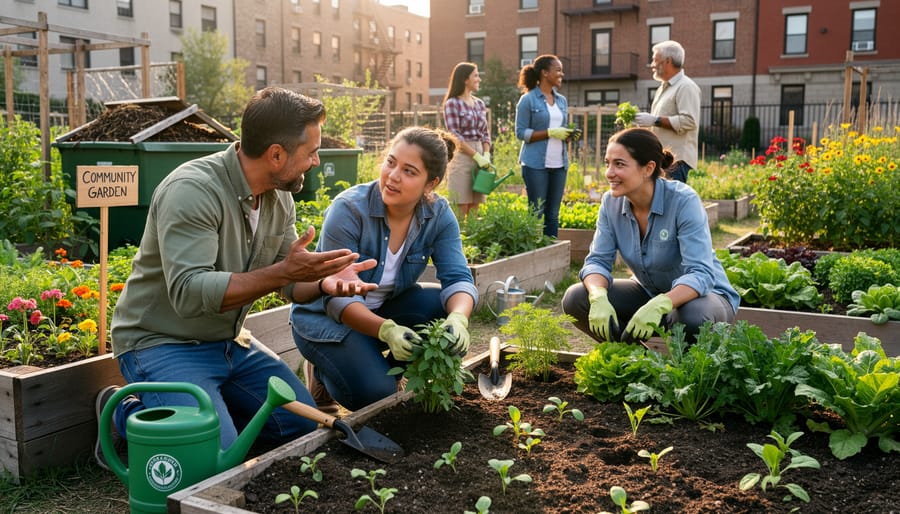
Community gardens deliver immediate, visible results that transform both spaces and mindsets. A vacant lot becomes a neighborhood asset producing fresh food while teaching soil health, composting, and water conservation. Residents see their efforts literally bear fruit, creating momentum for broader environmental commitments. Chicago’s Growing Power network demonstrated how urban agriculture projects engaged over 10,000 community members annually, many of whom later participated in policy advocacy for sustainable food systems.
Waste reduction challenges spark friendly competition while cutting landfill contributions measurably. A month-long neighborhood recycling competition or plastic-free challenge generates concrete data showing collective impact, tons diverted, petroleum saved, emissions reduced. Winners receive recognition, not prizes, keeping focus on environmental outcomes. Portland’s “Rethink Your Waste” program reduced residential garbage by 38% in participating neighborhoods within six months.
Native plant restoration projects reconnect communities with local ecosystems while addressing biodiversity loss. Weekend plantings along stream corridors or in park buffer zones provide habitat for pollinators and wildlife, with visible changes emerging within weeks as butterflies and birds return. These projects require minimal expertise to start but offer pathways to deeper ecological learning. Participants develop ownership over these spaces, returning to maintain them and noticing seasonal changes that deepen their environmental awareness.
The key across all projects: choose initiatives where results appear quickly, participation requires no specialized knowledge, and success scales naturally into more ambitious environmental work.
Leverage Citizen Science and Data Collection
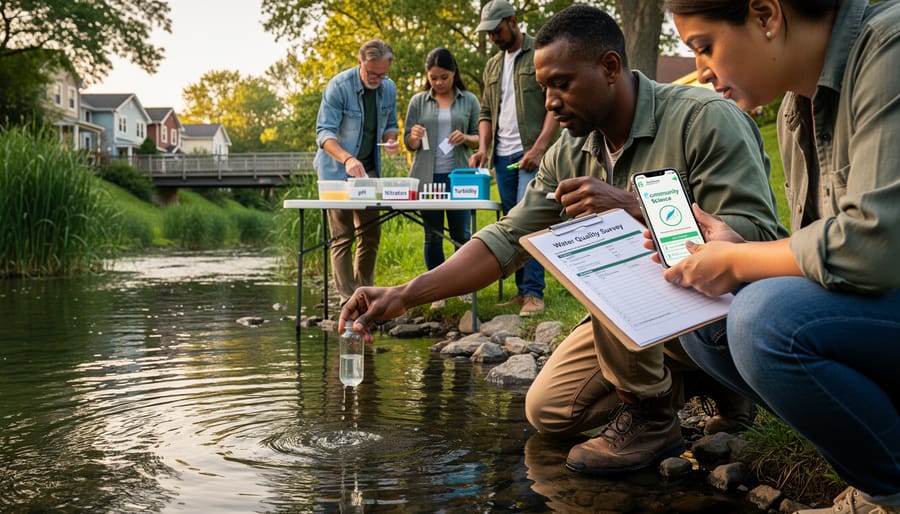
Citizen science transforms residents from observers into active researchers, generating environmental data that would otherwise require expensive consultants or stretched government resources. When you hand someone a water quality test kit or a biodiversity identification guide, you’re not just collecting data, you’re creating an invested stakeholder who understands the ecosystem firsthand.
Water quality monitoring programs demonstrate this power effectively. Volunteers collect samples from local streams, test for phosphates, nitrates, dissolved oxygen, and pH levels, then submit findings through mobile apps or web portals. This citizen science river monitoring approach builds comprehensive datasets that reveal pollution sources, track seasonal changes, and document improvement after interventions, all while deepening participants’ connection to local waterways.
Biodiversity surveys work similarly. Community members photograph species, record bird counts, or document native plant populations using standardized protocols. The data contributes to regional conservation databases while teaching participants to recognize indicator species and habitat health markers.
Pollution tracking programs engage residents in identifying illegal dumping, mapping litter hotspots, or monitoring air quality with low-cost sensors. These efforts create pressure maps that guide enforcement and remediation priorities.
The key: provide clear protocols, simple tools, and regular feedback showing how their contributions matter. When volunteers see their data influencing local environmental decisions, participation becomes self-sustaining.
Build Communication Networks That Sustain Engagement
Momentum dies without consistent communication. Even the most enthusiastic volunteers drift away when updates disappear and progress becomes invisible. Sustainable engagement requires deliberate communication infrastructure that keeps people informed, connected, and motivated.
Create multiple touchpoints using varied channels. Monthly newsletters work for detailed updates, while text message alerts drive event attendance. Social media posts celebrate quick wins, a filled trash bag from a stream cleanup, native plants emerging in a restoration site. In-person community meetings build deeper relationships that digital contact can’t replicate. Schedule quarterly gatherings where participants see progress photos, review environmental data, and influence upcoming priorities.
Transparency builds trust and investment. Share both successes and setbacks. When a composting initiative faces unexpected costs or regulatory hurdles, honest communication transforms frustration into collective problem-solving. Post measurable outcomes publicly: pounds of waste diverted, water quality improvements, volunteer hours contributed. Numbers make impact tangible and give participants ownership of results.
Recognize contributions consistently, not just at year-end ceremonies. Feature volunteer profiles, acknowledge milestone participants, spotlight community scientists whose monitoring detected a pollution source. Recognition validates effort and signals that every contribution matters toward cumulative environmental gains. Communication networks that celebrate incremental progress sustain participation through inevitable setbacks.

Overcoming Common Obstacles to Participation
Even the most well-designed sustainability initiatives stumble when they fail to account for real barriers keeping people on the sidelines. Understanding these obstacles, and addressing them head-on, separates programs that thrive from those that fade after initial enthusiasm.
Apathy often masks deeper issues. When residents seem disengaged, they’re rarely indifferent to environmental health. More often, they feel powerless to create change or don’t see how sustainability connects to their immediate concerns. Reframe environmental action around tangible local benefits: cleaner air for children with asthma, reduced utility bills through energy efficiency, safer streets through green infrastructure. A Philadelphia neighborhood program increased participation 340% by emphasizing how tree planting reduced summer cooling costs and created shade for elderly residents, not abstract carbon sequestration.
Time constraints hit hardest in communities where people juggle multiple jobs or caregiving responsibilities. The solution isn’t asking for less commitment but offering flexible participation models. Micro-volunteering, tasks requiring 15 minutes or less, lets people contribute during lunch breaks or while waiting for school pickup. Digital platforms enable contributions from home. Saturday morning events exclude shift workers; rotating schedules to evenings and weekdays expands access.
| Barrier | Root Cause | Evidence-Based Solution | Example Application |
|---|---|---|---|
| Perceived irrelevance | Disconnect between global messaging and local priorities | Lead with immediate community benefits, not planetary abstractions | Frame stormwater management as flood prevention, not just watershed health |
| Economic barriers | Participation costs exclude lower-income residents | Provide stipends, childcare, meals, and transportation | Seattle’s Green Jobs Program pays community members for environmental monitoring |
| Information gaps | Technical jargon and scattered communication channels | Use plain language, multiple formats, and trusted messengers | Partner with faith leaders and neighborhood associations to share information |
| Distrust of institutions | History of broken promises or extractive research | Center community voices in decision-making from project inception | Co-create program goals with residents, not for them |
Socioeconomic factors create real financial barriers. Asking people to volunteer time, purchase sustainable products, or attend meetings assumes resources many lack. Address this by compensating participants for their expertise and time, providing meals and childcare at events, covering transportation, and ensuring programs generate economic benefits like job training or reduced household costs.
Misinformation spreads fastest in communities underserved by clear, accessible environmental education. Counter this by partnering with trusted local voices, teachers, religious leaders, neighborhood associations, rather than relying solely on outside experts. Present information in multiple languages and formats. Most importantly, create spaces where people can ask questions without judgment and see evidence firsthand through hands-on projects that demonstrate concepts concretely.
The goal isn’t perfection but removing unnecessary friction that prevents willing participants from contributing their energy and insight to collective environmental action.
Measuring Impact: How to Know Your Engagement Is Working
Effective sustainability programs require more than good intentions, they demand rigorous measurement to demonstrate impact and guide improvements. Without clear metrics, you’re navigating blind, unable to distinguish successful strategies from well-meaning efforts that fall short.
Start by establishing baseline assessments before launching initiatives. Document current environmental conditions: measure air or water quality, quantify waste generation, assess biodiversity, or calculate energy consumption. Simultaneously, gauge community awareness and participation levels through surveys or focus groups. These benchmarks provide the comparison points that reveal genuine progress.
Your measurement framework should track two parallel dimensions. Quantitative environmental outcomes answer “What changed?” Monitor tangible results like tons of waste diverted from landfills, acres of habitat restored, percentage reduction in emissions, or kilowatt-hours saved. Track participation numbers, volunteer hours contributed, households adopting sustainable practices, or attendance at educational events.
Qualitative engagement metrics answer “How deeply are people involved?” Assess shifts in environmental knowledge through pre- and post-program surveys. Evaluate behavior changes beyond formal program activities. Document stories of residents initiating their own sustainability projects, evidence of peer-to-peer education, or community members advocating for environmental policies. These indicators reveal whether you’re building lasting stewardship or temporary compliance.
Adopt adaptive management cycles: collect data quarterly, analyze trends semi-annually, and adjust strategies based on what you learn. If water quality monitoring shows no improvement despite cleanup efforts, investigate whether you’re targeting the right pollution sources. When participation plateaus, survey non-participants to understand barriers.
Don’t obsess over perfection in measurement. A simple tracking system you’ll actually maintain beats an elaborate framework you abandon. Use accessible tools, spreadsheets, photo documentation, simple surveys, that volunteers can help manage. The goal isn’t academic research; it’s actionable insight that helps your community achieve measurable environmental wins while building the engaged base necessary for long-term success.
From Local Action to Systemic Change
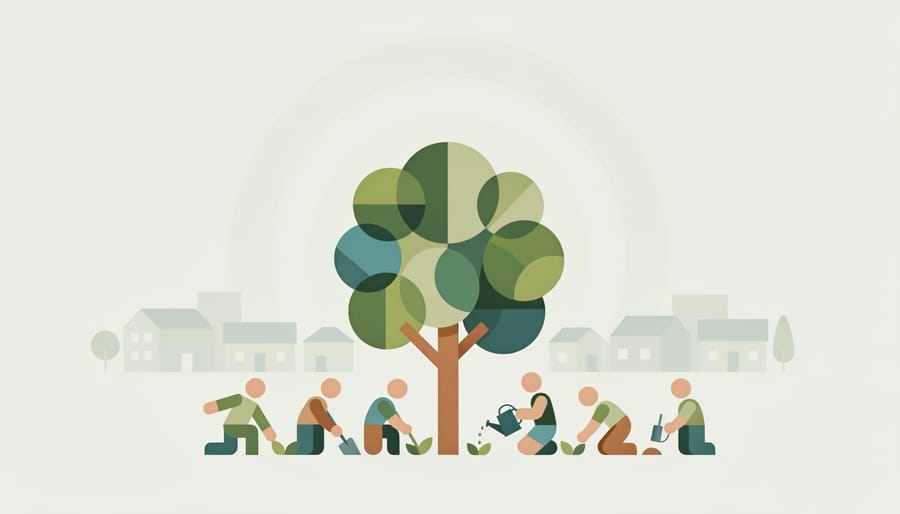
Local sustainability initiatives gain real power when communities connect their hands-on work to broader advocacy. A neighbourhood recycling program becomes evidence for municipal waste reduction mandates. Water quality data from citizen science monitoring creates legal grounds for holding industrial polluters accountable. Energy efficiency projects in residential areas demonstrate feasibility for city-wide building standards. This pathway from action to influence isn’t automatic, it requires communities to document outcomes, communicate results to decision-makers, and organize collective pressure.
The progression typically unfolds in stages. Initial projects build local credibility and demonstrate what’s possible. As communities track measurable improvements in air quality, waste diversion rates, or green space access, they gain standing to participate meaningfully in regional planning processes. Residents who’ve implemented stormwater management solutions speak with authority at public hearings about development proposals affecting watershed health.
Organizations like CERI understand this multiplier effect. Their community involvement model doesn’t stop at local projects, it explicitly connects grassroots efforts to policy advocacy. When communities across a region adopt similar sustainability practices and share their data, the cumulative evidence becomes impossible for governments to ignore. This is how scattered local initiatives become movements that reshaped environmental regulations and transformed climate policy from voluntary measures to enforceable standards.
The environmental justice dimension is crucial here. Communities most affected by pollution and climate impacts, often marginalized neighbourhoods, gain leverage when their documented experiences inform regulatory decisions. A coalition of residents monitoring toxic emissions near industrial sites can compel enforcement actions that individual complaints never would. Local sustainability engagement becomes a tool for systemic accountability, pushing both government agencies and corporations toward practices that prioritize community health over profit margins. The shift from neighbourhood action to regional change happens when communities refuse to separate their local work from the larger fight for environmental protection.
Your Next Steps: Building Momentum in 2026 and Beyond
The most effective sustainability programs in 2026 share a common thread: they started with one person deciding to act. If you’re a community member, begin this week by attending a local environmental meeting, joining a citizen science project, or starting conversations with neighbors about a shared concern like stormwater runoff or energy costs. Small actions create visible proof that change is possible, which draws others in.
For organizational leaders and local officials, prioritize projects that deliver quick, measurable wins while building toward systemic goals. Launch a pilot program in one neighborhood, document what works, then scale the successful elements. Establish transparent metrics from day one so your community sees concrete progress, not just promises.
Policymakers can accelerate momentum by creating frameworks that resource and legitimize grassroots efforts. Allocate funding for community-led initiatives, streamline permitting for sustainability projects, and build feedback loops that let local insights shape regional policy and next steps.
The urgency is real, but so is the opportunity. Communities that combine scientific evidence with local knowledge, advocacy with action, and individual commitment with collective power are already turning sustainability goals into environmental wins. Your role matters, whether you’re mobilizing ten neighbors or shaping legislation for thousands. The question isn’t whether community engagement works, the evidence confirms it does. The question is when you’ll start.