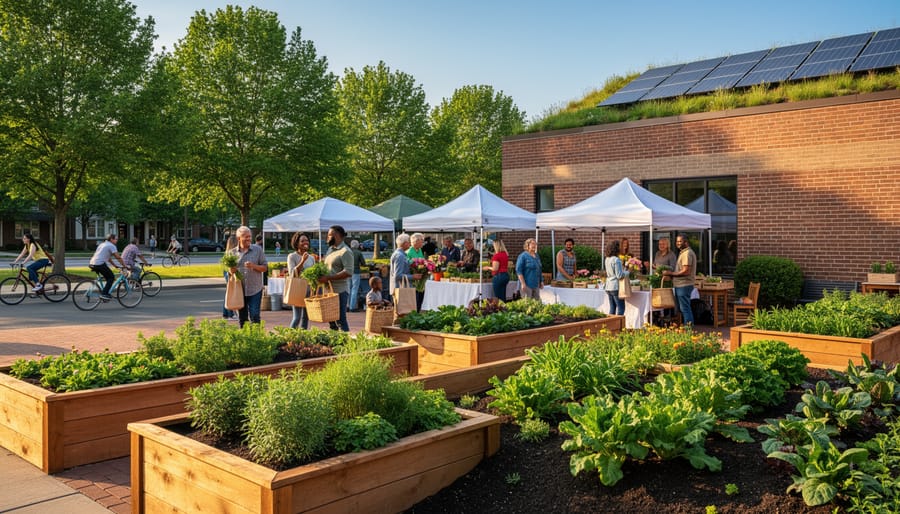
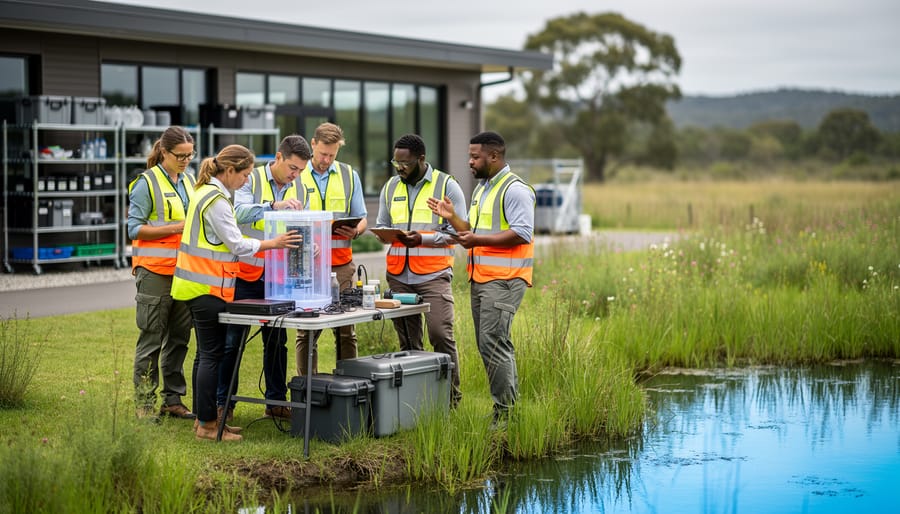
Environmental innovation centers serve as catalysts for sustainable change, bridging the gap between cutting-edge research and real-world environmental solutions. These hubs bring together scientists, policymakers, businesses, and community advocates to develop and deploy technologies and strategies that address pressing ecological challenges, from climate adaptation to resource conservation. By fostering collaboration across sectors, they transform environmental science into tangible action.
The concept gained momentum in the early 2000s as environmental crises demanded more than traditional academic research. Today’s centers operate as living laboratories where breakthrough ideas undergo rigorous testing before scaling to communities and industries. They combine data-driven analysis with stakeholder engagement, ensuring solutions are both scientifically sound and practically viable.
What sets these centers apart is their commitment to translating knowledge into impact. Rather than producing reports that gather dust, they create pathways for innovation to reach the people and places that need it most. Through pilot programs, policy briefs, and capacity-building workshops, they equip decision-makers with evidence-based tools to tackle environmental problems effectively.
The model proves particularly valuable in an era where environmental challenges grow more complex and interconnected. A successful center doesn’t just generate research; it cultivates networks, influences policy, and empowers communities to become agents of change in their own right.
What the Environmental Innovation Center Is
The Environmental Innovation Center operates as CERI’s dedicated research and development arm, driving breakthrough environmental technologies from concept to real-world implementation. Established to bridge the gap between scientific discovery and practical environmental solutions, the center functions as both a research facility and a collaborative workspace where scientists, engineers, and environmental advocates work together to tackle urgent ecological challenges.
At its core, the center’s mission centers on developing scalable, evidence-based solutions that address critical environmental threats while remaining economically viable and accessible to communities worldwide. Rather than pursuing research in isolation, the center maintains an integrated approach that connects laboratory work with field testing, policy development, and community engagement. This structure ensures that innovations move quickly from prototype to deployment, significantly reducing the time between discovery and environmental impact.
Within CERI’s broader framework, the center occupies a unique position as the organization’s action-oriented innovation hub. While CERI’s other divisions focus on advocacy, education, and policy analysis, the Environmental Innovation Center concentrates specifically on creating tangible technologies and methodologies that solve environmental problems. The center’s work directly informs CERI’s advocacy efforts by providing the hard data and proven solutions needed to influence policy and hold polluters accountable. This dual role as both a research facility and an evidence generator makes the center indispensable to CERI’s overall mission of driving systemic environmental change through science-backed action.
What the Center Does: Core Programs and Research Areas
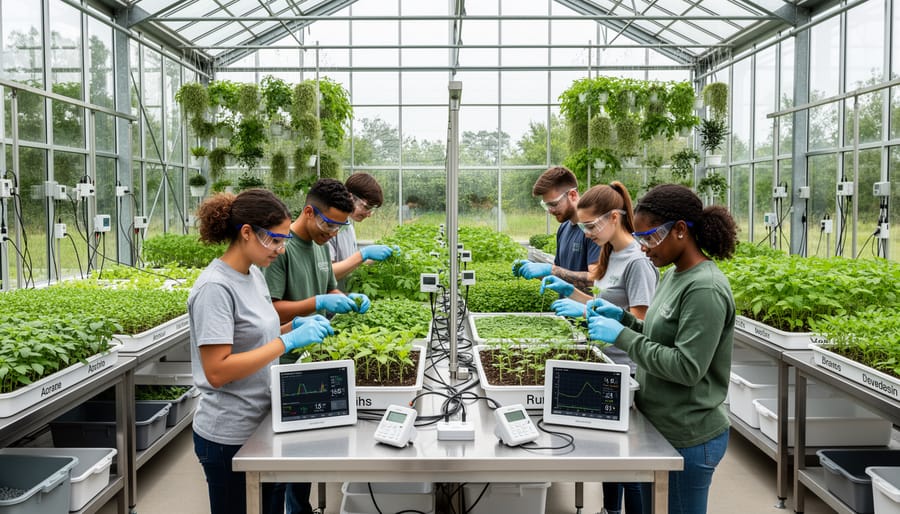
Groundbreaking Research Initiatives
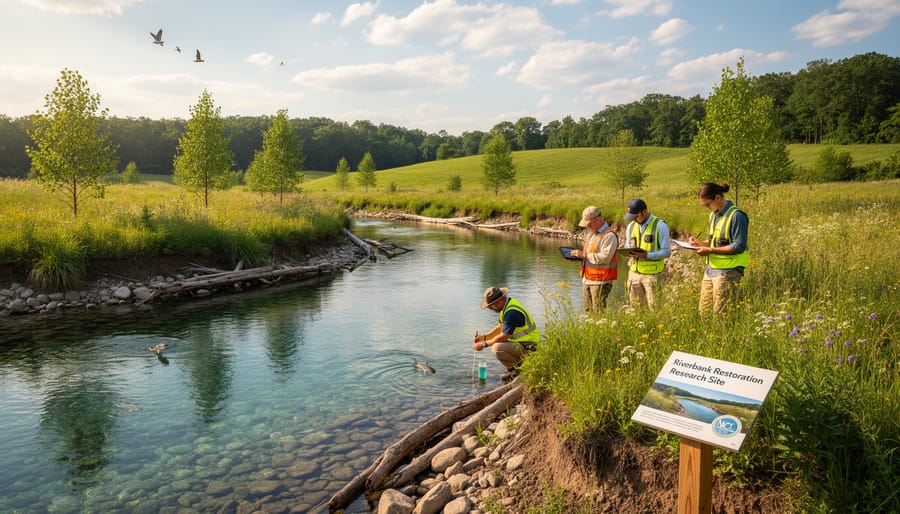
The Environmental Innovation Center’s research portfolio tackles urgent environmental challenges with precision and purpose. Current initiatives span four interconnected domains where breakthrough solutions can deliver measurable impact.
Active Research Focus Areas:
- Advanced water purification systems using biomimetic filtration and nanomaterial technology for removing microplastics and emerging contaminants
- Ecosystem restoration protocols combining native species selection algorithms with soil microbiome restoration for degraded habitats
- Circular economy waste innovations transforming agricultural byproducts and industrial waste streams into valuable materials
- Climate resilience frameworks helping coastal communities and drought-prone regions adapt infrastructure and land management practices
Each project moves beyond theoretical research into field testing and real-world validation. The water purification work, for instance, has progressed from laboratory prototypes to pilot installations in three communities facing contamination challenges. Ecosystem restoration protocols developed here now guide recovery efforts across 12,000 acres of formerly degraded wetlands and forests.
The waste reduction research demonstrates particular promise. Recent trials converted food processing waste into biodegradable packaging materials at commercial scale, eliminating 40 tons of landfill-bound material monthly at a single facility. Climate resilience projects pair hyper-local climate modeling with traditional ecological knowledge, creating adaptation strategies that work for specific geographies rather than generic recommendations.
What sets these initiatives apart is their emphasis on implementable solutions. Every research project includes clear deployment pathways, cost-benefit analyses, and stakeholder engagement plans from the start.
Technology Development and Innovation Labs
The Environmental Innovation Center operates state-of-the-art laboratory facilities designed to transform environmental concepts into practical, deployable technologies. These spaces house specialized equipment for prototyping and testing solutions across water treatment, renewable energy systems, waste processing, and ecological restoration tools.
The center’s pilot testing grounds provide controlled environments where innovations undergo rigorous evaluation before field deployment. Here, researchers simulate real-world conditions, from varying water quality scenarios to extreme weather patterns, ensuring technologies perform reliably outside laboratory settings. This testing phase identifies potential failures early, saving communities and partners from costly implementation mistakes.
Collaborative workspaces bring together interdisciplinary teams of engineers, ecologists, data scientists, and community representatives. These shared areas foster the cross-pollination of ideas that often leads to breakthrough solutions. Recent collaborations have produced modular filtration systems for remote communities and sensor networks that detect pollution sources in real time.
The center makes its facilities available to external researchers and partner organizations through structured access programs. This approach accelerates innovation by preventing duplicated efforts and pooling resources. Equipment ranging from emissions analyzers to biodegradation chambers becomes accessible to smaller organizations that couldn’t afford independent infrastructure, democratizing environmental technology development and ensuring solutions emerge from diverse perspectives rather than solely well-funded institutions.
Policy Influence and Advocacy Work
The center bridges the gap between laboratory findings and legislative action by packaging complex research into policy-ready briefings that government officials can implement immediately. Research teams work directly with environmental agencies at federal, state, and local levels to draft evidence-based regulations on air quality standards, water protection measures, and emissions controls. Rather than simply publishing findings, the center maintains active relationships with lawmakers, providing expert testimony at hearings and offering technical support during the drafting of environmental policy.
The advocacy arm holds corporations accountable by supplying legal teams and community groups with scientifically rigorous documentation of environmental violations. When polluters exceed permitted discharge levels or misrepresent their environmental impact, the center provides the hard data needed for enforcement actions and litigation. This work includes continuous monitoring programs that track industrial emissions, watershed contamination, and ecosystem degradation, creating an independent verification system that prevents greenwashing and regulatory capture.
Policy impact extends beyond reactive enforcement. The center proactively identifies regulatory gaps where current laws fail to address emerging environmental threats, then develops specific legislative language to close those gaps with solutions grounded in peer-reviewed research.
Who the Environmental Innovation Center Serves
The Environmental Innovation Center serves a diverse ecosystem of stakeholders united by their commitment to environmental progress. Each group brings unique expertise and needs, creating a collaborative network that accelerates the translation of research into real-world impact.
| Stakeholder Type | Primary Benefits | Engagement Opportunities |
|---|---|---|
| Academic Researchers | Access to cutting-edge facilities, funding opportunities, cross-disciplinary collaboration | Fellowship programs, joint research projects, equipment sharing |
| Policymakers & Government Agencies | Evidence-based policy recommendations, technical expertise, regulatory guidance | Research briefings, consultation services, pilot program partnerships |
| Environmental Organizations | Scientific validation of advocacy positions, data for campaigns, coalition building | Data sharing agreements, collaborative studies, joint advocacy initiatives |
| Industry Partners | Sustainable technology solutions, compliance strategies, innovation pathways | Technology licensing, pilot testing, corporate sustainability programs |
| Local Communities | Solutions to environmental health challenges, educational resources, direct environmental improvements | Community science projects, public workshops, environmental monitoring participation |
Academic institutions gain a competitive research partner equipped with specialized labs and interdisciplinary teams they might lack independently. Researchers access datasets spanning decades of environmental monitoring, accelerating their own work while contributing findings back to the collective knowledge base.
Communities facing pollution, water contamination, or ecosystem degradation find an ally that combines scientific rigor with genuine accountability. The center doesn’t just study problems; it works alongside affected populations to implement tested solutions and holds responsible parties to account through evidence that stands up in court and public discourse.
Industry partners discover that sustainability and profitability aren’t opposing forces. Companies access innovations that reduce waste, lower costs, and meet tightening regulations while contributing resources and real-world testing grounds that benefit everyone in the network.
How to Engage with the Environmental Innovation Center

For Researchers and Academic Partners
The Environmental Innovation Center actively seeks collaborative partnerships with researchers and academic institutions advancing environmental science. Faculty members and graduate students can propose joint research initiatives through the center’s open application portal, which accepts submissions year-round across priority research areas including climate adaptation, ecosystem restoration, and sustainable technology development.
Fellowship programs provide early-career researchers with 6-12 month placements, offering access to specialized equipment, datasets, and mentorship from established environmental scientists. Fellows receive stipends and can publish findings through CERI’s research channels, accelerating their academic careers while contributing to actionable environmental solutions.
Academic institutions can establish formal research partnerships to leverage the center’s testing facilities, analytical tools, and field sites. These collaborations often result in co-authored publications, grant proposals strengthening funding applications, and opportunities for student involvement in real-world environmental projects.
To propose a partnership, submit a brief research concept outlining objectives, methodology, and expected environmental impact. The center reviews proposals monthly and typically responds within three weeks. Researchers gain not only laboratory access but also connections to policymakers who can implement findings, bridging the gap between academic discovery and environmental action.
For Organizations and Industry Partners
Organizations seeking to align business practices with environmental sustainability can partner with the Environmental Innovation Center through several proven pathways. The center offers tailored collaboration models that match company size, sector, and sustainability goals.
Technology licensing provides immediate access to center-developed solutions, from advanced filtration systems to waste reduction technologies. Companies receive implementation support, technical training, and ongoing optimization guidance. Licensing fees fund continued research while giving businesses competitive advantages through validated, scientifically-backed innovations.
Pilot program participation allows organizations to field-test emerging technologies before full-scale deployment. The center provides monitoring equipment, data analysis, and performance benchmarking. Participating companies gain early access to breakthrough solutions while contributing real-world operational data that refines the technology for broader application.
Strategic partnerships involve co-developing solutions for industry-specific challenges. Manufacturing firms, agricultural operations, and logistics companies work directly with center researchers to create custom applications of existing technologies or develop entirely new approaches. These collaborations often result in joint intellectual property agreements and shared commercialization opportunities.
Contact the center’s partnership office to discuss alignment between your environmental challenges and ongoing research initiatives.
For Policymakers and Government Agencies
Policymakers and government agencies can access the center’s research to inform regulatory frameworks and environmental legislation. Request customized research briefings on specific environmental challenges through the center’s policy liaison team, these briefings translate complex data into actionable recommendations tailored to legislative timelines. Download published policy white papers and impact assessments from the center’s public repository to use research in evidence-based decision-making. Collaborate directly with center scientists on pilot regulatory programs, environmental impact assessments, or compliance framework development. The center provides expert testimony for legislative hearings and supports interagency working groups addressing pollution standards, conservation targets, and climate adaptation strategies.
For Community Members and Advocates
The center welcomes community members through multiple engagement pathways that transform environmental concern into meaningful community action. Monthly public workshops cover topics from composting techniques to renewable energy basics, requiring no prior expertise. Volunteer programs match individuals with ongoing projects, citizens have contributed thousands of data points through stream monitoring initiatives and urban biodiversity surveys that directly inform research priorities.
The center’s open-house events offer behind-the-scenes access to innovation labs, letting residents see prototype technologies and meet researchers. Educational series range from youth STEM programs to adult courses on sustainable living practices, including specialized modules on water education and conservation. Community members can also participate in pilot programs testing new environmental solutions in real neighborhoods, recent projects included home energy audits and native plant restoration in local parks. The center’s online portal provides free access to research summaries, toolkits, and advocacy resources, empowering individuals to apply evidence-based solutions in their own communities.
Frequently Asked Questions
The Environmental Innovation Center receives numerous inquiries from prospective partners, researchers, and community members. Here are answers to the most common questions about how the center operates and how you can connect with its work.
How is the Environmental Innovation Center funded?
The center operates through a combination of federal research grants, private foundation support, and strategic partnerships with organizations committed to environmental solutions. This diversified funding model ensures independence in research priorities while maintaining long-term sustainability.
Can the public access the center’s research findings?
Yes. The center publishes research findings in peer-reviewed journals and makes key reports available through CERI’s online repository. Policy briefs and community-focused summaries are freely accessible to ensure research translates into actionable knowledge for all stakeholders.
How does the center decide which research projects to pursue?
Research priorities are determined by a combination of urgent environmental challenges, community needs assessments, policy gaps requiring evidence-based solutions, and opportunities for high-impact innovation. The center’s advisory board includes scientists, community representatives, and policy experts who ensure research addresses real-world problems.
What’s the typical timeline for research collaborations?
Project timelines vary based on scope and complexity. Small pilot studies may run six to twelve months, while comprehensive research initiatives often span two to three years. The center works with partners to establish realistic timelines that balance thorough investigation with the urgency of environmental challenges.
Beyond these frequently asked questions, prospective collaborators should know that the center maintains an open-door policy for innovation proposals. Whether you’re a graduate student with a novel research idea, a community organization facing a specific environmental challenge, or a policymaker needing scientific evidence for upcoming legislation, the center’s team evaluates every inquiry for potential collaboration. Initial consultations help determine the best pathway for engagement, whether that’s a formal research partnership, access to existing data, or connection to ongoing initiatives that align with your goals.
The Environmental Innovation Center stands as proof that environmental challenges demand more than research, they require coordinated action, accessible expertise, and pathways for everyone to contribute. Whether you’re a researcher seeking collaboration, a policymaker needing evidence-based guidance, an organization ready to pilot sustainable technologies, or an individual wanting to make a difference, the center offers concrete ways to engage.
CERI has built this hub to bridge the gap between scientific discovery and real-world impact. The research emerging from these labs translates into cleaner water systems, restored ecosystems, reduced waste, and resilient communities. But these solutions only reach their potential when people like you get involved.
Your participation matters. Explore partnership opportunities, attend public events, contribute to community science projects, or simply stay informed about emerging innovations. The center’s work belongs to all of us, because environmental progress depends on collective action.
Visit CERI’s Environmental Innovation Center today to discover your role in shaping a sustainable future. The solutions exist. Now it’s time to put them to work.