
No, the Environmental Protection Agency is not a government corporation. The EPA is an independent executive agency of the federal government, created by executive order in 1970 and operating under the authority of numerous environmental statutes passed by Congress. Unlike government corporations such as the United States Postal Service or Amtrak, which function with corporate structures and revenue-generating mandates, the EPA receives direct appropriations from Congress and operates under traditional regulatory agency governance.
This distinction matters far beyond legal technicalities. Understanding the EPA’s structure reveals how decisions about air quality, water safety, and chemical regulation flow from legislative mandates through administrative rulemaking to enforcement actions that affect every community in America. The agency’s position as an executive branch entity means it answers directly to presidential direction while maintaining statutory obligations that persist across administrations.
The confusion often stems from the EPA’s substantial autonomy in scientific decision-making and regulatory implementation. The agency employs thousands of scientists, engineers, and enforcement officers who translate broad congressional directives into specific standards. But this independence operates within clear boundaries. Congress controls funding, confirms leadership, and can amend or withdraw the statutory authorities the EPA relies upon.
For citizens seeking environmental accountability, this framework creates multiple leverage points. Community action wins often emerge when advocates understand how to engage the rulemaking process, file effective public comments, or petition for enforcement in their regions. The EPA’s structure as a regulatory agency, rather than a corporation, means transparency requirements and public participation mechanisms are built into its operations by law, offering pathways for informed engagement that drive measurable environmental progress.
What the EPA Is: Federal Agency Structure and Legal Status
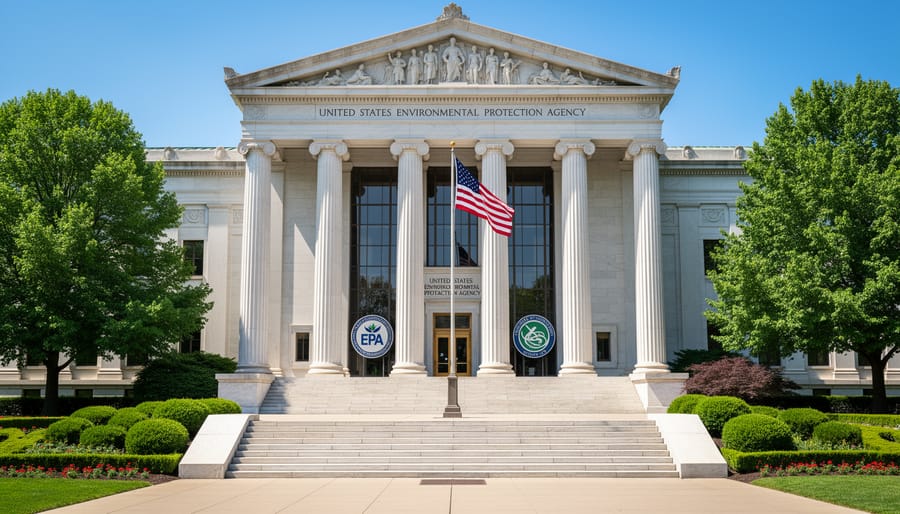
The EPA established in 1970 as an independent federal agency within the executive branch, not as a government corporation. President Richard Nixon created it through an executive reorganization plan that consolidated environmental responsibilities previously scattered across multiple agencies. This reorganization brought together functions from the Department of Health, Education, and Welfare, the Department of the Interior, and other federal entities under a single agency with a clear mission: protecting human health and the environment.
The EPA operates as an independent agency, meaning it sits outside of any Cabinet-level department and reports directly to the President. An Administrator, confirmed by the Senate, leads the agency rather than a corporate board of directors. This structure gives the EPA regulatory authority to develop and enforce environmental standards, but it remains fundamentally different from government corporations like the United States Postal Service, Tennessee Valley Authority, or Amtrak.
The EPA’s funding comes entirely from congressional appropriations, not from revenue-generating activities. Each year, Congress allocates the agency’s budget through the appropriations process, which includes funding for staff salaries, scientific research, enforcement activities, and grants to states and tribes. This funding mechanism subjects the EPA to annual legislative oversight and ties its capacity to political priorities reflected in budget negotiations.
The agency derives its regulatory authority from major environmental statutes passed by Congress, including the Clean Air Act, Clean Water Act, Resource Conservation and Recovery Act, and Comprehensive Environmental Response, Compensation, and Liability Act. These laws grant the EPA power to set standards, issue permits, conduct inspections, and take enforcement action against violators. The agency cannot act beyond the authority Congress has delegated through these statutes, and courts regularly review its regulatory decisions to ensure they stay within statutory bounds.
What Government Corporations Are and Why the Distinction Matters
Government corporations occupy a unique niche in the federal structure. Unlike traditional agencies, they blend public purpose with corporate flexibility. Congress creates these entities to perform business-like functions while serving public interests that private markets won’t adequately address.
The U.S. Postal Service, Amtrak, and the Tennessee Valley Authority exemplify this hybrid model. They generate revenue through commercial operations, selling stamps, tickets, or electricity, rather than relying entirely on annual appropriations. This revenue-generating capacity distinguishes them from regulatory agencies like the EPA. Government corporations typically have boards of directors, can borrow funds, maintain separate budgets, and operate with greater managerial autonomy than standard agencies.
| Characteristic | Federal Agency (EPA) | Government Corporation (TVA) |
|---|---|---|
| Legal Structure | Independent executive agency | Congressionally chartered corporation |
| Funding | Congressional appropriations | Revenue from electricity sales; some bond authority |
| Leadership | Administrator appointed by President | Board of Directors appointed by President |
| Primary Mission | Regulation and enforcement | Service delivery and economic development |
| Accountability | Annual budget review; judicial review of rules | Corporate governance structure; financial audits |
Why does this distinction matter for environmental accountability? Federal agencies face stricter oversight through the appropriations process, regulatory review requirements, and public comment mandates. The EPA must justify its budget annually and submit proposed rules for public scrutiny. Government corporations, while still publicly owned, operate with corporate governance models that can shield certain decisions from immediate public input. Understanding these structural differences helps advocates target engagement effectively, whether submitting comments on EPA regulations or engaging corporate boards overseeing infrastructure projects with environmental impacts. The EPA’s agency status means citizens have clearer pathways to influence policy through established administrative procedures.
What the EPA Does: Regulatory Authority and Environmental Mission
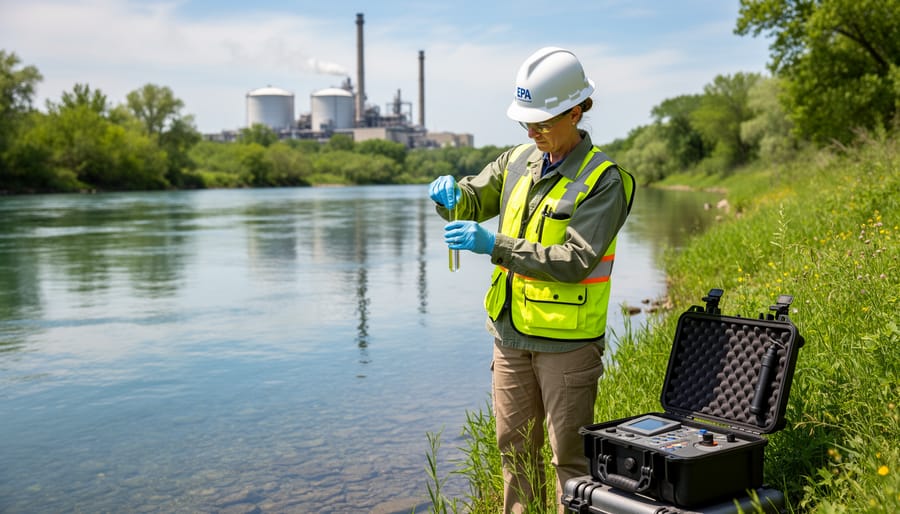
The EPA executes environmental protection through five core functions that shape how it fulfills its mandate to safeguard public health and ecosystems. These interconnected activities, rulemaking, enforcement, scientific research, grants administration, and coordination with state agencies, form the operational backbone of federal environmental law.
Rulemaking and Standard-Setting
The agency develops legally binding regulations that translate broad statutory mandates into specific, enforceable requirements. This process involves proposing rules, accepting public comment, analyzing scientific evidence, and issuing final standards that industries and governments must follow. For example, the EPA sets National Ambient Air Quality Standards that determine acceptable pollution levels for six common air pollutants, or establishes limits on mercury emissions from power plants under Clean Air Act authority.
Enforcement and Compliance
When violations occur, the EPA has authority to conduct inspections, issue administrative orders, assess civil penalties, and refer criminal cases for prosecution. EPA enforcement under CWA illustrates this function: the agency can pursue companies or municipalities that discharge pollutants into waterways without permits, seeking corrective action and fines. In 2026, enforcement remains a critical tool for ensuring regulatory compliance across industries.
Primary Environmental Statutes
The EPA implements a suite of landmark laws that authorize its regulatory work:
- Clean Air Act: Controls air pollution from stationary sources and vehicles, sets air quality standards
- Clean Water Act: Regulates discharges into U.S. waters, protects wetlands and drinking water sources
- Safe Drinking Water Act: Sets standards for public water systems and protects groundwater
- Resource Conservation and Recovery Act: Manages hazardous and solid waste from generation to disposal
- Comprehensive Environmental Response, Compensation, and Liability Act (Superfund): Addresses contaminated sites and holds polluters accountable for cleanup costs
- Toxic Substances Control Act: Regulates manufacture, processing, and use of chemicals
- Federal Insecticide, Fungicide, and Rodenticide Act: Controls pesticide distribution and use
Research and Scientific Support
The agency conducts and funds environmental research to inform policy decisions, assess emerging threats, and develop new pollution control technologies. EPA scientists study climate impacts, toxicology, ecosystem health, and exposure pathways, work that underpins evidence-based rulemaking.
Grants and State Coordination
The EPA distributes billions annually to state environmental agencies, tribes, and municipalities for infrastructure projects, program implementation, and technical assistance. This cooperative federalism model delegates day-to-day permitting and enforcement to states while the EPA provides oversight, funding, and backstop authority when state efforts fall short.
Who the EPA Serves: Stakeholders and Protected Communities
The EPA’s regulatory and protective mission serves an extraordinarily diverse array of stakeholders, each with distinct needs and vulnerabilities to environmental harm.
All U.S. Residents as Primary Beneficiaries
Every person living in the United States benefits from EPA’s work protecting air quality, drinking water safety, and limiting toxic substance exposure. The agency’s authority under statutes like the Clean Air Act and Safe Drinking Water Act establishes minimum environmental standards that safeguard public health regardless of geography or socioeconomic status.
Environmental Justice Communities
Low-income communities and communities of color face disproportionate exposure to pollution from industrial facilities, hazardous waste sites, and transportation corridors. EPA’s Office of Environmental Justice focuses specifically on these populations, using tools like demographic mapping to identify overburdened areas and direct enforcement resources, technical assistance, and grant funding toward addressing longstanding inequities.
Regulated Industries and Economic Sectors
Industries ranging from manufacturing and energy production to agriculture and transportation operate as both regulated entities and EPA stakeholders. These sectors require clear regulatory frameworks, compliance guidance, and permitting processes to meet environmental standards while maintaining economic viability.
Tribal Nations
The EPA maintains government-to-government relationships with 574 federally recognized tribes, acknowledging their sovereign status. The agency provides dedicated funding, consultation protocols, and tailored technical assistance to support tribal environmental programs protecting reservation lands, water resources, and cultural sites.
State and Local Governments
EPA partners with state environmental agencies, which implement many federal programs through delegated authority, and municipal governments managing water systems, waste disposal, and local air quality programs.
Government Accountability Mechanisms for the EPA
The Role of Advocacy Organizations in EPA Accountability
Advocacy organizations serve as critical watchdogs and amplifiers of public voice in the EPA’s regulatory process. Groups like CERI combine technical expertise with grassroots mobilization to strengthen EPA accountability across multiple fronts. When the EPA proposes new rules or guidance documents, environmental organizations submit detailed scientific comments, often drawing on independent research to highlight gaps, suggest stronger protections, or flag potential loopholes that industry lobbying might exploit.
These groups also exercise citizen suit provisions embedded in major environmental statutes, allowing them to take legal action when the EPA fails to enforce regulations or misses mandatory deadlines. Beyond the courtroom, advocacy organizations track agency performance, publish scorecards on enforcement trends, and use Freedom of Information Act requests to uncover internal documents that reveal policy shifts or corporate influence. CERI’s work in climate policy advocacy demonstrates how sustained organizational pressure can push the EPA to adopt more ambitious standards, particularly when advocates coordinate across scientific, legal, and community organizing channels to build political momentum for robust environmental protection.
How to Engage with the EPA: Pathways for Public Participation

The EPA offers several direct pathways for public participation that allow citizens and organizations to influence environmental policy and hold the agency accountable. Understanding these mechanisms transforms the EPA from a distant bureaucracy into an accessible institution where your voice can shape real outcomes.
Submitting Public Comments on Proposed Rules
When the EPA proposes new regulations or changes to existing rules, it must publish them in the Federal Register and accept public comments for a specified period, typically 30 to 90 days. You can submit comments through by searching for the relevant docket number. Effective comments don’t require legal expertise, they’re most powerful when they provide specific information about how a rule will affect your community, present local data the EPA may not have considered, or use research to advocate for stronger protections. The EPA must review and respond to substantive comments before finalizing rules.
Reporting Environmental Violations
If you witness pollution or suspect violations of environmental laws, you can report them directly to the EPA through its online reporting tools or regional offices. Each of the ten regional offices handles enforcement for specific states. For immediate threats, contact the National Response Center. The EPA also accepts tips about non-compliance with permits or regulatory requirements.
Accessing Information and Data
The Freedom of Information Act guarantees your right to request EPA documents and data. The agency’s online databases, including Enforcement and Compliance History Online and the Toxic Release Inventory, provide searchable information about facility permits, violations, and chemical releases in your area, critical tools for community advocacy and informed participation.
Frequently Asked Questions
How is the EPA funded?
The EPA operates primarily on Congressional appropriations from general tax revenue, not self-generated revenue like government corporations. Its annual budget is subject to the appropriations process, making it dependent on legislative funding decisions and vulnerable to budget cuts during political shifts.
Is the EPA politically independent?
The EPA is an executive agency led by a Presidential appointee confirmed by the Senate, meaning it operates under executive direction rather than true independence. While career staff maintain professional expertise, agency priorities and enforcement emphasis can shift significantly with changes in administration.
What enforcement power does the EPA have?
The EPA can issue administrative orders, assess civil penalties, and refer criminal violations to the Department of Justice for prosecution. However, its enforcement actions are subject to judicial review, and resource constraints often limit its ability to pursue all violations.
How does the EPA differ from state environmental agencies?
The EPA sets national standards and regulations under federal environmental laws, while state agencies implement and enforce these standards within their jurisdictions, often with additional state-specific requirements. Many programs operate as cooperative federalism arrangements where states receive EPA authorization to administer federal programs.
Can the public access EPA environmental data?
Yes, the EPA maintains several public databases including the Enforcement and Compliance History Online system, Toxics Release Inventory, and air and water quality monitoring data through its website. Most environmental data collected by the agency is available under the Freedom of Information Act.
How can citizens report environmental violations?
You can report suspected violations through your EPA regional office hotline, online complaint forms on the EPA website, or contact your state environmental agency. The EPA also operates specific hotlines for issues like illegal dumping, pesticide misuse, and drinking water contamination.
These questions reflect the most common areas of confusion citizens encounter when trying to understand how the EPA operates and how to engage with it effectively. Understanding the agency’s funding structure helps clarify why environmental advocates must stay vigilant during budget negotiations, while knowing how to access data and report violations enables direct participation in environmental protection efforts. The distinction between federal and state authority matters practically because you often need to know which agency has jurisdiction over a specific environmental concern in your community.
The EPA is a federal agency, not a government corporation. This distinction shapes how it operates, how it’s funded, and crucially, how accountable it remains to the public. Unlike government corporations that generate revenue and operate with greater independence, the EPA answers directly to Congress, the President, and the courts while relying on appropriated funds. This structure creates multiple accountability touchpoints where your voice matters.
Understanding the EPA’s status empowers you to engage effectively. When you submit comments on proposed regulations, attend public hearings, or support advocacy organizations monitoring agency actions, you’re exercising oversight mechanisms built into the federal agency framework. The EPA’s regulatory authority depends on Congressional mandates and public participation processes that government corporations don’t face.
Environmental protection requires active citizenship. The agency’s effectiveness correlates directly with informed public engagement and robust accountability. Whether you’re concerned about air quality in your community, water contamination, or climate action, you have standing to participate in EPA decision-making.
Join CERI’s Government Accountability in Environmental Protection initiative. We monitor EPA actions, amplify community voices in rulemaking processes, and ensure the agency fulfills its mission. Your participation strengthens environmental safeguards for everyone.