
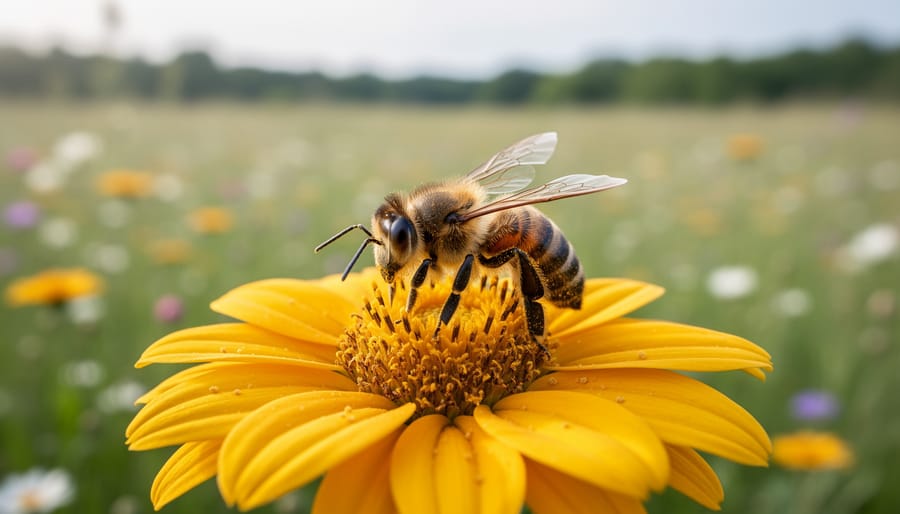
Scientific bee research is the systematic study of bee biology, behavior, ecology, and population dynamics to understand pollinator decline and inform conservation strategies. It encompasses field surveys, genetic analysis, disease surveillance, and habitat monitoring, transforming raw data into actionable solutions that protect these vital pollinators and the ecosystems they sustain.
The urgency couldn’t be clearer. Bee populations have declined by 40-50% in many regions over the past two decades, threatening the pollination services that support one-third of global food production. Scientific research provides the evidence base needed to reverse this trend, identifying stressors from pesticide exposure and habitat loss to climate change and parasitic mites. Without rigorous scientific investigation, conservation efforts remain guesswork.
What makes scientific bee research particularly powerful is its direct translation to real-world impact. Researchers deploy acoustic sensors to track colony health, analyze pollen samples to map foraging ranges, and conduct controlled experiments on nesting success across different landscapes. These methodologies generate the insights that shape policy, from pesticide regulations to habitat restoration guidelines. When scientists document that bees are a keystone species holding together entire food webs, the data carries weight in boardrooms and legislative chambers alike.
The field has evolved significantly since 2020, moving beyond simple population counts to sophisticated approaches that integrate molecular biology, remote sensing, and citizen science networks. Contemporary bee research doesn’t just diagnose problems. It tests solutions, measuring which wildflower mixes support the most diverse pollinator communities and quantifying how buffer strips around agricultural land reduce pesticide exposure. This evidence-driven approach turns concern into concrete action, giving landowners, farmers, and policymakers the tools they need to make bee-friendly decisions backed by science.
What Scientific Bee Research Encompasses
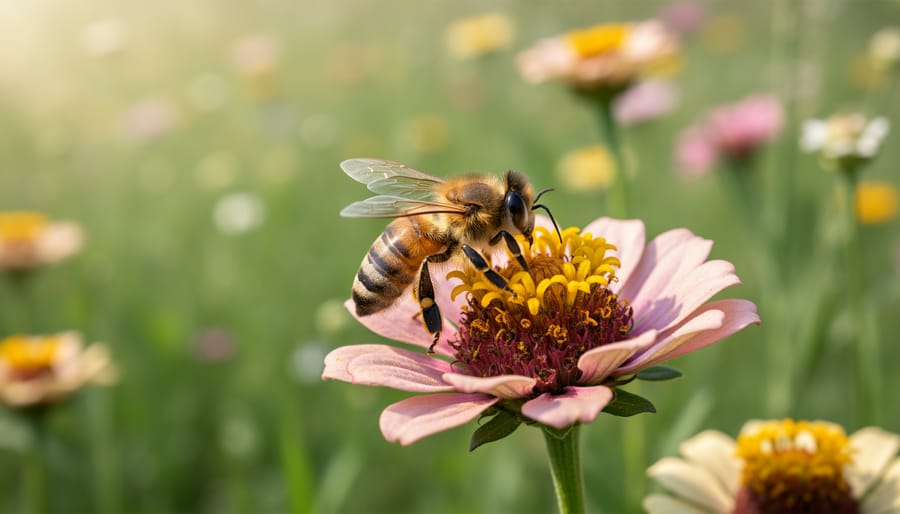
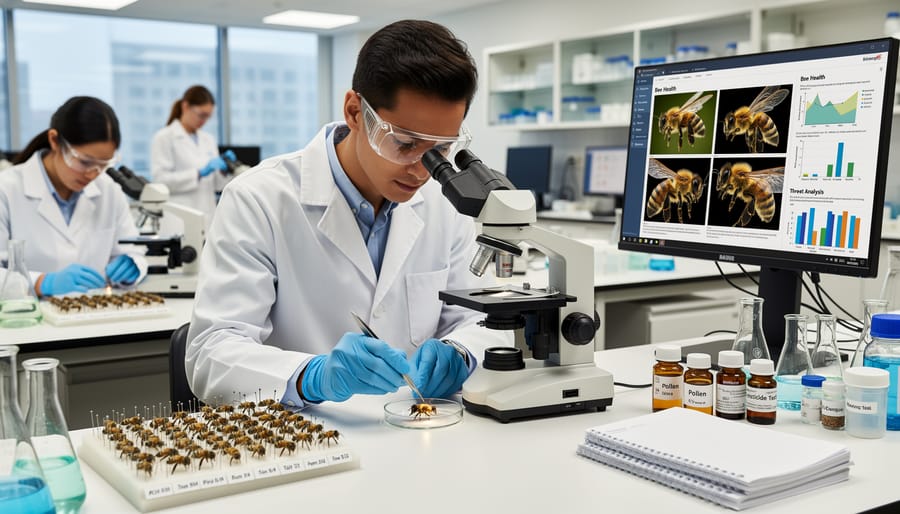
Scientific bee research draws on multiple scientific disciplines to build a comprehensive understanding of pollinator biology, threats, and conservation needs. At its foundation, this field combines molecular genetics, which reveals how bee populations adapt to environmental pressures and respond to stressors at the genetic level, with toxicology studies that measure how pesticides and environmental contaminants affect bee health, reproduction, and colony survival. Researchers examine not just whether a substance kills bees outright, but how sublethal exposure impairs navigation, foraging efficiency, and immune function.
Behavioral ecology contributes by documenting how bees interact with their environment, what flowers they visit, how far they forage, how colonies allocate labor, and how social structures break down under stress. This observational work often employs controlled experiments, video tracking, and statistical modeling to isolate cause-and-effect relationships rather than relying on anecdotal patterns.
Landscape analysis adds a spatial dimension, using geographic information systems and remote sensing to map habitat quality, floral resource availability, and pesticide exposure zones. Scientists correlate these landscape features with bee population trends to identify which habitat characteristics matter most for sustaining healthy pollinator communities.
Physiological studies examine bee immune systems, nutritional requirements, and disease resistance, while pathology research investigates viruses, parasites, and bacterial infections that compromise colony health. Emerging methods include genomic sequencing to track pathogen evolution and chemical ecology to understand plant-pollinator communication through volatile compounds.
What distinguishes scientific bee research from casual observation is the systematic application of the scientific method: formulating testable hypotheses, designing controlled experiments, collecting quantifiable data, subjecting findings to peer review, and replicating results across different contexts. This rigor transforms individual observations into reliable knowledge that can guide conservation policy, land management decisions, and agricultural practices. Rather than general impressions about pollinator presence, scientific research delivers specific, evidence-based answers about what bees need to survive and how human activities affect their populations.
The Pollinator Crisis: What the Science Tells Us
Multiple Stressors and Synergistic Effects
Scientific research has revealed a troubling reality: bees rarely face threats in isolation. Instead, they encounter multiple stressors simultaneously, creating synergistic effects far more damaging than any single factor alone. Pesticides can weaken immunity against pathogens like Nosema fungi or deformed wing virus, meaning a bee exposed to both faces exponentially higher mortality risk than one encountering either threat separately. Similarly, nutritional stress from habitat loss compounds pesticide toxicity, a well-fed bee can metabolize sublethal doses more effectively than one surviving on limited floral resources.
Temperature extremes driven by climate change disrupt synchronized flowering and foraging windows while simultaneously activating dormant pathogens and accelerating pesticide degradation rates in unexpected ways. Scientists use scientific research to map these interaction pathways, demonstrating that protecting bees requires addressing threat combinations, not individual issues. This systems-level understanding transforms conservation strategy from managing symptoms to disrupting the cascading failures that drive colony collapse.
How CERI’s Bee and Insect Biodiversity Initiatives Apply Scientific Methods
Community Science and Data Collection
CERI bridges the gap between professional research and public participation by training volunteers to collect pollinator data using standardized protocols. Citizen scientists conduct structured bee surveys along designated transects, photographing specimens and recording environmental variables such as flower abundance, weather conditions, and land use. This approach multiplies observation capacity across diverse habitats while ensuring data meets publication-quality standards.
Participants receive training modules covering bee identification basics, ethical collection methods, and digital data submission through CERI’s mobile platform. The system flags anomalies for expert review, maintaining accuracy across thousands of observations. CERI research teams validate a subset of community-collected data against professional surveys, consistently finding correlation rates above 85 percent for common species.
This distributed monitoring network reveals patterns invisible to limited-site studies, detecting phenological shifts as bees emerge earlier in warming regions, mapping pesticide exposure gradients near agricultural zones, and identifying refuge habitats where populations remain stable. Data feeds directly into conservation prioritization models and policy briefs, giving everyday observers measurable influence on landscape-scale decisions. The model proves that scientific rigor and broad participation aren’t opposing forces but complementary strategies for understanding pollinator dynamics at scale.
Policy Translation of Scientific Findings
CERI transforms scientific findings into enforceable policy through a structured advocacy model that bridges laboratory evidence and legislative action. When research reveals a specific threat, pesticide toxicity thresholds, critical nesting habitat parameters, or disease transmission vectors, CERI’s policy team translates those findings into clear regulatory proposals with quantifiable benchmarks. Rather than presenting generalized conservation pleas, CERI submits recommendations tied to measurable outcomes: pesticide application buffers based on documented foraging ranges, habitat restoration targets derived from population viability analyses, or monitoring requirements aligned with scientifically validated decline indicators.
This evidence-based approach creates accountability mechanisms that government agencies and agricultural industries can’t dismiss as opinion. CERI maintains ongoing dialogues with regulatory bodies, providing the scientific documentation needed to justify policy changes and tracking compliance through the same monitoring protocols that generated the original research. By making data publicly accessible and creating transparent metrics for conservation success, CERI ensures that policy commitments translate into verifiable environmental gains rather than performative gestures. The model demonstrates that scientific rigor doesn’t end at publication, it extends through implementation and enforcement, holding decision-makers accountable to what the evidence demands.
Breakthrough Technologies in Bee Research
Precision tools have transformed how researchers study bees, enabling scientists to trace individual flight paths, decode genetic responses to stressors, and detect threats invisible to the naked eye.
Genomic sequencing now reveals how pesticide exposure alters gene expression in worker bees, pinpointing molecular pathways that affect navigation and immunity. Researchers can identify specific genetic markers associated with disease resistance, guiding breeding programs that strengthen colony health without relying on chemical interventions.
Radio-frequency identification tags smaller than a grain of rice allow scientists to track individual bees through thousands of foraging trips. These RFID systems record when each bee leaves the hive, where she travels, and whether she returns, data that has exposed how neonicotinoid pesticides impair homing ability even at sub-lethal doses. One study tracked 2,000 tagged bees and found that exposed individuals took 50% longer to return from feeding sites, directly linking field-realistic pesticide levels to navigational failure.
Pesticide residue detection has advanced from laboratory analysis requiring grams of pollen to field-portable devices that identify contaminants in micrograms. Gas chromatography-mass spectrometry can now detect 200 different agrochemicals in a single pollen sample, revealing that bees often carry residues from six or more pesticides simultaneously. This technology has documented unexpected contamination sources, including treated ornamental plants sold as “bee-friendly.”
Acoustic monitoring systems use machine learning to analyze hive sounds, detecting colony stress before visible symptoms appear. Changes in buzz frequency and amplitude signal disease outbreaks, queen failure, or pesticide exposure days earlier than visual inspection would catch.
Environmental DNA sampling lets researchers identify which bee species visit a landscape simply by analyzing pollen from flowers or residue from leaves. This non-invasive method maps pollinator diversity across thousands of hectares without capturing a single insect, creating baseline data that measures conservation success objectively.
These technologies don’t replace fieldwork. They multiply its precision, turning observation into quantifiable evidence that drives effective conservation.
From Laboratory to Landscape: Applying Scientific Findings
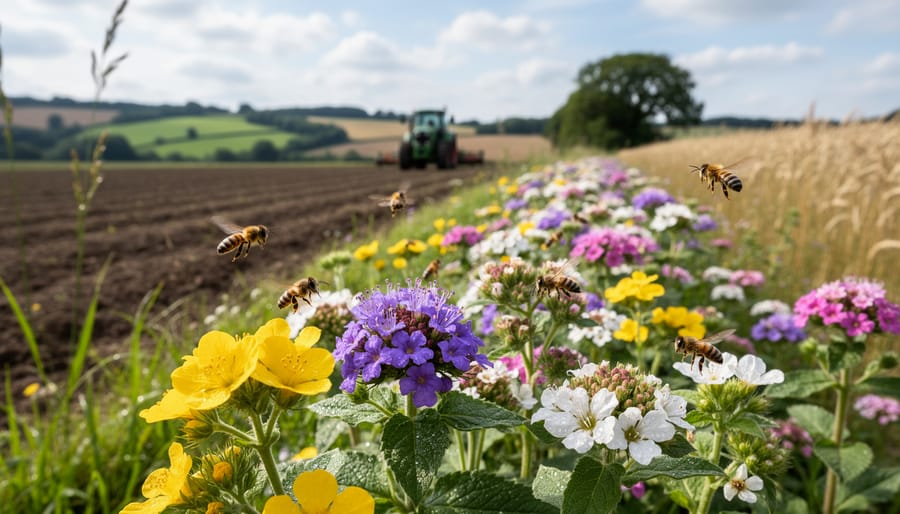
The most powerful outcome of scientific bee research isn’t a journal publication, it’s a restored meadow buzzing with pollinators, a farm field that no longer kills bees, or a city park transformed into a pollinator refuge. This translation from data to dirt happens through systematic processes that turn laboratory insights into landscape-scale change.
When researchers identify that bees need forage resources throughout the entire growing season, conservation practitioners respond by designing planting schemes that bloom sequentially from early spring through late fall. When pesticide toxicology studies reveal sublethal effects at specific concentrations, agronomists develop application protocols that minimize exposure during peak foraging hours. Each scientific finding becomes a building block for actionable conservation strategies.
The pathway from research to implementation follows a predictable sequence:
- Scientists identify a specific threat or conservation opportunity through controlled studies and field observations
- Researchers quantify the problem’s scope and severity through monitoring networks and population assessments
- Conservation teams develop targeted interventions based on the scientific evidence, testing approaches in pilot sites
- Practitioners scale successful interventions across larger landscapes, adapting to local conditions while maintaining scientific principles
- Ongoing monitoring evaluates effectiveness, feeding new data back to researchers who refine approaches based on real-world results
This cycle creates a feedback loop where science continuously improves practice and practice generates new research questions.
Consider how genomic studies revealing the importance of genetic diversity in wild bee populations shaped habitat corridor design. Rather than creating isolated pollinator patches, conservation planners now build connected networks that allow gene flow between populations, increasing resilience against disease and environmental stress. Landscape ecology research quantifying how far different bee species fly from nests to forage sites determines optimal spacing between habitat patches.
Agricultural applications demonstrate particularly tangible results. Integrated pest management systems now incorporate bee-safe thresholds, treating crops only when pest populations exceed levels that justify risking pollinator exposure. Strip cropping patterns alternate harvestable crops with flowering cover that provides continuous bee forage. Buffer zones around field edges protect ground-nesting bees from tillage while offering undisturbed habitat.
Urban planners use pollinator research to transform parks and roadside verges. Native plant palettes replace ornamental species that offer bees little nutrition. Mowing schedules shift to allow flowering, guided by phenology studies showing when bees most need resources. These aren’t aesthetic choices, they’re evidence-based decisions backed by quantifiable conservation outcomes.
Common Questions About Scientific Bee Research
How do we know bee research findings are reliable?
Reputable scientific bee research undergoes peer review by independent experts and is replicated across multiple studies before conclusions are drawn. Look for findings published in established journals and confirmed by institutions with transparent methodologies and no conflicts of interest.
How long does it take for conservation actions to show measurable results?
Timeline varies by intervention, habitat plantings may attract foragers within weeks, but population recovery typically requires 3-5 years of sustained effort. The key is consistent monitoring to track progress and adjust approaches based on what the data reveals.
Can individual landowners really make a difference?
Absolutely. Scientific studies show that even small pollinator-friendly patches create stepping stones that enhance landscape connectivity. When individual actions align with evidence-based practices and connect through community action the cumulative impact becomes significant.
What should research funding prioritize right now?
Current gaps include long-term monitoring of wild bee populations, studies on climate adaptation strategies, and research translating laboratory findings into field-tested conservation protocols. Funding that supports applied science with community implementation yields the fastest conservation gains.
How can I tell credible bee science from advocacy disguised as research?
Credible research acknowledges uncertainties, presents data transparently, and avoids absolute claims. Be cautious of studies funded solely by industry or advocacy groups without independent verification, and prioritize findings that show their methodology and raw data.
Do we need more research or more action?
We need both, working together. While scientists continue investigating complex questions like disease interactions and climate impacts, we already have sufficient evidence to implement proven conservation strategies. The most effective approach combines ongoing research with immediate deployment of validated practices.
These questions reflect the practical concerns that emerge when people encounter scientific findings about pollinator decline. The tension between needing certainty and taking action appears frequently in policy discussions, decision-makers want bulletproof evidence, yet delays cost us critical habitat and populations. Research has given us a strong foundation of knowledge about what threatens bees and what helps them, even as scientists refine details about mechanisms and interactions. Supporting rigorous research doesn’t mean waiting for perfect information before acting; it means using current evidence to guide decisions while remaining open to adjusting strategies as new data emerges.
Scientific bee research has moved pollinator conservation from guesswork to precision intervention. The evidence is clear: when we apply rigorous methodologies, genomic analysis, landscape-scale monitoring, toxicology studies, behavioral tracking, we identify the specific stressors driving declines and design targeted solutions that work. CERI’s Bee and Insect Biodiversity Initiatives demonstrate this principle in action, translating laboratory findings into habitat restoration projects, policy reforms, and community-led monitoring networks that produce measurable gains for pollinator populations.
The path forward requires sustained commitment to evidence-based approaches. Support organizations that ground their conservation work in peer-reviewed science rather than anecdotal observation. Advocate for policies that mandate pesticide testing protocols reflecting real-world bee exposure, protect critical habitat corridors identified through spatial analysis, and fund long-term monitoring programs that track conservation effectiveness. If you want to contribute directly to the scientific foundation of pollinator protection, join as a volunteer with citizen science initiatives that maintain rigorous data collection standards while creating scalable networks.
Every data point collected, every research finding applied, every policy informed by science rather than assumption brings us closer to reversing pollinator decline. The tools exist. The knowledge base grows daily. What remains is translating scientific bee research into widespread action, a challenge not of discovery but of implementation and collective will.