
The Global Community Engagement and Resilience Fund (GCERF) is the only global fund dedicated to preventing violent extremism, and it works by investing in people. Rather than relying on top-down security measures alone, GCERF backs community-centric initiatives led by civil society organisations, groups that understand the local social, economic, and political forces pushing people toward extremist movements.
Why does that approach matter? Because violent extremism rarely starts with ideology. It often grows from unresolved grievances between groups, broken trust between communities and the state, and a lack of positive alternatives. GCERF’s investments target exactly these roots. They aim to rebuild trust, offer constructive paths forward, and decrease the social legitimacy of violent extremist groups among the very communities they try to recruit from.
Founded in 2014 as an independent foundation, GCERF operates as a public-private partnership governed by a multi-stakeholder board, with the EU among its governing members. For environmentally conscious readers, policymakers, academics, and organisations, it offers a clear example of how resilient, well-connected communities become the strongest foundation for lasting stability.
This guide explains what the fund is, what it does, who it serves, and how you can take part.
What the Global Community Engagement and Resilience Fund Is
The Global Community Engagement and Resilience Fund, known as GCERF, is an independent foundation founded in 2014 as a public-private partnership. It is governed by a multi-stakeholder board, and the EU is part of that governing board. That structure matters because the fund doesn’t answer to a single government or sector. It brings different partners to the same table.
So what does “violent extremism prevention” actually mean? In plain terms, it’s the work of reducing the conditions that push people toward violent extremist groups before anyone gets hurt. Those conditions are rarely just about ideology. They tend to be local: social exclusion, economic hardship, political grievances, and a broken sense of trust between neighbours or between communities and the state. Prevention means addressing those roots rather than reacting after violence has already taken hold.
GCERF describes itself as the only global fund dedicated to this goal, and its method is simple to state: it works by investing in people. That is what makes a community-centered approach different from a top-down one. Instead of handing solutions to communities from the outside, the fund backs initiatives led by civil society organisations that already understand the local context. The people closest to the problem are treated as the ones best placed to solve it.
This focus on local leadership is also why the fund fits so naturally with ecosystem-minded thinking. Lasting change rarely comes from a single intervention. It grows when communities are trusted, equipped, and supported to lead. Details about how the fund is financed haven’t been verified here, so readers who want that information should consult GCERF’s official sources directly.
What GCERF Does: Investing in Community-Led Resilience

Four Priorities Guiding Its Investments
GCERF directs its funding through four priorities, all of which point back to the same idea: lasting prevention starts with people and the places they live. The fund backs community-centric civil society initiatives that tackle the local social, economic, and political drivers of violent extremism. Its current investments focus on:
- Addressing grievances between groups, so that tensions and perceived unfairness are dealt with before they harden into division.
- Rebuilding trust between communities and the state, so people feel heard and can work with institutions rather than against them.
- Promoting positive alternatives to violent extremism, giving people constructive paths for purpose, belonging, and opportunity.
- Decreasing the social legitimacy of violent extremist groups among community members, so these groups lose the acceptance they depend on to operate.
Each priority works on a different part of the same problem, and none of them relies on force alone. Together they reflect the three pillars mindset that CERI applies to sustainability: durable results come when social, economic, and civic strengths grow side by side.
That approach also explains why local leadership matters so much. When civil society organisations lead, the work reflects real community needs, and community action becomes the engine of change instead of an afterthought. Strong, trusting communities are better able to absorb shocks and recover from them, which is the same logic behind ecosystem resilience in the natural world.
Who the Fund Is For and Who It Serves
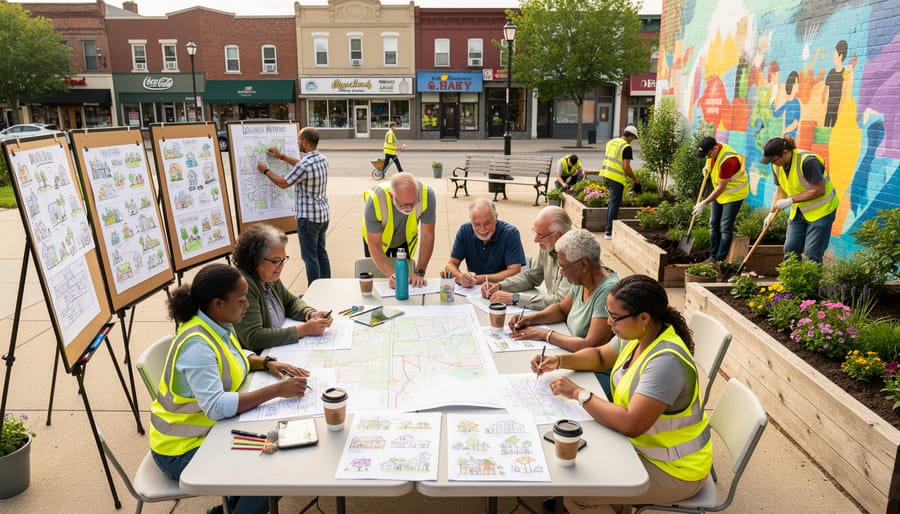
GCERF serves several groups at once, and each one matters to community resilience in a different way.
At the center are the communities affected by local social, economic, and political drivers of violent extremism. They benefit most directly, because the fund invests in people where the pressures are felt. Civil society organisations sit beside them as implementers. These organisations lead the community-centric initiatives GCERF funds, so local knowledge and trust shape the work rather than outside assumptions.
Policymakers, academics, and advocacy organisations play a different part. They support the approach, learn from it, and help turn community-level lessons into wider practice. GCERF’s own governance reflects this partnership model: it is an independent foundation, founded in 2014 as a public-private partnership, with a multi-stakeholder board that includes the EU.
| Audience | Role in relation to GCERF | What they gain or contribute |
|---|---|---|
| Communities | Beneficiaries | Support for addressing local drivers of violent extremism |
| Civil society organisations | Implementers | Funding to lead community-centric initiatives; local knowledge and trust |
| Policymakers | Partners and supporters | Backing for community-led prevention |
| Academics and advocates | Supporters and learners | Evidence, analysis, and public awareness |
Resilience grows when all four roles connect. Communities need capable local partners, those partners need dependable support, and decision-makers need credible evidence. For specific eligibility requirements, check directly with the fund.
How to Engage: Steps for Organisations and Supporters

Getting involved with GCERF starts with a few clear steps. Organisations that want to be part of community-led prevention can work through the verified application process:
1. Complete the online form. This is the formal starting point, where you introduce your organisation and its work.
2. Attend an orientation session. The fund uses this step to walk applicants through how the process works, so it’s worth treating as a chance to ask questions and understand expectations.
3. Select a focus area. Choose the area where your organisation’s strengths and local relationships fit best.
These steps are open, practical and designed to put local leadership at the centre. Requirements can change, though, so confirm current details, including eligibility and timelines, directly with the fund before you begin. This article doesn’t cover funding mechanisms, and the fund’s own channels are the only reliable place to find them.
Not every supporter is an organisation, and there are other ways to contribute to community and ecosystem engagement. CERI regularly recruits volunteers for seasonal campaigns, ongoing research projects and educational initiatives throughout the year. If you want hands-on involvement closer to home, you can become a volunteer and add your time and skills to this work. This is a separate opportunity from GCERF, and CERI does not administer the fund. Still, both routes rest on the same belief: lasting change grows when people take part.
Common Questions About GCERF and Community Engagement
Readers often ask the same handful of questions about GCERF. Here are straight answers, based only on what has been verified, with a note on where the picture is still incomplete.
What is GCERF?
The Global Community Engagement and Resilience Fund is the only global fund dedicated to preventing violent extremism. It works by investing in people.
Who governs it?
GCERF is an independent foundation founded in 2014 as a public-private partnership. A multi-stakeholder board governs it, and the EU sits on that board.
What kinds of initiatives does it fund?
It funds community-centric initiatives led by civil society organisations. These address the local social, economic, and political drivers of violent extremism.
How does the application process work?
Applicants complete an online form, attend an orientation session, and select a focus area. Confirm current requirements directly with the fund before you begin.
How does this connect to CERI Community and Ecosystem Engagement?
CERI is a separate organisation and does not administer GCERF. It shares the belief that lasting change comes from empowered communities, and it regularly recruits volunteers for seasonal campaigns, research projects, and educational initiatives.
Some details are still unclear. Funding mechanisms, for example, are not something we can describe with confidence here, so we won’t guess. If you need that level of detail, go to GCERF’s official channels for the most accurate and current information.
Resilient communities aren’t built from the outside in. They grow when people are trusted, resourced, and led by those who know their own neighborhoods best. That is the idea at the heart of GCERF’s work: invest in people, back local civil society organisations, and let communities shape their own answers to the grievances that can fuel violent extremism.
If you represent an organisation, the next step is concrete. Complete the online form, attend an orientation session, and select a focus area, then confirm current requirements directly with the fund. If you’re an individual who wants to help strengthen community and ecosystem engagement, CERI regularly recruits volunteers for seasonal campaigns, research projects, and educational initiatives.
Policymakers and institutions have a role too. Supporting community-led approaches means backing the people closest to the challenge. Start where you can, and let local leadership carry the work forward.